Category: Peace

  • 2017 Message to Viennese Peace Movement

    Dear friends on the path of Peace,

    Warm greetings from California!

    We are approaching the 72nd anniversaries of the atomic bombings of Hiroshima and Nagasaki.  We do so with hope in our hearts because the majority of the world’s countries have adopted a Treaty on the Prohibition of Nuclear Weapons (Ban Treaty).  It is a gift to the world of enormous proportions.  Among other prohibitions, it bans the possession, use and threat of use of nuclear weapons.  It is a treaty that validates the call to abolish nuclear weapons by the survivors of Hiroshima and Nagasaki, by many civil society organizations and individuals, and by most of the non-nuclear nations in the world.

    The negotiations leading to the adoption of the Ban Treaty on July 7, 2017 took place through the United Nations conference to negotiate a legally binding instrument to prohibit nuclear weapons, leading towards their total elimination.  The treaty’s preamble expresses deep concern “about the catastrophic humanitarian consequences that would result from any use of nuclear weapons,” and recognizes “the consequent need to completely eliminate such weapons, which remains the only way to guarantee that nuclear weapons are never used again under any circumstance….”

    Sadako’s paper cranes continue to fly all over the world, but, unfortunately, they still have not landed in the governments of the nine nuclear-armed countries, none of which participated in the negotiations for the Ban Treaty.  The US, UK and France actually went so far as to issue a joint statement on the treaty in which they asserted, “We do not intend to sign, ratify or ever become party to it.”  What can one say in the face of such overwhelming arrogance concerning one of the greatest threats to the human future?

    It is clear that our work is far from finished.  There is still much to do to rid the world of nuclear weapons.  But an important step forward has been taken.  I hope you will take heart from the progress that has been made, and always hold hope in your hearts.  Always remember that hope gives rise to action, and action gives rise to hope.

    David Krieger
    President
    Nuclear Age Peace Foundation
    (www.wagingpeace.org)

  • Why Is There So Little Popular Protest Against Today’s Threats of Nuclear War?

    This article was originally published by LA Progressive.

    In recent weeks, the people of the world have been treated to yet another display of the kind of nuclear insanity that has broken out periodically ever since 1945 and the dawn of the nuclear era.

    On April 11, Donald Trump, irked by North Korea’s continued tests of nuclear weapons and missiles, tweeted that “North Korea is looking for trouble.” If China does not “help,” then “we will solve the problem without them.” North Korean leader Kim Jong Un responded by announcing that, in the event of a U.S. military attack, his country would not scruple at launching a nuclear strike at U.S. forces. In turn, Trump declared: “We are sending an armada, very powerful. We have submarines, very powerful, far more powerful than the aircraft carrier. We have the best military people on earth.”

    During the following days, the governments of both nuclear-armed nations escalated their threats. Dispatched to South Korea, U.S. Vice President Mike Pence declared that “the era of strategic patience is over,” and warned: “All options are on the table.” Not to be outdone, North Korea’s deputy representative to the United Nations told a press conference that “thermonuclear war may break out at any moment.” Any missile or nuclear strike by the United States would be responded to “in kind.” Several days later, the North Korean government warned of a “super-mighty preemptive strike” that would reduce U.S. military forces in South Korea and on the U.S. mainland “to ashes.” The United States and its allies, said the official statement, “should not mess with us.”

    Curiously, this North Korean statement echoed the Trump promise during his presidential campaign that he would build a U.S. military machine “so big, powerful, and strong that no one will mess with us.” The fact that both Trump and Kim are being “messed with” despite their possession of very powerful armed forces, including nuclear weapons, seems to have eluded both men, who continue their deadly game of nuclear threat and bluster.

    And what is the response of the public to these two erratic government leaders behaving in this reckless fashion and threatening war, including nuclear war? It is remarkably subdued. People read about the situation in newspapers or watch it on the television news, while comedians joke about the madness of it all. Oh, yes, peace and disarmament organizations condemn the escalating military confrontation and outline reasonable diplomatic alternatives. But such organizations are unable to mobilize the vast numbers of people around the world necessary to shake some sense into these overwrought government officials.

    The situation was very different in the 1980s, when organizations like the Nuclear Weapons Freeze Campaign (in the United States), the Campaign for Nuclear Disarmament (in Britain), and similar groups around the world were able to engage millions of people in protest against the nuclear recklessness of the U.S. and Soviet governments―protest that played a key role in curbing the nuclear arms race and preventing nuclear war.

    So why is there so little public protest today?

    One factor is certainly the public’s preoccupation with other important issues, among them climate change, immigration, terrorism, criminal justice, civil liberties, and economic inequality.

    Another appears to be a sense of fatalism. Many people believe that Kim and Trump are too irrational to respond to reason and too autocratic to give way to public pressure.

    Yet another factor is the belief of Americans and Europeans that their countries are safe from a North Korean attack. Yes, many people will die in a new Korean War, especially one fought with nuclear weapons, but they will be “only” Koreans.

    In addition, many people credit the absence of nuclear war since 1945 to nuclear deterrence. Thus, they assume that nuclear-armed nations will not fight a nuclear war among themselves.

    Finally―and perhaps most significantly―people are reluctant to think about nuclear war. After all, it means death and destruction at an unbearable level of horror. Therefore, it’s much easier to simply forget about it.

    Of course, even if these factors explain the public’s passivity in the face of a looming nuclear catastrophe, they do not justify it. After all, people can concern themselves with more than one issue at a time, public officials are often more malleable than assumed, accepting the mass slaughter of Koreans is unconscionable, and if nuclear deterrence really worked, the U.S. government would be far less worried about other nations (including North Korea) developing nuclear weapons. Also, problems―including the problem posed by nuclear weapons―do not simply disappear when people ignore them.

    It would be a terrible thing if it takes a disastrous nuclear war between the United States and North Korea to convince people that nuclear war is simply unacceptable. The atomic bombing of Hiroshima and Nagasaki should already have convinced us of that.


    Dr. Lawrence Wittner (http://www.lawrenceswittner.com) is Professor of History emeritus at SUNY/Albany. He is the author of Confronting the Bomb (Stanford University Press).

  • Glenn Paige: A Prophet of Nonkilling

    [The world lost a great man when Glenn Paige passed on January 22, 2017.  What follows is an article I wrote in 2010, the year in which Glenn received the Nuclear Age Peace Foundation’s Distinguished Peace Leadership Award.  It is about Glenn’s great transformation in life from a successful academic to a prophet of nonkilling.  I’ve left the article in the present tense, and believe that Glenn lives on in the hearts and minds of the many people he inspired with his commitment to and leadership for a nonkilling world.]

    Glenn Paige is a man who in midlife re-created himself and his purpose on the planet.  At the age of 44, he shifted from being an academic Cold Warrior to a man dedicated to nonkilling.  He later described to me his transformation in this way: “It finally just came to me in three silent surprising words: ‘No More Killing!’  Technically it might be called the result of ‘cognitive dissonance’ when values and reality are perceived to clash.  But it was nothing rational…and was definitely related to many years of study of Korea and involvement in relations with it, South and North.  My book, The Korean Decision, justified war.  The results finally sunk in to me – neither peace nor freedom.”

    I asked Glenn to describe in a more detailed way what had happened when he experienced the words, “No More Killing.”  He replied: “The words/idea ‘No More Killing’ specifically came in an instant from the Korean experience – and was simultaneously generalized to the whole world, not just war, but all forms of killing.  The first thing I did was write a book review of my book on the Korean War….  Then I applied the same critique to the entire discipline of political science.”  Now he is applying the same critique to the world.

    I first knew of Glenn in the late-1960s.  He came to the University of Hawaii in 1967 as a professor in the department of political science as I was finishing up my Ph.D. in the department.  I would leave Hawaii in 1970, a few years before Glenn would experience his transformation in 1973.  At the time, Glenn had the reputation for being a Cold Warrior, having served as a soldier in the Korean War and then writing a book in which he justified the US involvement in the war.  I was strongly opposed to the Vietnam War, which was increasing in intensity and body counts at that time, and I had little tolerance for someone who had built his career on justifying any war.  I was neither open-minded about war, nor tolerant of those who supported it.  I felt that war was a way of misdirecting the lives of young people by propaganda and putting them in the untenable situation of having to kill or be killed.  In that regard, I have changed my views very little over the years, but Glenn changed very much.

    Glenn is a well educated Ivy Leaguer, who received a B.A. from Princeton and an M.A. from Harvard before being awarded a Ph.D. from Northwestern.  He had carved out a place for himself in academia with his study of the political decision of US leaders to enter the Korean War.  He had taught for six years at Princeton before accepting a position at the University of Hawaii.  He didn’t seem like a strong candidate for transformation, but something mysterious happened, perhaps something latent in his character asserted itself with, as he described it, “three silent surprising words: ‘No More Killing!’”

    Glenn transformed himself from an establishment academic who studied political leadership into a man who envisioned a peaceful, nonviolent world and was prepared to lead by example and personal commitment in attaining such a world.   He publicly recanted the conclusions he had earlier reached and written in justification of the Korean War, and he went on to renounce killing and to establish a Center for Global Nonkilling.

    How rare is that in academia?  It is so rare as to have an impossibly small probability of occurring.  Glenn’s initial path in academia was one that was bringing him considerable academic success.  He had been well received by the foreign policy establishment in the United States, and his studies promised a comfortable academic career.  However, his work prior to his transformation offered only the conventional “truths” that are deeply embedded in a culture of militarism.  It justified one war, which helped build a foundation for the next one.  It perpetuated the myth that wars are necessary and therefore glorious, the lies that induce new generations to submit to following orders and being willing to both kill others and sacrifice their own lives in war.  His earlier work, in short, was consistent with adding academia as a third institutional leg to the Military-Industrial Complex that Eisenhower warned against.

    Glenn’s transformation was so rare, in academia or any other profession, as to appear as a miracle, a change not easily explicable by reference to experience in our society.  There are few modern day examples of such transformation.  Glenn is walking in the path of champions of nonviolence like Thoreau, Tolstoy, Gandhi, Schweitzer and King.  Like Nobel Peace Laureate Mairead Maguire, he is a prophet of nonkilling, which in my view goes even beyond nonviolence.  It puts into tangible practice Schweitzer’s concept of reverence for life.  It holds humanity to a higher standard.  Glenn left the safety and comfort of the academic cloister to envision and help forge a better path for humanity.

    In the future, I think people who seek a better world will look back with awe on Glenn’s life and transformation.  I don’t mean to imply that Glenn is a saint.  He is far too human and grounded for that.  But I do mean to state strongly that he is a most honorable man who is deserving of great respect for his transformative shift of course and what he accomplished following that shift.  Glenn became a leader in battling against our cultural acceptance of militarism with its all-to-easy reliance upon the use of force for domination and empire.  Should we ever arrive at a day when nonkilling becomes our societal norm, Glenn will certainly be revered for his commitment, eloquence and leadership toward achieving this end.

    Glenn once wrote me a humbling note: “I can only bow in reverence for the focused, successful mobilization of action for nuclear disarmament by the Nuclear Age Peace Foundation under your leadership.  I believe it is the most effective nuclear disarmament movement in the world.”  Of course, I was more than pleased to receive such a positive affirmation.  In reflecting on Glenn’s words, I realize that making such affirmations is one of the tools of a good peace leader.  Glenn is such a leader.

    Glenn Paige has done the very best that one can do with his life.  He has stood for truth and human decency.  He has radically transformed himself from an academic proponent of conventional wisdom in a society dominated by militarism to become a powerful voice and force for compassion, decency, nonviolence and nonkilling.  He has focused on nonkilling, a goal that to some may seem so distant as to be impossible.  But to envision the impossible and to work to make it a reality is another important characteristic of a great peace leader.

    Glenn has worked to bring the future we must achieve into the present.  He gives me and, I’m sure many others, hope that a better world, a better future, is possible.  He has demonstrated to other academics that the future is far more important than footnotes.  He has lived the truths of peace and nonviolence that he discovered on his life journey, and he has shown by example that each of us can do more with our lives than may seem possible.  In leading by example, he has shown a central trait of a strong peace leader.

    Thank you, Glenn, for cutting away the tangled intellectual underbrush to forge a path toward a nonkilling political science and nonkilling societies.  Thank you for envisioning and building an institution that will work toward these ends.  Thank you for your compassionate and impassioned leadership aimed at achieving a world in which the killing of other human beings is taboo.  Thank you for being you.

  • A Peace Agenda for the New Administration

    The looming advent of the Trump administration in Washington threatens to worsen an already deeply troubling international situation.  Bitter wars are raging, tens of millions of refugees have taken flight, relations among the great powers are deteriorating, and a new nuclear arms race is underway.  Resources that could be used to fight unemployment, poverty, and climate change are being lavished on the military might of nations around the world―$1.7 trillion in 2015 alone.  The United States accounts for 36 percent of that global total.

    Given this grim reality, let us consider an alternative agenda for the new administration―an agenda for peace.

    One key ingredient is improving U.S. relations with Russia and China.  This is not an easy task, for these countries are governed by brutal regimes that seem to believe (much like many politicians in the United States) that a display of military force remains a useful way to deal with other nations.  Even so, the U.S. government has managed to work out live-and-let-live relationships with their Soviet and Chinese predecessors―some of which were considerably more bellicose―and should be able to do so again.  After all, the three countries have a good deal to gain by improving their relations.  This includes not only avoiding a catastrophic nuclear war, but reducing their spending on useless, vastly expensive weapons systems and cooperating on issues in which they have a common interest:  countering terrorism; halting the international drug trade; and battling climate change.

    It is not hard to imagine compromise settlements of their recent conflicts.  Behind the hard line Russia has taken in Ukraine, including the annexation of Crimea and military meddling in what’s left of that country, lies NATO’s expansion eastward to Russia’s borders.  Why not show a willingness to halt that expansion in exchange for a Russian agreement to respect the sovereignty of Ukraine and other nations in Russia’s vicinity?  Similarly, when dealing with the issue of war-torn Syria, why not abandon the U.S. government’s demand for the ouster of Assad and back a UN-negotiated peace settlement for that country?  The U.S. government’s growing dispute with China over the future of islands in the South China Sea also seems soluble, perhaps within a regional security framework.

    The three nations could avoid a very dangerous arms race and, at the same time, cut their military costs substantially by agreeing to reduce their military expenditures by a fixed percentage (for example, 10 percent) per year for a fixed period.  This “peace race” would allow them to retain their current military balance and devote the savings to more useful items in their budgets.

    A second key ingredient in a peace agenda is moving forward with nuclear arms control and disarmament.   With over 15,000 nuclear weapons in the arsenals of nine nations, including 7,300 held by Russia and 7,100 by the United States, the world is living on the edge of nuclear annihilation.

    Although the Kremlin does not seem interested right now in signing further nuclear disarmament agreements, progress could be made in other ways.  The President could use his executive authority to halt the current $1 trillion nuclear “modernization” program, take U.S. nuclear weapons off alert, declare a “no first use” policy for U.S. nuclear weapons, and make significant reductions in the U.S. nuclear arsenal.  An estimated 2,000 U.S. nuclear warheads are currently deployed and ready for action around the world, but the Joint Chiefs of Staff have concluded that only 1,000 are necessary.  Why not cut back to that level?

    The new administration could even engage in international negotiations for a treaty banning nuclear weapons.  Peace and disarmament organizations have pushed for the opening of such treaty negotiations for years and, this October, the UN General Assembly rewarded their efforts by passing a resolution to begin negotiations in 2017.  Why not participate in them?

    A third key ingredient in a peace agenda is drawing upon the United Nations to handle international conflicts.  The United Nations was founded in 1945 in the hope of ending the practice of powerful countries using their military might to bludgeon other countries into accepting what the powerful regarded as their national interests.  National security was to be replaced by international security, thereby reducing aggression and military intervention by individual nations.  Critics of the United Nations have argued that it is weak and ineffectual along these lines and, therefore, should be abandoned―except, perhaps, for its humanitarian programs.  But, instead of abandoning the United Nations, how about strengthening it?

    There are numerous ways to accomplish this.  These include eliminating the veto in the Security Council, establishing a weighted voting system in the General Assembly, and giving General Assembly decisions the force of international law.  Two other mechanisms, often discussed but not yet implemented, are creating an independent funding mechanism (such as an international financial transactions tax) for UN operations and establishing a permanent, all-volunteer UN rapid deployment force under UN jurisdiction that could act to prevent crimes against humanity.

    Of course, at the moment, little, if any, of this peace agenda seems likely to become U.S. government policy.  Donald Trump has promised a substantial increase in U.S. military spending, and his new administration will be heavily stocked with officials who take a hardline approach to world affairs.

    Even so, when it comes to peace, the American public has sometimes been remarkably active―and effective.  In January 1981, when the Reagan administration arrived in Washington, it championed an ultra-hawkish agenda, highlighted by a major nuclear weapons buildup and loose talk of waging and winning a nuclear war.  Ultimately, though, an upsurge of popular opposition forced a complete turnabout in administration policy, with Reagan joining the march toward a nuclear-free world and an end to the Cold War.  Change is always possible―if enough people demand it.


    [Dr. Lawrence Wittner (http://www.lawrenceswittner.com) is Professor of History emeritus at SUNY/Albany and the author of Confronting the Bomb (Stanford University Press).  A different version of this article appeared recently in the magazine Democratic Left.]

  • 2016 Evening for Peace Introduction

    When we founded the Nuclear Age Peace Foundation in 1982, we did so in the belief that peace is an imperative of the Nuclear Age.  That is, in our time, peace is not only desirable; it is essential for human survival.

    For the past 33 years, among our many projects and programs, we’ve honored some of the great Peace Leaders of our time, including the XIVth Dalai Lama; Archbishop Desmond Tutu; Carl Sagan; Helen Caldicott; Jacques Cousteau; Mairead Maguire; Queen Noor and Daniel Ellsberg.

    We have honored Peace Leaders from all walks of life and from all parts of the world.  It is a diverse group of individuals tied together by their compassion, commitment and courage in pursuit of a more peaceful and decent world.

    Each of these individuals recognizes the existential dangers of the Nuclear Age and the moral, legal and logical failings of reliance on nuclear weapons for security.

    Each of them reminds us of how desperately our world needs Peace Leaders; and that each of us – if we apply our energy and will – can become a Peace Leader as well.

    *****

    krieger_chomsky
    NAPF President David Krieger, right, presented Noam Chomsky with the Distinguished Peace Leadership Award on October 23, 2016.

    Tonight we honor Noam Chomsky.

    By training and profession, he is one of the world’s leading linguists.

    By choice and commitment, he is one of the world’s leading advocates of peace with justice.

    His ongoing analysis of the global dangers confronting humanity is unsurpassed.

    He is a man who unreservedly speaks truth to power, as well as to the People.

    Like Socrates, he is a gentle gadfly who does not refrain from challenging authority and authoritarian mindsets.

    He is a man who punctures hubris with wisdom.

    He confronts conformity with critical thinking.

    He has lectured throughout the world and written more than 100 books, the latest of which is Who Rules the World?

    He is a dedicated peace educator and his classroom is the world.

    The Boston Globe calls him “America’s most useful citizen.”

    It is an honor to have him with us tonight, and it is my great pleasure, on behalf of the Directors and members of the Nuclear Age Peace Foundation, to present Noam Chomsky with the Foundation’s 2016 Distinguished Peace Leadership Award.

  • Next Steps from Discourse to Action by Noam Chomsky

    This is the transcript of a talk given by Noam Chomsky at the Nuclear Age Peace Foundation’s symposium “The Fierce Urgency of Nuclear Zero: Changing the Discourse” on October 25, 2016. The audio of this talk is available here. For more information about the symposium, click here.

    chomsky 2

    Maybe it would be useful to start with a case where there was action from bottom up and it may have had a significant effect, and I think it has lessons for the present, concern for moving from discourse to action. And what I have in mind is, the last time that a President apparently planned to launch a nuclear attack, not as a result of accident but as a result of design, the facts aren’t crystal clear, they never are in such cases, but the evidence is fairly compelling. I’m referring to 1969, the latter stages of the Vietnam War, President Nixon. It seems from the evidence available that he was pretty close to a decision to resort to nuclear weapons, but was deterred, not by the Russians, but by popular opinion. Huge demonstrations coming up in Washington, already had been one. Nixon and Kissinger already had launched highly provocative action against the Soviet Union, signaling to them but nobody else that, “We’re ready to go all out,” Operation Giant Lance.

    This is something, actually, that Dan suggested years ago, that the popular demonstrations in November might have deterred Nixon from launching a war. And there’s confirmation in some recent studies, in particular a book by Jeffrey Kimball and William Burr, which has the interesting title, sub-title, ‘The Secret Alert of 1969, Madman Diplomacy, and The Vietnam War’. It’s worth, I’ll come back to that in a minute, but it’s worth remembering how quickly that popular opposition developed. It’s again a lesson for today, I think. So take, say, Boston, where I live, a pretty liberal city, the first international days of protest against the war were in October 1965 and the small group who were protesting the war, pretty small, mostly young people, decided to have a public demonstration on the Boston Common, the normal place for public events. So there was a march and a demonstration on the Common, it was violently broken up by counter-demonstrators, mostly students; the speakers, I was one of them, couldn’t be heard and were only saved from greater violence by a huge police presence. They didn’t like us, but they didn’t want bloodshed on the Boston Common.

    The Boston Globe, the most liberal paper in the country, devoted the whole front page to it the next day, bitterly denouncing the protesters for their lack of patriotism. A couple of years later the Globe became the first newspaper in the country to call for withdrawal from Vietnam. On the Senate floor, people like Mike Mansfield were almost hysterical in their denunciation of people who dared to make what in fact were very mild, embarrassingly mild protests, mostly about the bombing of North Vietnam, which we all knew was a side-show, but at least you get somebody to listen to it. The bombing of South Vietnam, obviously far worse, you could barely raise at the time.

    The next international day of protest was March, 1966. We realized we couldn’t have a public demonstration, so we decided to have an action at a church, Arlington Street Church. The church was attacked, tin cans, tomatoes, big police presence, could of gotten worse. That was early ’66. By ’67 things had changed, by ’68 substantially. By ’69, just a couple of years later, a huge public protest sufficient to, very likely, deter what could have been a resort to nuclear weapons. Actually, all of this bears a comment that Robert ended this morning’s session with, about lack of government response. That’s quite true, the government doesn’t want to do any of the things we’re talking about, and they don’t respond unless it reaches sufficient scale. And even a totalitarian state can’t ignore mass public opinion, actually; we even saw that in the case of Nazi Germany, and certainly a more free society can’t. And I think what all this suggests is that it’s possible to have a pretty rapid transition from not just apathy, but bitter antagonism, bitter, violent antagonism to massive public support by proper actions. And the actions were mostly taken by young people, and pretty effective ones.

    Well, let’s go back to the subtitle, the ‘Madman Diplomacy and The Vietnam War.’ The Madman Theory is commonly attributed to Richard Nixon on the basis of pretty thin evidence, mainly Haldeman’s memoir, but there’s actually much stronger evidence for the same theory under Clinton, it actually was released by Hans M. Kristensen about 15 years ago, a document, one of the many, that doesn’t get sufficient attention, I think, ‘Essentials of Post-Cold War Deterrence’ came out in 1995, STRATCOM document, which calls for first use of nuclear weapons even against non-nuclear states, and gives a rationale. The rationale is essentially what Dan was talking about yesterday. It said, “Nuclear weapons provide a cover, a shadow that covers all of our ordinary conventional actions.”

    In other words, if we make people think we might use nuclear weapons, they’ll back off when we carry off conventional actions. That’s Dan’s image of holding a gun, but not shooting it, but using it. This is STRATCOM talking about it. Then they go on to say we should project a national persona of being irrational and vindictive, so that people don’t know what we’re going to do next. That’s a madman theory from a better source than Haldeman’s memoirs. And remember it’s the Clinton years, first major post-Cold War document about so-called deterrence. And it’s worth remembering other things, say, about a Clinton liberal America, which tend to be forgotten. There was a huge and appropriate, popular uproar, at least in some circles, about George Bush II’s doctrine of preventive war. But go back to Clinton. There was also a Clinton doctrine. Every president has a doctrine. Now the Clinton doctrine was that the US has the right to resort to unilateral use of force in case of, I’ll read the words, “to ensure uninhibited access to key markets, energy supplies, and strategic resources.” That goes way beyond the Bush doctrine.

    But it was quiet testimony to Congress, no big flashy statements. But that’s the thinking that’s in the background, a version of the madman theory, make sure we get uninhibited access to energy resources, supplies, key market strategic resources or else we’re entitled to use force, all right in the background. We can run through a kind of a wish list of things that ought to be done, and they actually should be done, no question about them. Drew’s first aid kit yesterday is a good collection: Move forward with the Comprehensive Test-Ban Treaty; put an end to emplacing first-strike weapons on the Russian border disguised as a missile defense against non-existent Iranian missiles; a move towards eliminating the land-based component of a triad somebody mentioned this morning, certainly makes sense, useless, dangerous move towards establishing nuclear weapon-free zones in the world.

    I think that’s important. For one thing it has, apart from the policy consequences, has a psychological effect that indicates we’re this part of the world, we’re getting out of this insanity. That can become effective and infectious if it’s known. Unfortunately like many things, it’s barely known. And again the most important one by far is for the Middle East, where there is no regional opposition, in fact strong regional support, with the exception of Israel backed by the United States. Iran is in the lead of advocating it. The Arab states have been proposing it for 20 years. And a lot is at stake.

    The perpetuation of the Non-Proliferation Treaty is conditional on establishing that, and the fact that the United States blocks it is very serious. There are many examples of missed opportunities to shift from reflexive reliance on force to diplomacy and negotiations. And force means not just bombs, it also means, for example, sanctions, which can be very brutal and destructive. Just recently a UN report came out on the impact of sanctions on Syria, which doesn’t harm the Assad regime, they go ahead and do what they want with plenty of Russian support, but it does harm the population bitterly. And the worst such case was Iraq. Not discussed enough. The Iraqi sanctions were… Let’s just take the wording of the UN administrators who administered the humanitarian component of the Iraq sanctions, Denis Halliday, Hans Von Sponeck, both of whom resigned in protest against the US and Britain, arguing that the sanctions were, in their words, “genocidal”. Hans von Sponeck wrote an important detailed book about it, ‘Another Kind Of War’. Not a mention, I don’t think that there was a review or barely a mention in the United States or England.

    They also protected Saddam Hussein. It’s not impossible, as they kind of suggested, that he might have undergone the same fate as a whole series of other tyrants who were overthrown from within. He was protected by the sanctions, the sanctions compelled the population to rely on his distribution system for survival, and undermined the civil society that could have overthrown him. What happened to Samosa and Marcos and Ceausescu, another darling of the United States, incidentally, Mobutu, a whole series. That was the effect of virtually genocidal sanctions and force, we have plenty of examples. The discussions here have made it amply evident, if it wasn’t already, that no possible variety of tactical planning and considerations can ever justify the insanity, as David put it yesterday, of even the threat of maybe using nuclear weapons, let alone trying to use them on a small scale or anything crazy like that.

    The only hope that we have is a major shift in attitudes from reflexive resort to violence, the normal reaction to… What are taken to be publications or threats, to diplomacy, negotiations, and peaceful means. We certainly can see right in front of us constantly that resort to the sledgehammer is not the answer. It takes a so-called ‘Global War on Terror’. And when it was declared, radical Islamic terror was confined to a small tribal area in the northwest, in the region of Afghan and Pakistan border. But where is it now? All over the world. Every sledgehammer blow has expanded it, every single one. The Iraq War that was predicted by US Intelligence, we now know from the Chilcot Report by British Intelligence too, that it would extend terror, and it did, according to RAND statistics, quasi-governmental statistics, it increased terror by a factor of seven in the first year. It also instigated a sectarian conflict which didn’t exist, which is now tearing not only Iraq but the whole region apart. Libya, hit it with a sledgehammer in violation of our own Security Council resolution. Result: Huge, apart from destroying Libya, a huge flow of weapons and jihadis, mostly to West Africa, which is now the major source of Islamic terrorism in the world, according to UN statistics. And so, it is case after case. And there are plenty of alternatives. The same is true of killing leaders.

    There’s a very interesting book which, if you haven’t read it, you might look at, by military historian Andrew Cockburn called ‘Kill Chain,’ who runs through a long record, starting with drug cartels, moving on to terrorist groups, of assassinations of leaders that try to terminate the threat. Consistently, when you murder a leader, what you get, without looking at the roots of what’s going on, what you get is a younger, more violent, more militant leader who goes well beyond what has happened before. The record is pretty impressive and it goes on. A couple of weeks ago, Hillary Clinton advocated assassinating Baghdadi. Sure, the head of Isis, and no doubt plenty of plans to do that. You look at US government terrorism specialists, like Bruce Hoffman, they strongly oppose that. They say, “You kill Baghdadi, you’ll get somebody without getting to the source of what’s going on, you’ll get somebody younger, more militant, more violent, more radical, who may even do what Baghdadi has refused to do, mainly form an alliance with al-Qaeda.” ISIS and al-Qaeda are virtually at war now. An alliance with al-Qaeda would create a terrorist group much worse than what we’re facing now. That’s consistent. And there are many opportunities, many missed opportunities, we just heard about one this morning.

    Again, the current UN resolution on making the use, or even threat of possession of nuclear weapons illegal, that’s just gonna die. It’ll vanish, like all other opportunities, unless there is massive popular support for it, which has to begin with at least information. I doubt if a tenth of 1% of the population even knows it’s happening, there’s essentially nothing reported, nobody hears. But it can be done. What happened in 1969 is one of many illustrations. And there have been others, just keeping to recent years. The most important, which has come up several times, was the 1991, end of the Cold War, Gorbachev’s vision of a common Europe, an integrated security system for Europe and Eurasia, the whole region, no military alliances. Not much was known about it, scholarship has covered it, but the details are not known to the population. We now know that Bush and Baker not only rejected it and moved directly to expanding NATO, contrary to and in opposition to verbal promises to Gorbachev, which it now looks we’re deceitful and intended to mislead. Leading right up to what we have now: Confrontation on the Russian border which could easily lead the war.

    Gorbachev’s vision didn’t die, it’s been reiterated. It was reiterated by Medvedev when he was Prime Minister, it was reiterated by Putin, the demon Putin in 2014 that came forth with a fairly similar proposal, not quite the same words, but same in spirit. We don’t know if these could work, you have to try them, But they passed, they were missed, not discussed, no popular opposition, government could do what it wanted, namely reject them and move on to greater confrontation. 1999, Putin proposed US-Russian co-operation against the Taliban and Al-Qaeda. Ignored. Could it have worked? Yeah, it could have averted 9/11.

    Let’s turn to 2001, invasion of Afghanistan. Was that necessary? You can see the effects in Afghanistan. There was strong opposition to it from the leading anti-Taliban Afghan activists like Abdul Haq, the most respected of them, who bitterly condemned the bombing, said, “The US is just trying to show its muscle and harm Afghans, and it’s undermining our efforts to overthrow the Taliban from within, supported by others”. There were opportunities, we don’t know if they were real, for extradition, not pursuit. 2005, North Korea, big danger. Is there a way to deal with North Korea? Well, one way is to, the normal resort to more force. North Korea reacts, tit for tat. What happens when you move towards negotiations? It seems to succeed. In 2005, for example, there were actual negotiations between the Bush administration and North Korea. North Korea agreed to abandon all nuclear weapons, all existing weapon programs, allow international inspectors, in return for an end to aggressive talk and actions, international aid, a non-aggression pledge and a light water reactor for research and medical purposes. Bush immediately responded by dismantling the international consortium that was to provide the reactor, pressured banks to squeeze North Korean assets, North Korea returned to weapons development.

    If you go back to 1994, that’s been happening consistently, no time to run through it, but it’s reviewed in the professional literature. Go on to 2010, Iran and its nuclear programs were the great fear, supposedly. There was a proposal in 2010 initiated actually by a friend of my wife, Valeria’s, Celso Amorim in Brazil. Valeria has now got his book translated into English. He reviews this and is organizing a speaking tour for him. What happened? 2010, at Brazilian initiative, Brazil, Turkey and Iran reached an agreement. The agreement was to send the low enriched uranium in Iran to Turkey in return for provision of isotopes for research and medical work. As soon as it was mentioned it came under bitter attack in the United States; the press, the government and so on.

    Amorim was annoyed enough so that he released the letter from Obama, in which Obama had proposed precisely this, evidently expecting that Iran would turn it down and he’d get a propaganda coup. Well, they accepted it, so therefore we had to block it, of course the US has to run it, we don’t want peace. Again, no protests, no actions. Turn to Syria, one of the worst atrocities in the world. Is there a way to stop it? There might have been. 2012, Geneva 1, there was a meeting under the auspices then of Lakhdar Brahimi, a serious negotiator. Kofi Annan released a communique saying that there was agreement on a transitional government with the participation of members of the Assad regime, and any negotiation that tells the Assad regime, “Please commit suicide”, is just a death sentence for Syria, of course they’re not gonna do that.

    So there had to be participation of the Assad regime, can’t avoid that, no matter how horrible they are. It was blocked by Hillary Clinton, speaking for the government. Shortly before that, according to Martti Ahtisaari, the former Finnish Prime Minister, a long record in peace negotiations, according to him, the Russian Ambassador, Vitaly Churkin, the UN proposed that in negotiations Assad would step aside during the negotiations, leaving some participation of his regime. According to Ahtisaari, Britain, France and the United States rejected it. They assumed at the time Assad was gonna fall, so we lost that one.

    2015, again the five-year review period of the NPT conference, WMD free zone in the Middle East came up. It was blocked by the United States. Has to protect Israeli nuclear weapons from inspection. Again, threatening even the perpetuation of the NPT. No protest, no action, no knowledge. Another missed opportunity. And so it goes. There is a consistent record that goes back to the early ’50s of major opportunities that were ignored, rejected, unknown, no pressure, nothing happens. And it’s again worth remembering that pressure can build up even quickly and can be effective, and it’s imperative to keep trying.

  • Keeping Faith with the Future by Peter Kuznick

    This is the transcript of a talk given by Peter Kuznick at the Nuclear Age Peace Foundation’s symposium “The Fierce Urgency of Nuclear Zero: Changing the Discourse” on October 25, 2016. The audio of this talk is available here. For more information about the symposium, click here.

    krieger pages copy 2

    This session is called ‘Keeping Faith With the Future’, but after hearing so many presentations yesterday I decided I was going to do something a little different and talk about keeping faith with the past. We’ve been talking a lot about the public ignorance about nuclear war, nuclear winter, the risk that we face now. I’m always appalled by the public ignorance about history. In the national report card that was issued in 2011, among American high school seniors the area they came in last in was not math and science or languages, the area they came in last in was their understanding of US history. 12% of high school seniors were judged to be proficient in US history, but even that number is misleading, because only 2% could identify what Brown versus Board of Education was about, even though it was obvious from the way the question was posed.

    So we’ve got this vast problem of historical ignorance in this country, and that’s why Oliver Stone and I decided to do our project, ‘The Untold History of the United States’, because we wanted to address this. Oliver had… We come from different perspectives. Oliver comes from a conservative Republican family. He was a Goldwater supporter, he volunteered for combat in Vietnam, the only person probably in the history of Yale at least during the Vietnam War to volunteer for combat. I came from a left-wing New York family, and we decided we were going to look at this partly… Oliver wanted to figure out if George Bush was an aberration or if we looked at the patterns of American history, if George Bush was reflective of those patterns.

    He also saw his daughter’s high school history textbook and it repeated all the same lies, all the same myths that we all grew up with in the 1950s and 1960s. So we decided we were going to look at the broad range of American history. So we did a history… The Untold History Project is a history of the American empire and national security state. And one of the things we began to take on that was brought up yesterday is the question of American exceptionalism, because that’s so key to the American mindset in the world, the idea of exceptionalism, the idea that the United States is not only different from all other countries but the United States is better than all other countries.

    Other countries are motivated by greed, by geopolitical considerations, by territory. The United States, however, is motivated only by altruism, benevolence, one that’s bred freedom and democracy. But this is so deeply believed that it’s not even questioned in our society that the United States is different. It goes back to Woodrow Wilson saying after Versailles, “Now the world will see the United States as a savior of the world.” In more recent manifestations of that, Madeline Albright, “If we use forces because we’re America, we’re the indispensable nation. We stand taller and see farther than other countries.” Hillary Clinton repeating that over and over again that we’re the indispensable nation. Barack Obama. I don’t know if you remember when Obama welcomed the troops home at Fort Bragg at the first end of the Iraq war and he said to them, he said, “Your willingness to sacrifice so much for a people that you had never met is part of what makes us special as Americans. Unlike the old empires, we don’t make these sacrifices for territory, for resources, we do it because it’s right. There could be no fuller expression of America’s support for self-determination than our leaving Iraq to its people, that says something about us.” He says, “Wars make us stronger and more secure about our values,” he goes on and on.

    But this notion of American exceptionalism is so deeply ingrained in our psyche, in our culture, that we have to begin to really take it on. And that’s what Oliver and I tried to do in this project. So the idea started back in 2007. Oliver and I were having dinner and he said, “Let’s do a documentary.” It was going to be a one-hour documentary about Henry Wallace and Hiroshima. Then when I went to see him in New York two weeks later he now had an idea for a 10-hour, 10-part documentary series.

    I thought I could get it done during my sabbatical. It ended up taking us five years. Halfway through the project we decided we had to add a book, so we wrote this 800-page book in addition. And what you can say in a documentary in 58 minutes and 30 seconds, is very, very limited. I thought Oliver was going to narrate them like a New Yorker on speed, so my initial drafts were each about three times as long as you could do in 58 minutes. But then we had to obviously re-think it and do it a little bit differently. But, so we started with… And then it aired on Showtime in the United States, it’s aired all over the world. The books, there’s various versions of the book. There’s the Concise Untold History, based on the documentary scripts, the Young Readers book, the first of four volumes is out now. The graphic novel is on the way. So we’ve been doing this around the world and we start really initially with the myths about World War II, again so deeply ingrained in the United States.

    The first myth was that the United States won the war in Europe, right? That’s really unquestioned in the United States. The reality of, course, is that the Soviets won the war in Europe with some help from the United States and Britain. Throughout most of that war, the United States and Britain faced 10 German divisions combined; the Soviets were facing 200 German divisions combined. That’s why Churchill said that the Red Army tore the guts out of the Nazi war machine. Americans don’t know that. I did an anonymous survey with students recently. College students, all A students in high school. You would think they would know something. And I asked them how many Americans died in World War II. The median answer I got was 90,000. So it’s okay, they’re only 300,000 off, that’s in the ballpark. I asked them how many Soviets died in World War II. The median answer I got was 100,000. Which means they were only 27 million off. These kids, they can’t understand anything about the Cold War. They don’t know, can’t understand what’s going on in Ukraine now. This level of ignorance, I think, is pervasive throughout American society.

    The second myth, we look at the same kind of ignorance about Vietnam. College students now don’t really remember much or know much about Vietnam. The Gallup poll that came out last year said that 51% of 18-29 year olds in this country think the Vietnam war was worth fighting, that it wasn’t a mistake. 51%. And so yeah, you have to try to conceptualize this in a way they can understand. When I deal with World War II, I try to explain that the 27 million Soviet losses. You think of 9/11 in the United States, about 3,000 people lost. After that we turned the world upside down. We invaded several countries, we bombed many more countries, droning the world, special forces in 135 countries. And I tell them that, quantitatively, 9/11, that the Soviet losses in World War II are the equivalent of one 9/11 a day, every day for 24 years. One 9/11 a day, every day for 24 years.

    The Vietnam, how do you make that graphic for them? McNamara, when he came into my class, said he accepts that 3.8 million Vietnamese died in the war. Most of my students have gone down to the Vietnam Memorial Wall. And I asked them, “What is the message of that?” They say it’s got the names of 58,280 Americans who died in the war. The lesson of that is the tragedy of Vietnam is that 58,280 Americans died. And I say, “What if… And that wall is 492 feet long. If it included the names of the 3.8 million Vietnamese, the million Cambodians and Laotians, the Americans, Brits, Aussies, everybody who died, the wall would be more than eight miles long. That would be a fitting memorial to the Vietnam war.” But that’s not obviously what we have.

    So Oliver and I decided to take these things on. We go around to campuses all over the country. Our focus is largely our nuclear history, from an apocalyptic perspective. We’re trying to show, if you look at the broad range of American history, you can understand the question of nuclear winter and how deeply rooted that is. And if you study the history, he knows what we were talking about yesterday is not a surprise. And there were times when Americans weren’t even that ignorant. But the main one we show when we go to different campuses is our episode about the atomic bombings of Hiroshima and Nagasaki. I’ve been working on this question for a long time. Back in 1995 I started taking students on a study abroad class to Hiroshima and Nagasaki. I’ve done that every summer since then, since 1995. So American students, we travel with Japanese students from Japanese universities and we deal with this whole thing.

    But if you look at Hiroshima and Nagasaki, what we’re really talking about is World War II. It’s this tiny bomb and the destruction and damage it caused is minuscule compared to what a nuclear war would look like today, as we all understand. In our episodes, so we go around to campuses and to high schools and to community centers here and other countries and we show our episode about the decision to drop the bomb. And we make clear there is, first of all, that there was no military necessity to drop the bomb. One of… The fundamental myth about the bomb is that the atomic bombs ended World War II, and therefore they were justified and that they avoided an invasion, that if the United States had not dropped the bomb we would have had to invade Japan.

    Truman says Marshall told him that we’d lose a half million men in an invasion. Therefore the bombing was necessary, it was actually humane because it not only saved American lives, it saved Japanese lives. It’s the fundamental myth. And what does Obama say when he goes to Hiroshima? I was in Hiroshima. NHK, the Japanese public broadcaster who brought me over there to do some tv shows while Obama was there, and I probably did 50 interviews here as well about this. And what does Obama say there? It was great that he went. I was pushing him to go from the day he got elected. He should have really given his Prague speech in Hiroshima and it would have been even more meaningful and powerful. But what Obama says there from the very beginning is full of lies. The first sentence, “Death fell from the skies.” Death didn’t fall from the sky, the United States dropped an atomic bomb on Hiroshima. But he says there that we have to look history straight in the eye and that we have to tell the truth and tell a different story.

    And what does he say? He says, “World War II reached its brutal end in Hiroshima and Nagasaki”. That’s the lie. That’s what the people have been taught. What is the reality? The reality is that what ended the war, is what we show in our episode, was the Soviet invasion. But not only was the Soviet invasion of Manchuria that ended the war as prime minister Suzuki and others said, the military people said. But Truman knew that in advance. That was the crazy thing about this, is that Truman knew that the Soviet invasion would end the war. He knew there were two ways to end the war, to speed it up. One was changing the surrender terms, tell the Japanese they can keep the emperor. The other was wait for the Soviet invasion. Truman said he went to Potsdam to make sure that Stalin was coming into the war. Stalin had promised Roosevelt at Yalta in February that the Russians would come into the Pacific war three months after the end of the war in Europe, and he gets the agreement from Stalin, and he writes in his journal that night, “Stalin will be in the Jap war by August 15th. Fini Japs when that occurs.” He writes home to his wife, Bess, the next day, says, “The Russians are coming in, we’ll end the war a year sooner now, think of all the boys who won’t be killed.” He looks at the intercepted July 18th cable, and he calls it “the telegram from the Jap emperor asking for peace”.

    He’s fully aware that there are other alternatives to using the bomb, but he chose to use the bomb, and that’s what historians have been debating, why did he want to use the bomb so desperately? And he wanted to use the bomb because he wanted to send a signal to the Soviets that if they messed with American plans in Europe or the Pacific, this is what they’re going to get. And they understood that better than anybody, because the Japanese had adopted an unfortunate strategy of trying to get the Soviets to negotiate on their behalf for better surrender terms, so they could keep the emperor, and they had a couple other demands that they were hoping for.

    So the Soviets interpreted the atomic bombing exactly that way, that this bomb was not dropped on Japan because Japan was defeated, but it was dropped on them. So right from the very beginning, this is key to understanding the arch of the Cold War, but the perspective that Oliver and I have that’s different from other historians… John Dower, great historian from MIT, said that there are two basic narratives about the decision to drop the bomb. One is the tragic narrative and the other is the heroic narrative.

    So the heroic narrative, which we all know is the standard one, it saved American lives and we were the good guys in the war against fascism. The tragic narrative is that it didn’t have to be dropped, and it was a tragedy because of all the people who were killed and wounded and suffered ever since. But Oliver and I have done what we call the apocalyptic narrative, which ties directly into what we were talking about yesterday.

    The apocalyptic narrative argues that Truman knew, understood, and said on several occasions that he was not just dropping a bigger, more powerful bomb, but he was beginning a process that could end all life on the planet, and that was inherent in the bomb from the very beginning. In the summer of ’42, Edward Teller didn’t even want to waste time on the atomic bomb, he wanted to push for the fusion bomb, for the hydrogen bomb from the very beginning, was Teller’s idea.

    On May 31st, 1945, Robert Oppenheimer briefs America’s military and political leaders, and says that within three years, we’re likely to have weapons between 700 and 7,000 times as powerful as the bomb that was dropped on Hiroshima. We knew what was happening. And America’s military leaders knew this too, so at Potsdam, Truman gets the briefing on how powerful the Alamogordo test was, and he writes in his journal, he says, “We’ve discovered the most terrible weapon in history, this may be the fire destruction prophesied in the Euphrates valley era after Noah and his fabulous ark.”

    Not a bigger more powerful bomb, the fire destruction. So Truman uses it, right, to kill innocent people is a war crime, but to threaten all of humanity with extinction, which is what we were doing from the start of the nuclear age, is far, far worse. And from the standpoint of it being necessary, even in a military sense, America had eight five star admirals and generals in 1945. Seven of the eight are on record saying the bomb was either militarily unnecessary or morally reprehensible, or both. So we’re not talking about pacifists, we’re talking about Eisenhower, MacArthur, Leahy. We’re talking about… Nimitz. The key American military leaders, but does the American public know this?

    Well, maybe they’re starting to, because if we look at the polling over the years, it’s usually about 55% to 45% in favor of the atomic bomb in the public opinion polling. There was one that came out last year that was actually 57% in favor of the bomb, to 34% percent opposed. But in late May of this year, May 27th, CBS News released a poll that showed that 44% of Americans were opposed to the dropping of the atomic bomb, and only 43% support it.

    So I think our collective efforts of trying to get this message out there, perhaps is finally starting to reach people. I gave a talk in a senior citizens living center this summer, and before the talk I asked them, “How many of you think that Truman did the right thing in dropping the atomic bomb, and these are people in their 70s, 80s and 90s, and of the 27 people in the room, 26 hands went up supporting Truman in dropping the bomb. But you can get, sometimes on campuses, I get just the opposite response, and Oliver and I used to go around to campuses all over the country, and we’d get a fabulous response.

    That’s one of the reasons why I’m more optimistic about some of this, because a lot of it just has to do with our ability to reach people, because once they are exposed to things that they’ve never heard before, it wakes them up, it opens their eyes. And even the US, the museum, National Museum of the US Navy in Washington DC, says that now, in its exhibit, says, “The vast destruction wreaked by the bombings of Hiroshima and Nagasaki made little impact on the Japanese military; however, the Soviet invasion on Manchuria on August 9th changed their minds.” So even the National Museum of the US Navy is finally talking a little bit of truth about this.

    So we talk about that. Then we go into the Cold War and the arms race. One of the people we highlight, is a man who’s been lost to history and I think it’s very, very unfortunate, and that’s Henry Wallace. I go to audiences and I ask them, “Who is Roosevelt’s vice president from ’41 to ’45?” Nobody knows. Most people have never even heard of Henry Wallace. So Oliver and I really featured him very prominently. I assume that this group does know more about Henry Wallace, but I’ll just tell you a little since I don’t have much time.

    Roosevelt in 1940 knew we were about to get to war against fascism and he wanted a progressive on the ticket as vice president. So, he chose former Secretary of Agriculture, Henry Wallace, who was a leading anti-fascist in the New Deal administrations. It’s an interesting story, because the convention didn’t want to give him Wallace as vice president. So Roosevelt wrote a remarkable letter to the convention turning down the nomination for the third term saying, “We already have one conservative, money-dominated party in this country, the Republicans. So if the Democrats are not going to stand for liberal, progressive ideas and social justice, then this party has no reason to exist and I’m not going to run as a candidate for president on this ticket.” Eleanor went to the floor of the convention and convinced them that he was serious and they put Wallace on as vice president.

    In 1941, Henry Luce announced that the 20th century is going to be the American century, where the United States is going to dominate the world in every way. Wallace countered that, said that the 20th century must be the century of the common man. He called for a worldwide people’s revolution in the tradition of the American Revolution, the French Revolution, the Latin-American Revolutions and the Russian Revolution, said we have to end monopolies and cartels, go for global full employment, said we need a worldwide people’s revolution… It is visionary, this progressive vision, and so in ’44, the conservatives in the party want to get Wallace off the ticket. They knew that Roosevelt was not going to survive another term and they wanted somebody much more conservative. The problem was that Wallace was the second most popular man in the United States.

    And on the day the Democratic Party convention started, July 20th, ’44, Gallup released a poll asking potential voters who they wanted on the ticket as vice president. 65% said they wanted Wallace back as vice president, 2% said they wanted Harry Truman, but how could the party bosses control the convention in order to get Truman on there? The first night, Wallace makes a seconding speech for Roosevelt. The place goes wild and a big demonstration goes on for an hour. In the middle of it, Claude Pepper, the senator from Florida, realized if he could get to the microphone, get Wallace’s name in nomination, Wallace would sweep the convention, defy the bosses, be back on the ticket as vice president and would’ve become president on April 12th, 1945.

    So Pepper fights his way to the microphone. Mayor Kelly and the other bosses are screaming, “Adjourn this convention immediately, it’s a fire hazard!” Sam Jackson is chairing it, he didn’t know what to do, said, “I have a motion to adjourn, all in favor say ‘Aye’.” About 5% said aye, all opposed no, everybody else yelled out, “no”. He said, “Motion carried, meeting adjourned”. Pepper was literally 5 feet from the microphone at that point. What we argue here, is that had Pepper gotten five more feet to the microphone, then Wallace would have become president instead of Truman. There would have been no atomic bombing in 1945 and very possibly no Cold War, because Wallace had that rare ability to see the world through the eyes of our adversaries, which most American presidents can’t do at all. And Wallace agreed with Roosevelt that we were going to have to… The post-war period would have to be one in which the United States and the Soviets led the world as friends and allies in order to maintain peace and stability in the post-war world.

    We tell that story because part of the problem, if people’s vision of history is such that they think that the way the world’s turned out is the only way the world could have been, and they can’t imagine a better world. One of the things that’s missing now is this utopianism that we felt so strongly in the 1960s, the idea that we could make a better world, we could make a different world. Students now don’t see that nearly as much. They want to do piece-meal reforms. They don’t have a broad, radical vision that many of us had then, and hopefully still do have. So we wanted to show how many times, how close we’ve come to very, very different histories. How close we came, somebody mentioned yesterday about Eisenhower’s wonderful speech in 1953, which was the first one that Eisenhower gave after Stalin died. After a long silence, Eisenhower gives that speech about building roads and post offices at the cost of one bomb, but what we don’t know is that two days later, Dulles gives a speech and contradicts everything in Eisenhower’s speech and again waves a red flag of confrontation with the Soviets. Eisenhower’s speech was front page news all over the Soviet Union. They were thrilled. They were so excited. We had that possibility when Stalin died in 1953. We had that potential over and over again to create a different history, and that’s part of what we we’re about. We want to grab history now and bend it in a very, very different way than it’s been going.

    I have a lot more that I was going to talk about what the Cold War was really about. This is something that I’ve seen Noam use, but almost no historians use it. George Kennan’s secret memo in 1948 when he was talking about the Cold War. And he says, “We have about 50% of the world’s wealth, but only 6.3% of its population. We cannot fail to be the object of envy and resentment. Our real task in the coming period is to devise a pattern of relationships which will permit us to maintain this position of disparity.” He said, “To do so, we will have to dispense will all sentimentality and day-dreamings. We should cease to talk about vague and unreal objectives, such as human rights, the raising of the living standards and democratization. We’re going to have to deal in straight power concepts. The less we are then hampered by idealistic slogans, the better.”

    What was the Cold War really about? What was Vietnam really about? What was going on in the 1950s? The background to what Dan was talking about yesterday. Somebody mentioned there some numbers, I think Hans threw out some numbers about Eisenhower’s nuclear build-up. When Eisenhower became president, the United States had about a thousand nuclear weapons. When Eisenhower left office, the United States had 22,000 nuclear weapons. When Eisenhower’s budgeting cycle was finished two years later, the United States had 30,000 nuclear weapons. So most people when… Or my students, when I ask them what they know about Eisenhower, they talk about the military industrial complex. Yeah, Eisenhower knew about the military industrial complex, because he created it.

    And as Dan has shown, we went from one finger on the nuclear button with sub-delegation and delegation to dozens of fingers on the nuclear button. Nuclear weapons went from being our last resort to our first resort. They went from civilian control to military control. The last psyop or the first psyop that Dan actually was able to reveal said that in the event of a nuclear war we would immediately shoot off our entire arsenal. It was the Eisenhower strategy, and it would lead to between 600 and 650 million deaths from the American weapons alone. So, as Dan says, a holocaust is what the American strategy was.

    So this apocalyptic vision, this idea of nuclear winter that we’ve been so fixated on is something that was very well-known in the 1950s when there was discussion of cobalt bombs, when there was a world-wide movement to try to control nuclear weapons, where there was a broad discussion that even a nuclear launch by the United States would be suicidal. And that understanding during the Cuban Missile Crisis, it continues in the 1980s, where we still have… Remember the movies like ‘The Day After’, ‘Threads’, ‘Testament’, this was broadly part of the culture. But since the end of the Cold War it has largely vanished. Our goal and our responsibility is to figure out how to bring that back, how to rekindle it. Thanks.

  • World Beyond War: An Idea Whose Time Is Coming

    Over 300 people gathered last week at a conference at American University in Washington DC which brought together a remarkable assembly of philosophers, scientists, activists, diplomats, lawyers, doctors, economists, media experts, and activists working against patriarchy, gender discrimination, poverty, and racism, to develop creative answers and intelligent directions on how people can take action to put an end to war.   The event was organized by World Beyond War– a new and vibrant network and campaign, which in less than two years has gained the endorsement of thousands of people and organizations in 135 countries who signed a pledge “to commit to engage in and support nonviolent efforts to end all war and preparations for war and to create a sustainable and just peace”.  The gathering initiated a sorely needed examination of the public perception of the inevitability of war on the planet while promoting the possibilities and solutions for abolishing it.

    One of the more astonishing reports was the heart wrenching presentations on the ongoing state of chaos and destruction in the Congo where more than 6 million people have died.  We learned how the US and its allies have been supporting brutal dictators who are responsible for these deaths, ever since the CIA was involved in the overthrow and murder of its first democratically elected President, Patrice Lumumba, in 1961.

    (To help those trying to spread the word and bring peace to the region, check out www.congojustice.org or www.friendsofthecongo.org ) Dennis Kucinich spoke about his success in establishing a Department of Peace as well as missed opportunities when Congress rejected the impeachment legislation he introduced to hold the Bush administration to account for war crimes in Iraq.  Gar Alperovitz gave a challenging analysis of a new initiative to create the post-capitalist economy, The Next System Project, at http://www.thenextsystem.org/ with inspiring examples of programs instituted at the community level, such as worker cooperatives and public ownership of banks and utilities.  Barbara Wien delivered a rousing presentation on patriarchy, calling it “the mother’s milk of militarism”.  We heard, via video, UK Labor Party leader Jeremy Corbyn, a long-time peace activist who has been campaigning to scrap Britain’s nuclear arsenal, on the very same day he was re-elected to lead his party and be its next candidate for Prime Minister.  Code Pink’s Medea Benjamin gave a chilling report on how Saudi Arabia corrupts and buys the US Congress and its army of lobbyists with huge multi-million payments. Bruce Gagnon, with the Global Network Against Weapons and Nuclear Power in Space, reported on the rising tide of activism in South Korea and Japan to protest the destabilizing new U.S. missile bases in Asia and how more than 10,000 people demonstrated in Seoul.  Journalist Gareth Porter proposed a ten year plan for ending what he described as “the permanent war state”, crediting General Smedley Butler, known for having characterized war as a “racket”.  Porter’s talk is posted here.

    What Butler said in 1935, underscored by Porter was:

    War is a racket. It always has been. It is possibly the oldest, easily the most profitable, surely the most vicious. It is the only one international in scope. It is the only one in which the profits are reckoned in dollars and the losses in lives. A racket is best described, I believe, as something that is not what it seems to the majority of the people. Only a small ‘inside’ group knows what it is about. It is conducted for the benefit of the very few, at the expense of the very many. Out of war a few people make huge fortunes. https://en.wikipedia.org/wiki/War_Is_a_Racket

    Videos of all the panels and speakers are posted here: http://worldbeyondwar.org/NoWar2016/

    Workshops addressed issues such as closing the more than 800 US military bases encircling the globe, ending military recruitment in schools, abolishing nuclear weapons, organizing young people to work for Palestinian freedom, bringing the US into the International Criminal Court, mitigating the effects of the new cold war through citizen exchanges with Russia to promote better relations,  updating World Beyond War’s strategy manual,  A Global Security System: An Alternative to War,  providing activists  and scholars key information on the myths, obstacles, and solutions that have already worked to end wars.

    (See http://worldbeyondwar.org/alternative/)

    The conference came at a time when significant global events demonstrated that it is possible to end war.  During the weekend of the meeting, Columbia negotiated to settle the longest running armed conflict in the Western hemisphere after 52 years of slaughter and destruction at a peace conference between the Colombian government and the Revolutionary Armed Forces of Colombia (FARC). Unfortunately a subsequent public referendum rejected the historic settlement by a margin of less than one percent although the ceasefire is still holding.    And the phenomenon of so many previously hostile indigenous tribes of America coming together in North Dakota to help the Standing Rock Sioux defeat the pipeline that is threatening their water and earth—“burying the hatchet” so to speak and using peaceful non-violent means to protect our planet can be seen as a metaphor for what all the nations of the world must now do as well—give up our tribal differences as members of nation states and “bury the hatchet” as global citizens.

    It is increasingly dawning on people that the current post-Cold War series of wars and military devastation waged on the world by the US and its alliances only make conditions more violent and perilous at home.  We are beginning to understand that these wars may be void of any conceivable purpose except to feed the war machine.   A growing number of people are supporting third party candidates that pledge to drastically cut the military budget although their voices are generally ignored.    Despite the difficulty most of us have in imagining an end to war in these distressing times, when our foreign policy is so militarized, and the media is beating the drums for war and shutting out the voices of the peacemakers, the World Beyond War gathering offered new possibilities for shifting our priorities and our mind set. Regardless of who is elected on November 8, this conference demonstrated that there are growing numbers of us who are engaged and understand what is at stake.   Their work and ideas will be needed if we are to end the violence and destruction of war.


    Alice Slater is an Advisor to the Nuclear Age Peace Foundation, and serves on the Coordinating Committee of World Beyond War.  This article first appeared at TheNation.com on October 6, 2016.

  • Where Is That Wasteful Government Spending?

    In early September 2016, Donald Trump announced his plan for a vast expansion of the U.S. military, including 90,000 new soldiers for the Army, nearly 75 new ships for the Navy, and dozens of new fighter aircraft for the Air Force.  Although the cost of this increase would be substantial―about $90 billion per year―it would be covered, the GOP presidential candidate said, by cutting wasteful government spending.

    capitol_moneyBut where, exactly, is the waste?  In fiscal 2015, the federal government engaged in $1.1 trillion of discretionary spending, but relatively small amounts went for things like education (6 percent), veterans’ benefits (6 percent), energy and the environment (4 percent), and transportation (2 percent).  The biggest item, by far, in the U.S. budget was military spending:  roughly $600 billion (54 percent).  If military spending were increased to $690 billion and other areas were cut to fund this increase, the military would receive roughly 63 percent of the U.S. government’s discretionary spending.

    Well, you might say, maybe it’s worth it.  After all, the armed forces defend the United States from enemy attack.  But, in fact, the U.S. government already has far more powerful military forces than any other country.  China, the world’s #2 military power, spends only about a third of what the United States does on the military.  Russia spends about a ninth.  There are, of course, occasional terrorist attacks within American borders.  But the vast and expensive U.S. military machine―in the form of missiles, fighter planes, battleships, and bombers―is simply not effective against this kind of danger.

    Furthermore, the U.S. Department of Defense certainly leads the way in wasteful behavior.  As William Hartung, the director of the Arms and Security Project of the Center for International Policy, points out, “the military waste machine is running full speed ahead.”  There are the helicopter gears worth $500 each purchased by the Army at $8,000 each, the $2.7 billion spent “on an air surveillance balloon that doesn’t work,” and “the accumulation of billions of dollars’ worth of weapons components that will never be used.”  Private companies like Halliburton profited handsomely from Pentagon contracts for their projects in Afghanistan, such as “a multimillion-dollar `highway to nowhere,’” a $43 million gas station in nowhere, a $25 million `state of the art’ headquarters for the U.S. military in Helmand Province . . . that no one ever used, and the payment of actual salaries to countless thousands of no ones aptly labeled `ghost soldiers.’”  Last year, Pro Publica created an interactive graphic revealing $17 billion in wasteful U.S. spending uncovered by the U.S. Special Inspector General for Afghan Reconstruction.

    Not surprisingly, as Hartung reports, the Pentagon functions without an auditing system.  Although, a quarter century ago, Congress mandated that the Pentagon audit itself, it has never managed to do so.  Thus, the Defense Department doesn’t know how much equipment it has purchased, how much it has been overcharged, or how many contractors it employs.  The Project on Government Oversight maintains that the Pentagon has spent about $6 billion thus far on “fixing” its audit problem.  But it has done so, Hartung notes, “with no solution in sight.”

    The story of the F-35 jet fighter shows how easily U.S. military spending gets out of hand.   Back in 2001, when the cost of this aircraft-building program was considered astronomical, the initial estimate was $233 billion.  Today, the price tag has more than quadrupled, with estimates ranging from $1.1 trillion to $1.4 trillion, making it the most expensive weapon in human history.  The planes reportedly cost $135 million each, and even the pilots’ helmets run $400,000 apiece.  Moreover, the planes remain unusable.  Although the U.S. Marine Corps and the U.S. Air Force recently declared their versions of the F-35 combat ready, the Pentagon’s top testing official blasted that assertion in a 16-page memo, deriding them as thoroughly unsuitable for combat.  The planes, he reported, had “outstanding performance deficiencies.”  His assessment was reinforced in mid-September 2016, when the Air Force grounded ten of its first F-35 fighters due to problems with their cooling lines.

    U.S. wars, of course, are particularly expensive, as they require the deployment of large military forces and hardware to far-flung places, chew up very costly military equipment, and necessitate veterans’ benefits for the survivors.  Taking these and other factors into account, a recent study at Brown University’s Watson Institute for International and Public Affairs put the cost to U.S. taxpayers of the U.S. wars in Iraq and Afghanistan at nearly $5 trillion thus far.  According to the report’s author, Neta Crawford, this figure is “so large as to be almost incomprehensible.”

    Even without war, another military expense is likely to create a U.S. budgetary crisis over the course of the next thirty years:  $1 trillion for the rebuilding of the U.S. nuclear weapons complex, plus the construction of new nuclear missiles, nuclear submarines, and nuclear-armed aircraft.  Aside from the vast cost, an obvious problem with this expenditure is that these weapons will either never be used or, if they are used, will destroy the world.

    Wasted money, wasted lives, or maybe both.  That’s the promise of increased military spending.


    [Dr. Lawrence Wittner (http://www.lawrenceswittner.com) is Professor of History emeritus at SUNY/Albany.  His latest book is a satirical novel about university corporatization and rebellion, What’s Going On at UAardvark?]

  • 2016 Message to Vienna Peace Movement

    Dear Friends of Peace in Vienna,

    David KriegerI applaud your continuing to commemorate August 6th, the day in 1945 on which the first atomic bomb was used in warfare, dropped by the United States on the Japanese city of Hiroshima. The use of that bomb took 70,000 lives immediately and 140,000 lives by the end of 1945.  It was a bomb that vaporized people, leaving behind, for some, only shadows and elemental particles.  The use of atomic weapons was a war crime and crime against humanity.  Three days later these crimes were repeated on the Japanese city of Nagasaki, killing 40,000 people immediately and 70,000 by the end of 1945.
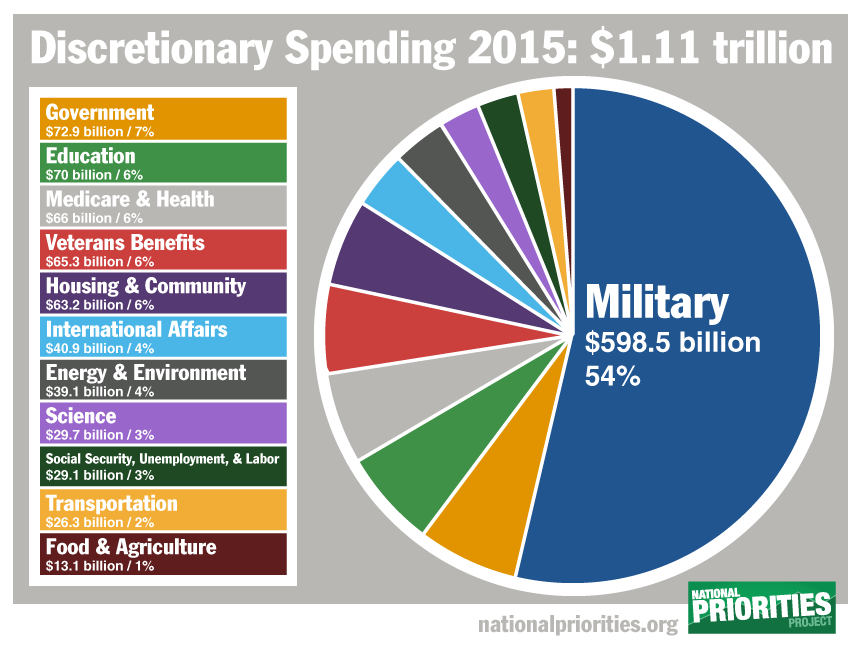
    When these atrocities were committed in August 1945, there were no additional nuclear weapons in the world.  Today there are more than 15,000 nuclear weapons, most far more powerful than those that destroyed Hiroshima and Nagasaki.  And most of the world is complacent in the face of these terrible devices of mass annihilation.  In our world today, nuclear weapons bestow prestige rather than disgrace.  We are like small children playing with fire.  In our hubris, we believe that we can possess these weapons and threaten their use without adverse consequences.  But this isn’t so.  If countries continue to rely upon nuclear weapons for their security, eventually they will be used again – because we humans are fallible creatures and nuclear deterrence is a dangerous and unproven hypothesis.

    Some 180 U.S. nuclear weapons are deployed in Europe, including in Turkey, where there was a recent attempted coup d’état that involved high-ranking military officers from Incirlik Air Force Base, the very base where the U.S. stores its nuclear weapons.  Mass killings occur almost daily.  The world is filled with terrorists and unstable individuals, who desire to do harm to innocent people.  This is bad enough, but the ultimate evil would be to again use nuclear weapons.  So long as they are relied upon for security, so long as they are possessed, there remains a not insignificant chance they will be used again by mistake or malice.  We must abolish these weapons before they abolish us.

    Nuclear weapons must be abolished so that we can get on with the task of building a more decent world.  To achieve that more decent world we must move from apathy to empathy; from conformity to critical thinking; from ignorance to wisdom; and from denial to recognition of the dangers to all humanity posed by nuclear weapons.

    On behalf of the Nuclear Age Peace Foundation and our 75,000 members, I send you our greetings, our good wishes and our appreciation for your reflections on this anniversary day of such significant consequence to all humanity.

    Sincerely,

    David Krieger
    President
    Nuclear Age Peace Foundation