Category: Nuclear Disarmament

  • Why Should Trump – Or Anyone – Be Able to Launch a Nuclear War?

    This article was originally published by History News Network.

    The accession of Donald Trump to the U.S. presidency brings us face-to-face with a question that many have tried to avoid since 1945: Should anyone have the right to plunge the world into a nuclear holocaust?

    Trump, of course, is an unusually angry, vindictive, and mentally unstable American president. Therefore, given the fact that, acting totally on his own, he can launch a nuclear war, we have entered a very perilous time. The U.S. government possesses approximately 6,800 nuclear weapons, many of them on hair-trigger alert. Moreover, the United States is but one of nine nations that, in total, possess nearly 15,000 nuclear weapons. This nuclear weapons cornucopia is more than enough to destroy virtually all life on earth. Furthermore, even a small-scale nuclear war would produce a human catastrophe of unimaginable proportions. Not surprisingly, then, Trump’s loose statements about building and using nuclear weapons have horrified observers.

    In an apparent attempt to rein in America’s new, erratic White House occupant, Senator Edward Markey (D-MA) and Representative Ted Lieu (D-CA) recently introduced federal legislation to require Congress to declare war before a U.S. president could authorize nuclear weapons strikes. The only exception would be in response to a nuclear attack. Peace groups are rallying around this legislation and, in a major editorial, the New York Times endorsed it, noting that it “sends a clear message to Mr. Trump that he should not be the first since World War II to use nuclear weapons.”

    But, even in the unlikely event that the Markey-Lieu legislation is passed by the Republican Congress, it does not address the broader problem: the ability of the officials of nuclear-armed nations to launch a catastrophic nuclear war. How rational are Russia’s Vladimir Putin, or North Korea’s Kim Jong-un, or Israel’s Benjamin Netanyahu, or the leaders of other nuclear powers? And how rational will the rising politicians of nuclear armed nations (including a crop of rightwing, nationalist ideologues, such as France’s Marine Le Pen) prove to be? “Nuclear deterrence,” as national security experts have known for decades, might serve to inhibit the aggressive impulses of top government officials in some cases, but surely not in all of them.

    Ultimately, then, the only long-term solution to the problem of national leaders launching a nuclear war is to get rid of the weapons.

    This was the justification for the nuclear Non-proliferation Treaty (NPT) of 1968, which constituted a bargain between two groups of nations. Under its provisions, non-nuclear countries agreed not to develop nuclear weapons, while nuclear-armed countries agreed to dispose of theirs.

    Although the NPT did discourage proliferation to most non-nuclear countries and did lead the major nuclear powers to destroy a substantial portion of their nuclear arsenals, the allure of nuclear weapons remained, at least for some power-hungry nations. Israel, India, Pakistan, and North Korea developed nuclear arsenals, while the United States, Russia, and other nuclear nations gradually backed away from disarmament. Indeed, all nine nuclear powers are now engaged in a new nuclear arms race, with the U.S. government alone beginning a $1 trillion nuclear “modernization” program. These factors, including Trump’s promises of a major nuclear weapons buildup, recently led the editors of the Bulletin of the Atomic Scientists to move the hands of their famous “Doomsday Clock” forward to 2-1/2 minutes to midnight, the most dangerous setting since 1953.

    Angered by the collapse of progress toward a nuclear weapons-free world, civil society organizations and non-nuclear nations joined together to press for the adoption of an international treaty banning nuclear weapons, much like the treaties already in place that ban chemical weapons, landmines, and cluster bombs. If such a nuclear ban treaty were adopted, they argued, it would not itself eliminate nuclear weapons, for the nuclear powers could refuse to sign or comply with it. But it would make possession of nuclear weapons illegal under international law and, therefore, like the chemical and other weapons ban treaties, put pressure on nations to fall into line with the rest of the world community.

    This campaign came to a head in October 2016, when the member states of the United Nations voted on a proposal to begin negotiations for a treaty to ban nuclear weapons. Although the U.S. government and the governments of other nuclear powers lobbied heavily against the measure, it was adopted by an overwhelming vote: 123 countries in favor, 38 opposed, and 16 abstaining. Treaty negotiations are slated to begin in March 2017 at the United Nations and to be concluded in early July.

    Given the past performance of the nuclear powers and their eagerness to cling to their nuclear weapons, it seems unlikely that they will participate in the UN negotiations or, if a treaty is negotiated and signed, will be among the signatories. Even so, the people of their nations and of all nations would gain immensely from an international ban on nuclear weapons―a measure that, once in place, would begin the process of stripping national officials of their unwarranted authority and ability to launch a catastrophic nuclear war.

  • Seeking Nuclear Disarmament in Dangerous Times

    This article was originally published by In Depth News.

    UN Secretary General Ban Ki-moon has championed efforts for nations to make good on their pledges to abolish nuclear weapons. In 2009 he published a five-point proposal for nuclear disarmament, urging nuclear weapons states in particular to fulfill their promises under the Non-Proliferation Treaty (NPT) to negotiate for the total elimination of nuclear weapons as well as other complementary steps to that end such as banning missiles and space weapons.

    At the end of his term this year, there have been some stunning new developments after years of global gridlock and blocked efforts. At the UN General Assembly First Committee for Disarmament, 123 nations voted this October to support negotiations in 2017 to prohibit and ban nuclear weapons, just as the world has already done for biological and chemical weapons.

    The most remarkable upset in the vote was a breach in what had always been a solid single-minded phalanx of 5 nuclear weapons states recognized in the NPT, signed 46 years ago in 1970 – the US, Russia, UK, France, and China. For the first time, China broke ranks by voting with a group of 16 nations to abstain, along with India and Pakistan, non-NPT nuclear weapons states. And to the great surprise of all, North Korea actually voted YES in support of negotiations going forward to outlaw nuclear weapons.

    The ninth nuclear weapons state, Israel, voted against the resolution with 38 other countries including those in nuclear alliances with the United States such as the NATO states as well as Australia, South Korea, and, most surprisingly, Japan, the only country ever attacked with nuclear bombs. Only the Netherlands broke ranks with NATO’s unified opposition to ban treaty talks, as the sole NATO member to abstain on the vote, after grassroots pressure on its Parliament.

    All nine nuclear-weapon states had boycotted a special UN Open Ended Working Group for Nuclear Disarmament last summer, which followed three conferences in Norway, Mexico, and Austria with civil-society and governments to examine the catastrophic humanitarian consequences of nuclear war, thus opening a new pathway for how we think and speak about the bomb.

    This new “humanitarian initiative” has shifted the conversation from the military’s traditional examination and explanations of deterrence, policy, and strategic security to an understanding of the overwhelming deaths and devastation people would suffer from the use of nuclear weapons.

    Today there are still almost 16,000 nuclear weapons on the planet, with nearly 15,000 of them in the United States and Russia, now in an increasingly hostile relationship, with NATO troops patrolling on Russia’s borders, and the Russian Emergencies Ministry actually launching a sweeping nationwide civil-defense drill involving 40 million people. The US, under President Obama, has proposed a $1 trillion program for new nuclear-bomb factories, warheads, and delivery systems, and Russia and other nuclear-weapon states are engaged in modernizing their nuclear arsenals as well.

    Perhaps one additional way to break the log jam for nuclear disarmament and find a silver lining in the crumbling neo-liberal agenda for globalization evidenced by the Brexit event and the shocking and unanticipated election of Donald Trump in the US, is to encourage Trump’s repeated statements that the US should make “a deal” with Putin and join with Russia to fight terrorists.

    Trump has criticized the NATO alliance, the expansion of which has been very provocative to Russia and was the reason Russia gave, together with the US walking out of the Anti-Ballistic Missile Treaty and installing a new missile base in Romania, for putting a halt to further US-Russian agreements for nuclear disarmament.

    Trump, who promotes himself as a “deal maker” has also suggested that he would have no difficulty in sitting down and talking with North Korea. These efforts should be encouraged, as North Korea has actually shown it is willing to enter into negotiations to ban the bomb, which is more than the other eight nuclear weapons states have been willing to support.

    Furthermore, North Korea has been seeking an official end to the Korean War of 1953, during which time the US continues to station about 28,000 troops on its borders while trying to starve North Korea out with drastic sanctions all these many years.

    Perhaps Secretary General Ban Ki-moon can leave his office with an important victory at the end of his term by seizing this opportunity and encouraging the “deal maker” in Trump to move forward with a US-Russia rapprochement, clearing a pathway for the elimination of nuclear weapons as well as putting an end to the hostilities on the Korean peninsula.

  • Recordando al Almirante Gene La Rocque

    Por David Krieger
    Traducción de Rubén Arvizu

    Hace poco me enteré de que el almirante Gene La Rocque falleció el 31 de octubre de 2016 a la edad de 98 años. Fue sepultado en el cementerio de Arlington.  Gene tenía una larga carrera en el ejército, ascendiendo al rango de almirante. En 1971, después de su retiro del ejército, fue uno de los principales fundadores del Centro de Información de Defensa (CDI), una organización educativa sin fines de lucro y no partidista que se ocupaba del análisis de asuntos militares y particularmente abusos en gastos de defensa. El CDI fue dirigido por oficiales militares retirados, incluyendo a Gene, quien fue su primer director. La organización apoyó una defensa fuerte, pero se opuso a los gastos excesivos para las armas y también las políticas que aumentaban la probabilidad de una guerra nuclear.

    El almirante Gene La Rocque (I) y el presidente de la NAPF, David Krieger (D), en 1985 en la Noche de Paz de la Nuclear Age Peace Foundation.

    En 1985, la Nuclear Age Peace Foundation otorgó a Gene el Premio al Hombre de Estado Distinguido por su “valiente liderazgo en la causa de la paz” (El nombre del premio fue luego cambiado a Premio Líder Distinguido de la Paz).  Ahí habló sobre “El papel de los militares en la era nuclear”. En su discurso al recibir el premio de la Fundación, Gene compartió algunas ideas importantes. Dijo, por ejemplo, que, basándose en su larga experiencia militar, creía que “la guerra es una manera muy tonta de resolver las diferencias entre las naciones. Y la guerra nuclear es totalmente insana. Gene siempre decía las cosas con claridad.

    También comentó esto sobre la guerra nuclear: “Si vamos a tener una guerra nuclear, no podemos ganarla. ¿Podemos sobrevivir? No lo sé. Nadie lo sabe. Esa es la tragedia – nadie lo sabe. Cualquiera que diga que esta cantidad de gente va a morir y que muchos de ellos van a sobrevivir no sabe de qué está hablando “.

    Refiriéndose a una guerra entre Estados Unidos y la Unión Soviética, dijo: “Nos estamos acercando a una guerra que no queremos, a una guerra que no podemos controlar, a una guerra en la que no podemos defendernos, a una guerra  que no podemos ganar, y una guerra que probablemente no podamos sobrevivir.

    Sustituyamos “Rusia” por “Unión Soviética “, y estas palabras son tan verdaderas hoy como lo eran en 1985.

    Gene La Rocque era un hombre sabio y humilde, que estaba de pie al lado de la justicia y la paz. Sirvió durante muchos años como miembro del Consejo Asesor de la NAPF,  y siempre podíamos contar con él con sus sabios consejos y su decencia absoluta.  Nunca se sintió importante y tenía un gran sentido del humor. Vivió una larga y muy buena vida, e hizo todo lo posible para dejar al mundo como un lugar mejor.

    Les pido a todos que sigamos el consejo de Gene de “hacer algo todos los días si quieren evitar una guerra nuclear”. Ningún consejo de un líder militar podría ser más importante o más útil para el destino de la humanidad.


    David Krieger es Presidente de  la Nuclear Age Peace Foundation (www.wagingperace.org)  Es autor y editor de

    muchas obras sobre la paz y la abolición de las armas nucleares, incluyendo “Hablando de Paz: Citas para inspirar

    acción.”

    Rubén D. Arvizu es Director para América Latina de NAPF,  Director General de Comunicaciones Internacionales de WorldArcticFund y

    Director General para América Latina de Ocean Futures Society.

  • Remembering Admiral Gene La Rocque

    I recently learned that Admiral Gene La Rocque died on October 31, 2016 at the age of 98.  He is buried at Arlington Cemetery.  Gene had a long career in the military, rising to the rank of rear admiral. In 1971, after his retirement from the military, he was one of the principal founders of the Center for Defense Information (CDI), a non-profit, non-partisan educational organization concerned with analysis of military matters and particularly abuses in defense expenditures.  CDI was led by retired military officers, including Gene, who was its first director.  The organization supported a strong defense, but opposed excessive expenditures for weapons and also policies that increased the likelihood of nuclear war.

    Admiral Gene La Rocque (L) and NAPF President David Krieger (R) at the Nuclear Age Peace Foundation's 1985 Evening for Peace.
    Admiral Gene La Rocque (L) and NAPF President David Krieger (R) at the Nuclear Age Peace Foundation’s 1985 Evening for Peace.

    In 1985, the Nuclear Age Peace Foundation gave its Distinguished Statesman Award to Gene for “courageous leadership in the cause of peace.”  (The name of the award was later changed to Distinguished Peace Leadership Award.)  Gene came to Santa Barbara to receive the award and spoke on “The Role of the Military in the Nuclear Age.”  In his speech upon receiving the Foundation’s award, Gene shared some important insights.  He said, for example, that, based upon his long military experience, he believed “that war is a very dumb way to settle differences between nations.  And nuclear war is utterly insane.”  Gene was always a straight talker.

    He also had this to say about nuclear war: “If we are to have a nuclear war, we can’t win it.  Can we survive it?  I don’t know.  Nobody knows.  That’s the tragedy of it – nobody knows.  Anybody that tells you that this many people are going to be killed and this many are going to survive doesn’t know what he’s talking about.”

    Referring to a war between the U.S. and Soviet Union, he said, “We’re getting closer to a war we don’t want, a war we can’t control, a war in which we can’t defend ourselves, a war we can’t win, and a war we probably can’t survive.”  Substitute “Russia” for “Soviet Union,” and these words are as true today as they were in 1985.

    Gene La Rocque was a wise and humble man, who stood squarely on the side of justice and peace.  He served for many years as a member of the Nuclear Age Peace Foundation’s Advisory Council, when we could always count on him for his good advice and his abiding decency.  He was self-deprecating and had a great sense of humor.  He lived a long life and a good life, and he did his utmost to leave the world a better place.

    I urge you to follow Gene’s advice “to do something every day if you want to avert a nuclear war.”  No advice from a military leader could be more important or more useful to the fate of humanity.

    To read Admiral La Rocque’s 1985 speech on “The Role of the Military in the Nuclear Age,” click here.

  • The United Nations Votes to Start Negotiations to Ban the Bomb

    This article was originally published by The Nation.

    In a historic vote on October 27 at the United Nations Committee for Disarmament, what has long seemed to be hopelessly clogged institutional machinery for abolishing nuclear weapons was upended when 123 nations voted to move forward with negotiations in 2017 to prohibit and ban nuclear weapons just as the world has already done for biological and chemical weapons. Civil-society participants broke out into cheers and shouts of jubilation in the normally staid halls of the UN basement conference room, accompanied by beaming smiles and muffled applause from some of the leading government representatives in the room, which included Austria, Brazil, Ireland, Mexico and Nigeria, along with South Africa, who had drafted and introduced the resolution, then sponsored by 57 nations.

    The most stunning realization after the vote was posted was the apparent breach in what had always been a solid, single-minded phalanx of nuclear-weapon states recognized in the Non-Proliferation Treaty (NPT), signed 46 years ago in 1970—the United States, Russia, the United Kingdom, France, and China. For the first time, China broke ranks by voting with a group of 16 nations to abstain, along with India and Pakistan, non-NPT nuclear-weapon states. North Korea actually voted yes in support of negotiations’ going forward to outlaw nuclear weapons. The ninth nuclear-weapon state, Israel, voted against the resolution with other 38 countries, including those in nuclear alliances with the United States such as the NATO states as well as Australia, South Korea, and, most surprisingly, Japan, the only country ever attacked with nuclear bombs. Only the Netherlands broke ranks with NATO’s unified opposition to ban treaty talks, as the sole NATO member to abstain on the vote, after grassroots pressure on its Parliament.

    All nine nuclear-weapon states had boycotted a special Open Ended Working Group for Nuclear Disarmament last summer, which was established at the 2015 UN General Assembly following three conferences in Norway, Mexico, and Austria with civil-society and government representatives to examine the catastrophic humanitarian consequences of nuclear war, opening a new pathway for how we think and speak about the bomb. The recently launched humanitarian initiative has shifted the conversation from the military’s traditional examination and explanations of deterrence, policy, and strategic security to an understanding of the overwhelming deaths and devastation people would suffer from the use of nuclear weapons.

    Today there are still 16,000 nuclear weapons on the planet, 15,000 of which are in the United States and Russia, now in an increasingly hostile relationship, with NATO troops patrolling on Russia’s borders, and the Russian Emergencies Ministry actually launching a sweeping nationwide civil-defense drill involving 40 million people. In the United States, President Obama has announced a $1 trillion program for new nuclear-bomb factories, warheads, and delivery systems, and Russia and other nuclear-weapon states are also engaged in modernizing their nuclear arsenals as well. Yet the issue has largely disappeared from public debate in a world lulled by the fall of the Berlin Wall and the dissolution of the Soviet Union.

    Back in the 1980s, during the Cold War, when there were some 80,000 nuclear bombs on our planet, most of which were stockpiled in the United States and Russia, the International Physicians for the Prevention of Nuclear War (IPPNW) held a series of widely promoted scientific, evidenced-based symposiums on the disastrous effects of nuclear war and were awarded the Nobel Peace Prize in 1985 for their efforts. The Nobel Committee noted that IPPNW “performed a considerable service to mankind by spreading authoritative information and by creating an awareness of the catastrophic consequences of atomic warfare.” It further observed:

    The committee believes that this in turn contributes to an increase in the pressure of public opposition to the proliferation of atomic weapons and to a redefining of priorities, with greater attention being paid to health and other humanitarian issues. Such an awakening of public opinion as is now apparent both in the East and the West, in the North and in the South, can give the present arms limitation negotiations new perspectives and a new seriousness. In this connection, the committee attaches particular importance to the fact that the organization was formed as a result of a joint initiative by Soviet and American physicians and that it now draws support from the physicians in over 40 countries all over the world.

    On October 15, at Tufts University in Boston, just two weeks before the historic UN vote to begin negotiations in 2017 to outlaw nuclear weapons, the US affiliate of IPPNW, Physicians for Social Responsibility (PSR), with the sponsorship of all the city’s medical schools as well as nursing schools and state and local public-health institutions, revived PSR’s distinguished heritage at a symposium modeled after the earlier ones that had put nuclear disarmament front and center in the public consciousness and led to the largest demonstration in history when over 1 million people showed up in Central Park in 1982 in NY and called for a nuclear freeze. In this new millennium, the symposium was organized to address the links and similarities between nuclear war and catastrophic climate change.

    Dr. Susan Solomon, of MIT, delivered a brutal overview of projected environmental catastrophes from the effects of growing carbon emissions—air pollution, rising sea levels, more frequent and severe droughts, the destruction of the very fertility of our soil…—noting that in 2003 more than 10,000 people died in Europe from a protracted and unprecedented heat wave. She demonstrated the inequality between haves and have-nots with evidence that 6 billion people in the developing world produce four times less CO2 than the 1 billion people in the developed world, who, with fewer resources, will unjustly be unable to protect themselves from the ravages of climate change—more floods, wildfires, soil erosion, and unbearable heat.

    Dr. Barry Levy, at Tufts University, demonstrated the devastation that would be wreaked on our food and water supplies, with rising cases of infectious diseases, mass migrations, violence, and war. Dr. Jennifer Leaning, at Harvard University, explained how the war and violence in Syria was initially caused by a drought in 2006 leading to massive crop failures that precipitated mass migrations of over 1 million northern Sunni Syrian farmers to urban centers populated by Alawite and Shia Muslims, creating unrest and the initial impetus for the devastating war now raging there.

    Bill McKibben, founder of 350.org which encircled the White House to protest global warming and organized marches with millions of people around the world to halt climate change, reflected, via Skype, that with the coming of the bomb, humanity’s relationship to the earth changed from the vision of the Old Testament’s book of Job— how weak and puny man was in relation to God. For the first time, humanity has achieved overwhelming power to destroy the Earth. Nuclear war and climate change are our two greatest existential threats, since both of these man-made catastrophes, for the first time in history, could destroy the human species.

    Dr. Zia Mian, at Princeton University, outlined the frightening prospects of nuclear war between India and Pakistan, which is more likely now that climate change is already affecting their access to clean water. The 1960 Indus Water Treaty regulated the three rivers flowing out of Kashmir between the two countries. India and Pakistan have had a series of wars and skirmishes since 1947, and after a recent attack on India by Pakistani terrorists, the Indian government warned that “blood and water cannot flow together,” threatening to block Pakistan’s access to the rivers.

    Dr. Ira Helfand, xhair of PSR’s Security Committee, presented a gut-wrenching cascade of facts demonstrating that even the use of only 100 nuclear weapons would cause a steep drop in temperature, causing crops to fail and producing global famine and the death of possibly 2 billion people. Helfand has presented these shocking facts to governments examining the humanitarian consequences of nuclear war in the series of international conferences that led to this week’s UN vote to hold negotiations to ban the bomb.

    PSR’s executive director, Dr. Catherine Thomassen, presented information on the medical responsibility to act. She noted a poll that showed that from a list of professions the American public selected nurses, pharmacists, and doctors as those they respected the most. She urged the participants that this was all the more reason for them to take action.

    John Loretz of IPPNW, whose Australian affiliate initiated the campaign to outlaw the bomb in 2007, www.icanw.org, reviewed the stalled “progress” in nuclear disarmament over the years leading up to this week’s historic vote. Adopting a resolution to ban nuclear weapons, just as we have banned chemical and biological weapons as well as landmines and cluster bombs, may be the most significant development since the end of the Cold War. It will stigmatize the bomb in a new way and put grassroots pressure from their parliaments on other states in the US nuclear alliance who are being heavily lobbied by the United States to resist this initiative—NATO members as well as Japan, South Korea, and Australia—to come out in support of the ban, as just occurred this month with Sweden, which was persuaded to vote in favor of starting the ban talks, or to abstain from voting against the ban, as the Netherlands did, even though it is part of the NATO alliance that relies on nuclear weapons in its security policy.

    One way citizens in the nuclear-weapon states can support the ban is to check out a new divestment campaign from institutions that rely on nuclear weapons manufacturers, Don’t Bank on the Bomb. For those in the United States, Loretz urged that we start a debate on our military budget and the obscene trillion-dollar projection for nuclear weapons over the next 30 years. It is still clear that if the ICAN campaign actually fulfills its goal for the successful abolition of nuclear weapons, we need a change in the current US-Russian relationship which has deteriorated so badly in Obama’s second term. One reason the Nobel Prize was awarded to the IPPNW physicians in 1985, as set forth in the citation, was “the fact that the organization was formed as a result of a joint initiative by Soviet and American physicians and that it now draws support from the physicians in over 40 countries all over the world.” While IPPNW still has an affiliate in Russia, the Russians physicians have been inactive on this issue. Just as the US affiliate, PSR, has only recently refocused on nuclear issues through the ban campaign and the new humanitarian initiative, efforts will be made to renew relationships with Russian physicians, and to also develop possibilities for meetings with physicians in the Asian nuclear-weapon states that took the world by surprise when four of them broke with the big-power nuclear consensus, to block negotiations on a nuclear -weapons ban, by either voting to abstain on the resolution or by actually voting in favor of moving forward with the talks.

  • Let’s Reduce the U.S. Nuclear Arsenal

    At present, nuclear disarmament seems to have ground to a halt.  Nine nations have a total of approximately 15,500 nuclear warheads in their arsenals, including 7,300 possessed by Russia and 7,100 possessed by the United States.  A Russian-American treaty to further reduce their nuclear forces has been difficult to secure thanks to Russian disinterest and Republican resistance.

    Yet nuclear disarmament remains vital, for, as long as nuclear weapons exist, it is likely that they will be used.  Wars have been fought for thousands of years, with the most powerful weaponry often brought into play.  Nuclear weapons were used with little hesitation by the U.S. government in 1945 and, although they have not been employed in war since then, how long can we expect to go on without their being pressed into service again by hostile governments?

    Furthermore, even if governments avoid using them for war, there remains the danger of their explosion by terrorist fanatics or simply by accident.  More than a thousand accidents involving U.S. nuclear weapons occurred between 1950 and 1968 alone.  Many were trivial, but others could have been disastrous.  Although none of the accidentally launched nuclear bombs, missiles, and warheads―some of which have never been found―exploded, we might not be as lucky in the future.

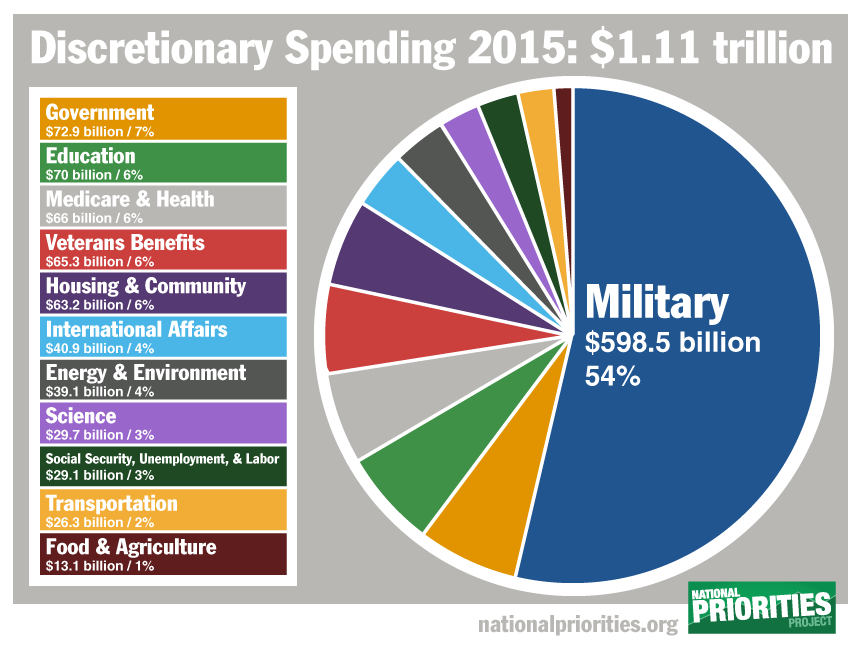
    Also, nuclear weapons programs are enormously costly.  Currently, the U.S. government plans to spend $1 trillion over the next 30 years to refurbish the entire U.S. nuclear weapons complex.  Is this really affordable?  Given the fact that military spending already chews up 54 percent of the federal government’s discretionary spending, an additional $1 trillion for nuclear weapons “modernization” seems likely to come out of whatever now remains of funding for public education, public health, and other domestic programs.

    In addition, the proliferation of nuclear weapons to additional countries remains a constant danger.  The nuclear Non-Proliferation Treaty (NPT) of 1968 was a compact between the non-nuclear nations and nuclear-armed nations, with the former forgoing nuclear weapons development while the latter eliminated their nuclear arsenals.  But the nuclear powers’ retention of nuclear weapons is eroding the willingness of other nations to abide by the treaty.

    Conversely, further nuclear disarmament would result in some very real benefits to the United States.  A significant reduction in the 2,000 U.S. nuclear weapons deployed around the world would reduce nuclear dangers and save the U.S. government enormous amounts of money that could fund domestic programs or simply be returned to happy taxpayers.  Also, with this show of respect for the bargain made under the NPT, non-nuclear nations would be less inclined to embark on nuclear weapons programs.

    Unilateral U.S. nuclear reductions would also generate pressures to follow the U.S. lead.  If the U.S. government announced cutbacks in its nuclear arsenal, while challenging the Kremlin to do the same, that would embarrass the Russian government before world public opinion, the governments of other nations, and its own public.  Eventually, with much to gain and little to lose by engaging in nuclear reductions, the Kremlin might begin making them as well.

    Opponents of nuclear reductions argue that nuclear weapons must be retained, for they serve as a “deterrent.”  But does nuclear deterrence really work?  Ronald Reagan, one of America’s most military-minded presidents, repeatedly brushed off airy claims that U.S. nuclear weapons had deterred Soviet aggression, retorting:  “Maybe other things had.”  Also, non-nuclear powers have fought numerous wars with the nuclear powers (including the United States and the Soviet Union) since 1945.  Why weren’t they deterred?

    Of course, much deterrence thinking focuses on the safety from nuclear attack that nuclear weapons allegedly provide.  But, in fact, U.S. government officials, despite their vast nuclear armada, don’t seem to feel very secure.  How else can we explain their huge financial investment in a missile defense system?  Also, why have they been so worried about the Iranian government obtaining nuclear weapons?  After all, the U.S. government’s possession of thousands of nuclear weapons should convince them that they needn’t worry about the acquisition of nuclear arms by Iran or any other nation.

    Furthermore, even if nuclear deterrence does work, why does Washington require 2,000 deployed nuclear weapons to ensure its efficacy?  A 2002 study concluded that, if only 300 U.S. nuclear weapons were used to attack Russian targets, 90 million Russians (out of a population of 144 million) would die in the first half hour.  Moreover, in the ensuing months, the enormous devastation produced by the attack would result in the deaths of the vast majority of survivors by wounds, disease, exposure, and starvation.  Surely no Russian or other government would find this an acceptable outcome.

    This overkill capacity probably explains why the U.S. Joint Chiefs of Staff think that 1,000 deployed nuclear weapons are sufficient to safeguard U.S. national security.  It might also explain why none of the other seven nuclear powers (Britain, France, China, Israel, India, Pakistan, and North Korea) bothers to maintain more than 300 nuclear weapons.

    Although unilateral action to reduce nuclear dangers might sound frightening, it has been taken numerous times with no adverse consequences.  The Soviet government unilaterally halted nuclear weapons testing in 1958 and, again, in 1985.  Starting in 1989, it also began removing its tactical nuclear missiles from Eastern Europe.  Similarly, the U.S. government, during the administration of U.S. president George H.W. Bush, acted unilaterally to remove all U.S. short-range, ground-launched nuclear weapons from Europe and Asia, as well as all short-range nuclear arms from U.S. Navy vessels around the world―an overall cut of several thousand nuclear warheads.

    Obviously, negotiating an international treaty that banned and destroyed all nuclear weapons would be the best way to abolish nuclear dangers.  But that need not preclude other useful action from being taken along the way.

  • Overcoming Geopolitical Obstacles to Nuclear Zero by Richard Falk

    This is the transcript of a talk given by Richard Falk at the Nuclear Age Peace Foundation’s symposium “The Fierce Urgency of Nuclear Zero: Changing the Discourse” on October 24, 2016. The audio of this talk is available here. For more information about the symposium, click here.

    falk

    Let me say what others have said, that it’s a great privilege to be part of this symposium and this group. And I want to start by reinforcing a couple of things that Rich put before us. I think it’s not only a geopolitical moment generated by a resurgent nationalism, but it’s also a kind of perverse political moment, in which autocrats are being elected to lead most of the critical governments in the world. And we’re living in an age of what I’ve sometimes called the ‘popular autocrat’. Not only are they elected to actually diminish democracy, but they remain popular after they do that. The most extreme example is in the Philippines, where a really quite openly fascist leader, who takes pride in executing people without any foundation is wildly popular in the country. But it’s true in India, in Japan, in China, as in Russia, Turkey, Eastern Europe, and more and more countries, and we have the Trump phenomenon and Brexit, they’re all out in that domain, which is also characterized by elites being out of touch with the feelings of the people of their own societies.

    The Trump phenomenon is an illustration, but it happens in many other places in the world in a similar way, where the people that think, well, who are the political class, to use that terminology, really don’t understand what is animating their own citizenry. And that contributes, I think, to this toxic interaction between an anti-democratic mood that is re-embracing the Westphalian idea of territorial sovereign states. And of course, that mood of nationalism for a geopolitical actor like the United States is closely tied to militarism. And militarism, of course, is closely tied to nuclearism. And so, we’re in a context, which seems to be extremely averse to the goals of this foundation and of this symposium. And I think, the dialectical challenge to that interpretation was, I think, highlighted by the presentations we had just before lunch, which suggest that if we don’t effectively challenge the nuclear complacency, we’re on a course of species suicide.

    In other words that… And what makes this so daunting is, as I think, Steven made very vividly clear, is that we do have the scientific basis for a rational adjustment to these threats. We have an elite and a politically dominant climate that resists that kind of message, because it challenges the prevailing paradigm for how security is to be achieved, and why we need to rethink what we mean by strategic stability. I was stimulated in that direction by Hans’ presentation this morning to feel that, if we really take these threats seriously, strategic stability means something very, very different than what it means in the Beltway, and in other governing circles around the world.

    So, on the one level, you have the challenge of the unacknowledged apocalyptic consequences of an outbreak of nuclear war. And that is coupled with the realization that there are several geopolitical contexts of encounter that could easily escalate into a hot war, and in a hot war, easily cross the nuclear threshold. And it’s significant in this, in a sort of symbolic sense, that President Obama was pressed, you probably recall, recently to endorse a no-first-use pledge. And he rejected that, which I think was an opportunity on his part to re-establish the nuclear taboo, which I think is being undermined by these geopolitical developments. And the fact that he was under the kind of governmental and military industrial complex pressures that didn’t allow him to do that, or led him to believe that he shouldn’t do that, is indicative, it seems to me, of the adverse climate that exists within the US government and is shared to a significant degree by what we know about the other nuclear governmental elites.

    An additional problem that I have, and it may be provocative for some of us here, is I have for quite a long time felt that there’s a tension between the sort of world view and stability that the arms control community seeks to achieve, and the transformative vision that those that endorse nuclear abolition or nuclear zero seek to achieve. They’re not compatible, and yet they’re treated as if they’re compatible. And the reason they’re not compatible is that the more success one has within the arms control paradigm, the less necessity there seems to be to take the risks of altering that paradigm. So if you can stabilize… And I think the existing leaderships in the most countries have adopted this managerial consensus, it’s given an academic gloss by scholars like Joseph Nye and Graham Allison, that this is the best you can do. And the best you can do is a combination of pursuing stabilizing measures, plus a geopolitical enforcement of the non-proliferation regime.

    That’s a very important element in this managerial worldview. And it’s not enforcing the Treaty, because the Treaty, of course, as we all know, has a disarmament provision. But in the geopolitical understanding of non-proliferation, that Article X is excluded, it’s basically seen as irrelevant. And so, what this geopolitical regime involves is first of all the prevention of any political actors who are seen as hostile to the broad international status quo from acquiring nuclear weapons.

    Israel is the most famous exemption, and someone referred earlier to India and Pakistan also. They were for various reasons not seen as hostile. Iran, on the other hand, the West is ready to go to war to prevent acquisition of nuclear weapons, even though, as Noam mentioned, I think last night, they don’t pose any kind of threat beyond trying to establish deterrents for themselves. That’s really if they were to acquire nuclear weapons, that would be their role in that. So that the managerials’ status quo involves the geopolitical enforcement of the NPT, possession and continuous development, modernization of the arsenals at a level where they are not too expensive and they don’t have too great risks of accidents or unwanted access, and also a realization that having nuclear weapons gives you a certain status, psycho-political status within the world system.

    And it’s not coincidental, I suppose, that the five permanent members of the UN Security Council were the first five countries to acquire nuclear weapons. So there’s a kind of correlation in the political consciousness between international status and having this kind of weaponry of mass destruction. So it comes back to this question of; what can one do given this understanding of the existing situation, which on its face seems discouraging, to awaken enough of the public to create political traction to challenge nuclear complacency. How do you gain that political traction? And I think two critical audiences are youth, and somehow trying to penetrate the media. And the media, broadly conceived, is including film, and tv and radio. But somehow, which is difficult to do, because the media in particular has become corporatized and in its own way deferential to the managerial consensus. So it would be, it’s not an easy thing to do.

    The final point that I would try to make is that the US has a double or triple distinctive relationship to these, to this challenge. First of all, as Obama pointed out at Prague, it’s the only country ever to have used these weapons, and it has sustained a position of technological dominance in relation to the weaponry ever since 1945.

    Secondly, it is the main architect of a global militarized global security system that includes foreign military bases, navies in every ocean, the militarization of space and the oceans. So the US, we’re not living in a unipolar world, but there is a kind of control over the global security structure that no other country is in a position to challenge except… And even then in a very precarious way the regional dominance, in other words, China wants to have a kind of parity within its region. And that’s seen as provocative from the perspective of this global security system.

    And the same thing Russia’s… Part of the reason Russia is perceived now as being provocative is, it wants to play a role similar to what it did during the Cold War in the Middle East. And that’s, again, a threat to this globalization of the American domination project and the American-led security system. So then in that sense it seems to me one needs to revitalize the language of the preamble of the UN Charter as if we meant it. This time as if we meant to save succeeding generations from the scourge of war, and that relates to this idea that you can isolate nuclear weaponry from this larger context of a militarized security structure.

    And therefore, what Jackie was saying this morning about the need to take into our understanding the linkages to conventional weaponry, and the vulnerability that many countries will feel toward American conventional superiority is something that is, I think, part of what any kind of awakening process involves. But underneath all of this is what do we do to awaken first of all the American public sufficiently to gain political traction to challenge nuclear complacency.

  • Isn’t It Time to Ban the Bomb?

    This article was originally published by History News Network.

    Although the mass media failed to report it, a landmark event occurred recently in connection with resolving the long-discussed problem of what to do about nuclear weapons.  On August 19, 2016, a UN committee, the innocuously-named Open-Ended Working Group, voted to recommend to the UN General Assembly that it mandate the opening of negotiations in 2017 on a treaty to ban them.

    For most people, this recommendation makes a lot of sense.  Nuclear weapons are the most destructive devices ever created.  If they are used―as two of them were used in 1945 to annihilate the populations of Hiroshima and Nagasaki―the more than 15,000 nuclear weapons currently in existence would destroy the world.  Given their enormous blast, fire, and radioactivity, their explosion would bring an end to virtually all life on earth.  The few human survivors would be left to wander, slowly and painfully, in a charred, radioactive wasteland.  Even the explosion of a small number of nuclear weapons through war, terrorism, or accident would constitute a catastrophe of unprecedented magnitude.

    Every President of the United States since 1945, from Harry Truman to Barack Obama, has warned the world of the horrors of nuclear war.  Even Ronald Reagan―perhaps the most military-minded among them―declared again and again:  “A nuclear war cannot be won and must never be fought.”

    Fortunately, there is no technical problem in disposing of nuclear weapons.  Through negotiated treaties and unilateral action, nuclear disarmament, with verification, has already taken place quite successfully, eliminating roughly 55,000 nuclear weapons of the 70,000 in existence at the height of the Cold War.

    Also, the world’s other agents of mass destruction, biological and chemical weapons, have already been banned by international agreements.

    Naturally, then, most people think that creating a nuclear weapons-free world is a good idea.  A 2008 poll in 21 nations around the globe found that 76 percent of respondents favored an international agreement for the elimination of all nuclear weapons and only 16 percent opposed it.  This included 77 percent of the respondents in the United States.

    But government officials from the nine nuclear-armed nations are inclined to view nuclear weapons―or at least their nuclear weapons―quite differently.  For centuries, competing nations have leaned heavily upon military might to secure what they consider their “national interests.”  Not surprisingly, then, national leaders have gravitated toward developing powerful military forces, armed with the most powerful weaponry.  The fact that, with the advent of nuclear weapons, this traditional behavior has become counter-productive has only begun to penetrate their consciousness, usually helped along on such occasions by massive public pressure.

    Consequently, officials of the superpowers and assorted wannabes, while paying lip service to nuclear disarmament, continue to regard it as a risky project.  They are much more comfortable with maintaining nuclear arsenals and preparing for nuclear war.  Thus, by signing the nuclear Non-proliferation Treaty of 1968, officials from the nuclear powers pledged to “pursue negotiations in good faith on . . . a treaty on general and complete disarmament under strict and effective international control.”  And today, nearly a half-century later, they have yet to begin negotiations on such a treaty.  Instead, they are currently launching yet another round in the nuclear arms race.  The U.S. government alone is planning to spend $1 trillion over the next 30 years to refurbish its entire nuclear weapons production complex, as well as to build new air-, sea-, and ground-launched nuclear weapons.

    Of course, this enormous expenditure―plus the ongoing danger of nuclear disaster―could provide statesmen with a powerful incentive to end 71 years of playing with their doomsday weapons and, instead, get down to the business of finally ending the grim prospect of nuclear annihilation.  In short, they could follow the lead of the UN committee and actually negotiate a ban on nuclear weapons as the first step toward abolishing them.

    But, to judge from what happened in the UN Open-Ended Working Group, a negotiated nuclear weapons ban is not likely to occur.  Uneasy about what might emerge from the committee’s deliberations, the nuclear powers pointedly boycotted them.  Moreover, the final vote in that committee on pursuing negotiations for a ban was 68 in favor and 22 opposed, with 13 abstentions.  The strong majority in favor of negotiations was comprised of African, Latin American, Caribbean, Southeast Asian, and Pacific nations, with several European nations joining them.  The minority came primarily from nations under the nuclear umbrellas of the superpowers.  Consequently, the same split seems likely to occur in the UN General Assembly, where the nuclear powers will do everything possible to head off UN action.

    Overall, then, there is a growing division between the nuclear powers and their dependent allies, on the one hand, and a larger group of nations, fed up with the repeated evasions of the nuclear powers in dealing with the nuclear disaster that threatens to engulf the world.  In this contest, the nuclear powers have the advantage, for, when all is said and done, they have the option of clinging to their nuclear weapons, even if that means ignoring a treaty adopted by a clear majority of nations around the world.  Only an unusually firm stand by the non-nuclear nations, coupled with an uprising by an aroused public, seems likely to awaken the officials of the nuclear powers from their long sleepwalk toward catastrophe.

  • Book Review: Almighty

    “Nukes, in other words, would be America’s third-highest national priority, ever. Along the way, the weapons would evolve from a strategy into a policy into a faith.” –Dan Zak, Almighty, p. 23


    almightyAlmighty, by Dan Zak, is a compelling new book that exposes the intimate truths behind the 2012 Y-12 break-in through the lens of the peace-activist perpetrators.  Fluidly weaving between the past and the present, this intriguing true-story resembles more of a thriller novel than that of a mundane biography. As the unique background of all three activists, Sister Megan Rice, Michael Walli, and Greg Boertje-obed, unfolds the egregious history of nuclear weapons elucidates the United States’ futile attempt at non-proliferation.

    A house painter, a Vietnam War veteran, and an 82 year old Catholic sister, broke into the “Fort Knox of Uranium” (Y-12) in an act of civil disobedience for the sake of mankind. Considered to be one of the most secure facilities in the world, Y-12 was easily penetrated with wire cutters and a courageous death wish. The three peace activists hoped to stop the production of nuclear weapons or, simply, bring awareness to their cause. However, inadvertently, the success of their mission spawned significant national security concerns and shed light on the inherent fault in nuclear facilities: human error.

    The novel is broken down into three sections: action, reaction, and relativity/uncertainty. In Part I, Action, Zak describes the history and intricacies of the Manhattan Project as well as provides an in-depth description of the Y-12 break-in. Created by the intellectual elite of Columbia University, the Manhattan Project outlined a clear and destructive path to combat the fear and rise of the Third Reich. The atom became a destructive force displayed in the acts of Hiroshima and Nagasaki. However, “ All the while, a counterforce pushed back. Men and women of science, and of faith, believed that humanity was too fragile to tangle with the almighty. The mere possession of nuclear weapons, to them, was a wish for death” (p. 24). In the time of scientific innovation, Manhattan became the soil in which Megan Rice sprouted her anti-nuclear activism.

    One of the most intriguing sections in Almighty is Part II, Reaction. In this section, an entire chapter is dedicated to the background and history of Oak Ridge.  Oak Ridge, an eerie Cold-War era community dedicated to the production of Uranium at Y-12, prides itself on ‘protecting America’s future’.  City festivals and moments of silence commemorate the city’s important role in producing nuclear weapons as well as act as a tool of societal enforcement with regards to the acceptance of nuclear weapons. Historically, Y-12 was a community secret and often employees were unknowingly contributing to the production of uranium. One Oak Ridge citizen recalls, “Her grandmother, who worked at Y-12, was told she was helping to make ice cream” (p.185).

    Almighty continues into the aftermath of the Y-12 break-in where the three peace activists were tried for criminal trespassing and destruction of federal property. The court trials touch on the American nuclear weapons paradox regarding morality and the façade of national security. As the judge deliberates between motive, morality, and actions, the reader is taken through the labyrinth that is the jaded American nuclear debate.  To illustrate the complexities of the American nuclear relationship, Zak references the youthful Barack Obama in 1983 at Columbia University. In Obama’s student newspaper article Breaking the War Mentality, “His last sentence envisioned a peace ‘that is genuine, lasting, and non-nuclear (p.148).” Yet, the Obama administration has provided little support towards this approach. Clearly the discourse regarding both the struggle to justify nuclear weapons or encourage non-proliferation is inadequate. The activists answered this challenge with radical action.

    Almighty covers substantial nuclear weapon modern history, and the morality behind these destructive human designs. Topics further discussed include the court proceedings, life and background of the activists, Hiroshima and Nagasaki, the Marshall Islands, and the Iran-Nuclear Deal.

    Armed with a few hammers and a heavy conscience, these religiously motivated peace-activists hung banners, graffitied biblical verses, and streaked human blood across the exterior of Y-12.  Their motivations and respective moral compasses are eloquently revealed in the pages of such chaos. Binding American power, the case for nuclear weapons transforms into 2016 relevance through Almighty.

  • Ten Myths About Nuclear Weapons

    Nuclear weapons were needed to defeat Japan in World War II.

    It is widely believed, particularly in the United States, that the use of nuclear weapons against the Japanese cities of Hiroshima and Nagasaki was necessary to defeat Japan in World War II.  This is not, however, the opinion of the leading US military figures in the war, including General Dwight Eisenhower, General Omar Bradley, General Hap Arnold and Admiral William Leahy.  General Eisenhower, for example, who was the Supreme Allied Commander Europe during World War II and later US president, wrote, “I had been conscious of a feeling of depression and so I voiced [to Secretary of War Stimson] my grave misgivings, first on the basis of my belief that Japan was already defeated and that dropping the bomb was completely unnecessary, and secondly because I thought that our country should avoid shocking world opinion by the use of a weapon whose employment was, I thought, no longer mandatory as a measure to save American lives.  It was my belief that Japan was, at that very moment, seeking some way to surrender with a minimum loss of ‘face’….”  Not only was the use of nuclear force unnecessary, its destructive force was excessive, resulting in 220,000 deaths by the end of 1945.

    Nuclear weapons prevented a war between the United States and the Soviet Union.

    Many people believe that the nuclear standoff during the Cold War prevented the two superpowers from going to war with each other, for fear of mutually assured destruction.  While it is true that the superpowers did not engage in nuclear warfare during the Cold War, there were many confrontations between them that came uncomfortably close to nuclear war, the most prominent being the 1962 Cuban Missile Crisis.  There were also many deadly conflicts and “proxy” wars carried out by the superpowers in Asia, Africa and Latin America. The Vietnam War, which took several million Vietnamese lives and the lives of more than 58,000 Americans, is an egregious example.  These wars made the supposed nuclear peace very bloody and deadly.  Lurking in the background was the constant danger of a nuclear exchange. The Cold War was an exceedingly dangerous time with a massive nuclear arms race, and the human race was extremely fortunate to have survived it without suffering a nuclear war.

    Nuclear threats have gone away since the end of the Cold War.

    In light of the Cold War’s end, many people believed that nuclear threats had gone away.  While the nature of nuclear threats has changed since the end of the Cold War, these threats are far from having disappeared or even significantly diminished.  During the Cold War, the greatest threat was that of a massive nuclear exchange between the United States and Soviet Union.  In the aftermath of the Cold War, a variety of new nuclear threats have emerged.  Among these are the following dangers:

    • Increased possibilities of nuclear weapons falling into the hands of terrorists who would not hesitate to use them;
    • Nuclear war between India and Pakistan;
    • Policies of the US government to make nuclear weapons smaller and more usable;
    • Use of nuclear weapons by accident, particularly by Russia, which has a substantially weakened early warning system; and
    • Spread of nuclear weapons to other states, which may perceive them to be an “equalizer” against a more powerful state.

    The United States needs nuclear weapons for its national security.

    There is widespread belief in the United States that nuclear weapons are necessary for the US to defend against aggressor states.  US national security, however, would be far improved if the US took a leadership role in seeking to eliminate nuclear weapons throughout the world.  Nuclear weapons are the only weapons that could actually destroy the United States, and their existence and proliferation threaten US security.  Continued high-alert deployment of nuclear weapons and research on smaller and more usable nuclear weapons by the US, combined with a more aggressive foreign policy, makes many weaker nations feel threatened.  Weaker states may think of nuclear weapons as an equalizer, giving them the ability to effectively neutralize the forces of a threatening nuclear weapons state.  Thus, as in the case of North Korea, the US threat may be instigating nuclear weapons proliferation.  Continued reliance on nuclear weapons by the United States is setting the wrong example for the world, and is further endangering the country rather than protecting it.  The United States has strong conventional military forces and would be far more secure in a world in which no country had nuclear arms.

    Nuclear weapons make a country safer.

    It is a common belief that nuclear weapons protect a country by deterring potential aggressors from attacking.  By threatening massive nuclear retaliation, the argument goes, nuclear weapons prevent an attacker from starting a war.  To the contrary, nuclear weapons are actually undermining the safety of the countries that possess them by providing a false sense of security.  While nuclear deterrence can provide some psychological sense of security, there are no guarantees that the threat of retaliation will succeed in preventing an attack.  There are many ways in which deterrence could fail, including misunderstandings, faulty communications, irrational leaders, miscalculations and accidents. In addition, the possession of nuclear weapons enhances the risks of terrorism, proliferation and ultimately nuclear annihilation.

    No leader would be crazy enough to actually use nuclear weapons.

    Many people believe that the threat of using nuclear weapons can go on indefinitely as a means of deterring attacks because no leader would be crazy enough to actually use them.  Unfortunately, nuclear weapons have been used, and it is likely that most, if not all, leaders possessing these weapons would, in fact, use them.  US leaders, considered by many to be highly rational, are the only ones who have ever used nuclear weapons in war, against the Japanese cities of Hiroshima and Nagasaki.  In addition to these two actual US bombings, leaders of other nuclear weapons states have repeatedly come close to using their nuclear arsenals.  Nuclear deterrence is based upon a believable threat of nuclear retaliation, and the threat of nuclear weapons use has been constant during the post World War II period.  US policy currently provides that the US will not threaten or use nuclear weapons against non-nuclear weapons states that are parties to the Nuclear Non-Proliferation Treaty (NPT) and in compliance with their non-proliferation obligations.  Importantly, this leaves out other nuclear weapons states, as well as states not parties to the NPT and states the US determines not to be in compliance with their non-proliferation obligations.  US leaders have regularly refused to take any option off the table in relation to potential conflicts.  Threats of nuclear attack by India and Pakistan provide another example of nuclear brinksmanship that could turn into a nuclear war.  Historically, leaders of nuclear-armed countries have done their best to prove that they would use nuclear weapons.  Assuming that they would not do so would be extremely foolhardy.

    Nuclear weapons are a cost-effective method of national defense.

    Some have argued that nuclear weapons, with their high yield of explosive power, offer the benefit of an effective defense for minimum investment.  This is one reason behind ongoing research into lower-yield tactical nuclear weapons, which would be perceived as more usable.  The cost of research, development, testing, deployment and maintenance of nuclear weapons and their delivery systems, however, exceeds $7.5 trillion (in 2005 dollars) for the US alone.  The US is planning to spend another $1 trillion over the next three decades modernizing and upgrading every aspect of its nuclear arsenal.  The nine nuclear-armed countries are spending over $100 billion annually on their nuclear arsenals.  With advances in nuclear technology and power, the costs and consequences of a nuclear war would be immeasurable.

    Nuclear weapons are well protected and there is little chance that terrorists could get their hands on one. 

    Many people believe that nuclear weapons are well protected and that the likelihood of terrorists obtaining these weapons is low.  In the aftermath of the Cold War, however, the ability of the Russians to protect their nuclear forces has declined precipitously.  In addition, a coup in a country with nuclear weapons, such as Pakistan, could lead to a government coming to power that would be willing to provide nuclear weapons to terrorists.  In general, the more nuclear weapons there are in the world and the more nuclear weapons proliferate to additional countries, the greater the possibility that nuclear weapons will end up in the hands of terrorists.  The best remedy for keeping nuclear weapons out of the hands of terrorists is to drastically reduce their numbers and institute strict international inspections and controls on all nuclear weapons and weapons-grade nuclear materials in all countries, until these weapons and the materials for making them can be eliminated.  The 2016 Nuclear Security Summit had a narrow focus on protecting civilian stores of highly enriched uranium (HEU), which accounts for only a very small percentage of the world’s weapons-grade material.

    The United States is working to fulfill its nuclear disarmament obligations.

    Most US citizens believe that the United States is working to fulfill its nuclear disarmament obligations.  In fact, the United States has failed for nearly five decades to fulfill its obligations under Article VI of the Nuclear Non-Proliferation Treaty to negotiate in good faith for an end to the nuclear arms race at an early date and for nuclear disarmament.  The US is currently being sued in US federal court by the Republic of the Marshall Islands for failing to fulfill its nuclear disarmament obligations under the NPT.  Rather than negotiating to end the nuclear arms race, the US is planning to upgrade and modernize all aspects of its nuclear arsenal, delivery vehicles and nuclear infrastructure.  The United States has also failed to ratify the Comprehensive Test Ban Treaty.  Further, it has unilaterally withdrawn from the Anti-Ballistic Missile Treaty, and thereby abrogated this important treaty.  The New START (Strategic Arms Reduction Treaty) between the US and Russia, which was signed in April 2010 and entered into force in February 2011, will reduce the number of deployed strategic warheads on each side to 1,550 by the year 2018.  This is not, however, a fulfillment of the US treaty obligations under the NPT.

    Nuclear weapons are needed to combat threats from terrorists and “rogue states.”

    It has been argued that nuclear weapons are needed to protect against terrorists and “rogue states.”  Yet nuclear weapons, whether used for deterrence or as offensive weaponry, are not effective for this purpose. The threat of nuclear force cannot act as a deterrent against terrorists because they do not have a territory to retaliate against. Thus, terrorists would not be prevented from attacking a country for fear of nuclear retaliation.  Nuclear weapons also cannot be relied on as a deterrent against “rogue states” because their responses to a nuclear threat may be irrational and deterrence relies on rationality.  If the leaders of a rogue state do not use the same calculus regarding their losses from retaliation, deterrence can fail.  As offensive weaponry, nuclear force only promises tremendous destruction to troops, civilians and the environment.  It might work to annihilate a rogue state, but the force entailed in using nuclear weaponry would be indiscriminate, cause unnecessary suffering, and be disproportionate to a prior attack, as well as highly immoral.  It would not be useful against terrorists because strategists could not be certain of locating an appropriate target for retaliation.


    David Krieger is president of the Nuclear Age Peace Foundation (www.wagingpeace.org). Angela McCracken, the 2003 Ruth Floyd intern in human rights and international law at the Nuclear Age Peace Foundation, was co-author of an earlier version of this article.

    6/08/16
    7/03/08
    7/07/03