Category: Non-Proliferation

  • President’s Letter: August 2022

    Dear NAPF Community,

    It is with a great sense of excitement that I greet you following my first month as NAPF’s President. Coincidentally, August 1 turned out to be three things: 1. My first official day in this position; 2. The first day of the 10th Nuclear Non-Proliferation Treaty (NPT) Conference at the United Nations (UN) in New York City; and 3. My daughter’s (oldest of three children) 21st birthday. And thus the day marked a new phase in my own personal and professional life, but also in the nuclear disarmament sphere more generally. Meeting both NGO colleagues and diplomats that first week, I kept saying in jest that my hope was that the failure or success of the conference would not be a reflection on my own path at NAPF.

    Attending the conference was truly an emotional rollercoaster. That first day, I was elated hearing from the UN Secretary General Antonio Guterres, whose brilliant statement will surely provide no shortage of quotes on the urgency, necessity, and imperative of nuclear disarmament. From saying that humanity is “one miscalculation away from nuclear annihilation,” to warning that, “luck is not a strategy,” Secretary General expressed deep commitment to nuclear abolition and the Treaty on the Prohibition of Nuclear Weapons (TPNW). In fact, Secretary General left the conference after his remarks to board a plane to Japan, where he was to visit Hiroshima on August 6, the 77thanniversary of the atomic bombing. His dedication to the cause was apparent from both his words and his actions.

    But the first day wasn’t all wonderful. I got to watch the United States (US) Secretary of State Anthony Blinken state that “The United States would only (emphasis mine) use nuclear weapons under extreme circumstances,” a position I find morally and ethically repugnant. In my opinion, no circumstances would justify incinerating and sickening civilians by the thousands or millions, while putting all of humanity at risk of starvation following use of even a fraction of today’s nuclear arsenals. The remainder of the week featured statements by individual states or groups of states, and I would single out the statements made by Austriathe Holy See, and South Africa, as models for how countries should be thinking about the NPT and its disarmament provisions. Also notable were the statements by the Marshall Islands and Kiribati, two countries that experienced the devastating short- and long-term consequences of nuclear weapons testing, conducted by the US and the United Kingdom (UK). Sadly, the Nuclear Weapon States (NWS: China, France, Russia, UK, and US) and many of their allies, especially the France/UK/US NATO allies, expressed far too little interest in nuclear disarmament and far more interest in maintaining the status quo. It’s as if they had not listened to the Secretary General’s remarks at all, as if the TPNW did not exist, as if there weren’t a war and other geopolitical tensions involving multiple NWS. They seemed to advocate for business as usual, with disarmament only a dream for the naïve.

    The end of the week featured the NGO session, where I was proud to deliver a statement on behalf of NAPF. If you have not watched the statement, I hope you’ll take time to do so. It is only six minutes long and you can find it here.

    Speaking in the UN General Assembly Hall

    It was exhilarating to not only have the opportunity to share with the conference my own and NAPF’s views on the urgency of nuclear disarmament, but also to hear from giants in the field, such as Sergio Duarte (former UN High Representative for Disarmament and President of the Pugwash Conferences) and Jackie Cabasso (from Western States Legal Foundation and Mayors for Peace), as well as rising stars of nuclear disarmament such as Yuta Takahashi of NO NUKES Tokyo and Benetick Kabua Maddison of the Marshallese Educational Initiative, who is also a part of our youth initiative, Reverse the Trend.

    I missed the second week of the conference in order to be in Santa Barbara for our 28th Annual Sadako Peace Day and to spend time in person with various members of our community. My time couldn’t have been more energizing and humbling. Sadako Peace Day saw us back at La Casa de Maria, with many in our community eager to reconnect and gratified to be back on the beautiful grounds of La Casa. In fact, we were their first public event since the site was closed following the devastating mudslides in 2018. I also had the opportunity to meet with our Board in person, following which our Senior Vice President Richard Falk wrote two essays inspired by our discussions. I hope you will read them.

    With Father Larry Gosselin at Sadako Peace Day

    During the third week of August, and back in New York and at the UN, I had the opportunity to participate in three separate conference side events. The first, co-organized by NAPF and IPPNW, took place on August 15. I was fortunate to Chair a fantastic panel of four fabulous experts and fierce advocates of a nuclear weapons-free world: Veronique Christory (ICRC Senior Advisor), Ambassador Tito of Kiribati, Tilman Ruff (Co-President of IPPNW), and Bonnie Docherty (Harvard Law Human Rights Clinic and Human Rights Watch). The focus of the panel was on humanitarian consequences of nuclear weapons and the discussion ranged from past to present to future, with important remarks and connections to the TPNW. I also participated at an August 17 side event, co-organized by Austria and Princeton, where I spoke about the environmental consequences of nuclear weapons testing in the Marshall Islands. And finally, on August 19, at another side-event co-organized by Abolition 2000 and World Future Council and others, I made the case for an absolutist position on nuclear abolition. All three events were amazing opportunities to advance NAPF’s mission and vision.

    The fourth week of the conference featured negotiations on drafts of the outcome document, which ultimately did not end up being adopted. I wrote an article for our website following the late Friday night closing session. If you haven’t read it, I hope you’ll consider doing so. In the article, I outline the issues that were at stake during the conference and make a case for why nuclear disarmament is more important than ever.

    Throughout the month I have felt warmly welcomed by everyone at NAPF – Carol Warner, Christian Ciobanu, Josie Parkhouse, Sandy Jones, and our Board of Directors. Each in their own way has supported, trusted, encouraged, and welcomed me into this family that is NAPF. I couldn’t be more grateful.

    Stay tuned for more updates from us this month on the continuation of our Nuclear Dangers in Ukraine Discussion Series (on Zoom), a new series of invited articles on nuclear abolition and other global challenges, and important work that we will be doing at the UN in regards to the TPNW. We also have an event coming up in November, a Women Waging Peace Luncheon, for which you can now purchase tickets and/or consider sponsorship opportunities. We are excited to honor two amazing women – Cynthia Lazaroff and Monique Limón – both of whom have made significant contributions to a nuclear weapons-free world and both of whom truly embody one of our guiding principles, “Peace is more than the absence of war.”

    This note also comes with an enormous thank you to all those who have supported NAPF over its four decades of existence, in a myriad of ways – from giving their time, energy and generosity to supporting nuclear disarmament efforts locally, nationally, and internationally. We wouldn’t be where we are today without you. We remain committed to a peaceful world, free of nuclear weapons, for as long as it takes to achieve.

    Warmly and with gratitude,

    Ivana

  • A brief review of Saudi Arabia’s nuclear program

    A brief review of Saudi Arabia’s nuclear program

    Click here for a longer version of this article.

    Saudi Arabia is not a nuclear weapons state and has always declared that it is only interested in the peaceful use of nuclear energy. The Saudi Kingdom manifested an interest in nuclear energy during the 1960s, and started its civilian nuclear program in the 1970s. In 1977, Saudi Arabia built its nuclear plant for the development of a civilian nuclear program – the King Abd Al-Aziz Centre for Science and Technology (KAACST) – in Riyadh, and in 1988 the Atomic Energy Research Institute (AERI) was established. In that same year, Riyadh signed the Treaty on the Non-proliferation of Nuclear Weapons (NPT) and, since the start of the 21st century, has advocated for the establishment of a nuclear-weapons-free zone in the Middle East (MENWFZ). In 2006, in fact, Saudi Arabia, and six other member states of the Gulf Cooperation Council (GCC) – namely, Bahrain, Kuwait, Oman, Qatar, and the United Arab Emirates (UAE) – announced that the Council was commissioning a study on the peaceful use of nuclear energy. It was on this occasion that Saudi Arabia outlined plans to construct up to 16 large nuclear reactors over the course of 20 to 25 years to provide the Kingdom with 17 GWe of nuclear capacity by 2040.[1] Two years later, Saudi Arabia signed a memorandum of understanding under the auspices of the Atoms for Peace program with the Bush administration, through which the U.S. would sell nuclear reactors and nuclear fuel to Saudi Arabia for its development of a civil nuclear program, specifying that no support would be given to the building of an atomic bomb by Riyadh. Shortly after the memorandum with the U.S., Saudi Arabia established nuclear cooperation agreements with France (2011); South Korea (2011); China (2012); and other nuclear companies such as INVAP, in Argentina (2015); Rosatom, in Russia (2015); CNEC, in China (2016 and 2017); JAEC and JUMCO, in Jordan (2017). It had also initiated talks with the government of the Czech Republic, Russia and United Kingdom with the purpose of fulfilling its aspiration to build its nuclear rectors.[2]

    Suspicions about Riyadh’s true intentions surfaced at the end of the 1990s, when rumors about possible collusion on a joint nuclear weapon program between Pakistan and Saudi Arabia surfaced due to several high-profile interactions between the two governments.[3] To increase the level of suspicion was (and still is) the consideration that even though Saudi Arabia has been part of the International Atomic Energy Agency (IAEA) since 1962, the Crown hasn’t subscribed to the comprehensive safeguards agreement, thus preventing IAEA inspectors from accessing its nuclear facilities.

    In 2016, Nuclear Threat Initiative reported: “Saudi Arabia possesses only a rudimentary civil nuclear infrastructure, and currently lacks the physical and technological resources to develop an indigenous nuclear weapons capability.”[4] It became even more of a concern when Crown Prince Mohammed bin Salman declared in 2018 that if Iran were to develop a nuclear bomb, Saudi Arabia would follow suit.[5] Recent developments that are throwing Iran into open hostility with the United States and its allies in the region – Saudi Arabia being one of them – make Prince bin Salman’s declaration worrisome.

    The threat posed by Iran adds to some murky indicators surrounding Riyadh’s nuclear program, and some revelations regarding recent secret deals with the Trump administration. Altogether, they strongly suggest that Saudi Arabia is considering developing nuclear weapons with the complicity of the United States. In April 2019, Bloomberg published some satellite pictures showing the development, over two years, of a columnar vessel at a reactor facility in Riyadh that would plausibly contain atomic fuel, and that seemed to be nearly completed.[6] This represents a problematic factor, considering the impossibility that the IAEA could pursue inspections.

    The same article elucidates that the Trump administration is advancing sales of nuclear power plants and technology to Saudi Arabia, and had kept the deals away from Congressional scrutiny. The six secret authorizations are known as Part 810 authorizations, which would authorize sharing U.S. nuclear power technology with Saudi Arabia. To this regard, U.S. Secretary of State Mike Pompeo has refused to disclose the nature of the authorizations when asked to do so by Congress.

    Finally, the U.S.-Saudi Arabia deal satisfies economic interests. In fact, the nuclear energy market is very slim, and there are many lobbyists who can exercise pressure to induce a government – and U.S. government constitutes no exception – to enter into deals with countries that do want to invest on a nuclear program. It is known that there are numerous lobbyist forces in the U.S. that can be interested in the deal, which include: a few American energy firms, such as General Electric, NuScale, TerraPower and Westinghouse; Trump’s son-in-law, Jared Kushner, who has a strong friendship with Saudi Crown Prince Mohammed bin Salman and might have some connections with the U.S.-Saudi Arabia deal as a way to recover from financial losses; Michael Flynn, a retired Army lieutenant general and President Donald Trump’s first national security adviser, who has been trying to secure a deal of this kind with the Middle East for years and is currently under investigation by the U.S. House Committee on Oversight and Reform.

    The U.S. administration argued that there is no direct linkage between nuclear energy and nuclear weapons, and declared that it is working to ensure that Saudi Arabia’s program develops transparently and only for civil purposes. However, any nuclear power plant that has been built (or is planned) in Saudi Arabia will be fueled with uranium that can be enriched to uranium-235, which is what is needed to build a nuclear bomb. Moreover, all nuclear reactors produce plutonium, which is also used to make nuclear weapons. Even if concerns over the possibility that Saudi Arabia is pursuing a nuclear weapon are cast aside, a recent approval of an $8 billion sale of conventional weapons to Saudi Arabia by the Trump administration without Congressional approval (again) has met with Congressional concern and has contributed to increased tensions in the region for two reasons, at least. First, the deal was approved following the crisis with Iran in June 2019 after Iran downed a U.S. Global Hawk drone in the Strait of Hormuz. Shortly after this event Mike Pompeo confirmed the U.S. was trying to build a global coalition against Iran, not only in the Middle East, but also in Europe and Asia, thus adding fuel to the fire.[7] Second, there is concern that the weapons could be used by Saudi Arabia in Yemen to kill thousands of civilians.

    The muddy atmosphere surrounding the U.S. – Saudi nuclear deal has not been dispelled. We are left only with the hope that, if and when clarity is achieved, it won’t be too late.

    Footnotes

    [1] “Nuclear power in Saudi Arabia,” World Nuclear Association (Accessed on September 12, 2019 https://www.world-nuclear.org/information-library/country-profiles/countries-o-s/saudi-arabia.aspx).

    [2] For further details, see ibidem.

    [3] “Saudi Arabia – Nuclear,” Nuclear Threat Initiative, July 2016 (Accessed on September 12, 2019 https://www.nti.org/learn/countries/saudi-arabia/nuclear/).

    [4] Ibidem.

    [5] Tirone, Jonathan, “Before Saudi Arabia goes nuclear, it may have to follow Iran’s lead,” Bloomberg, March 6, 2019 (Accessed on September 12, 2019 https://www.bloomberg.com/news/articles/2019-03-06/before-saudi-goes-nuclear-it-may-have-to-follow-iran-s-lead).

    [6] Tirone, Jonathan, “First images of Saudi nuclear reactor show plant nearing finish,” Bloomberg, April 3, 2019 (Accessed on September 12, 2019 https://www.bloomberg.com/news/articles/2019-04-03/first-images-of-saudi-nuclear-reactor-show-plant-nearing-finish).

    [7] Morello, Carol, “Iran crisis looms over Pompeo’s trip to Middle East, Asia,” The Washington Post, June 23, 2019 (Accessed on September 12, 2019 https://www.washingtonpost.com/politics/pompeo-confronts-dual-crises-as-he-begins-trip-to-middle-east-asia/2019/06/23/c77180d0-95db-11e9-8d0a-5edd7e2025b1_story.html?noredirect=on).

  • Saudi Arabia’s Nuclear Program

    Saudi Arabia’s Nuclear Program

    Click here for a shorter version of this article.

    From declaration of support of a nuclear-weapons-free-zone to suspicions

    Saudi Arabia is not a nuclear weapons state and has always declared that it is only interested in the peaceful use of nuclear energy. However, recent developments in Iran are increasing the militarization of the Middle East. These together with some murky indicators and secrecy surrounding Riyadh’s nuclear program, strongly suggest that Saudi Arabia is considering developing nuclear weapons, while avoiding inspections.

    Saudi Arabia manifested its own interest in nuclear energy during the 1960s, and started its civilian nuclear program in the 1970s. Its nuclear plant for the development of a civilian nuclear program – the King Abd Al-Aziz Centre for Science and Technology (KAACST) – was built in 1977 in Riyadh. Subsequently, the Atomic Energy Research Institute (AERI) was established in 1988. In that same year, Riyadh signed the Treaty on the Non-proliferation of Nuclear Weapons (NPT) and, since the start of the 21st century, has advocated for the establishment of a nuclear-weapons-free zone in the Middle East.

    There has been credible speculation that Saudi Arabia’s involvement in Pakistan’s and Iraq’s nuclear weapons programs was a signal of shared ambitions. These speculations were reinforced by the declaration of former Saudi diplomat Muhammed al Khilewi, who defected to the United States in the 1990s and leaked that his government had plans to acquire a nuclear weapon.[1] The veracity of these statements, however, is still shrouded in doubt and was not confirmed by the Clinton administration, which granted asylum to al Khilewi.

    In December 2006 Saudi Arabia, and six other member states of the Gulf Cooperation Council (GCC) – namely, Bahrain, Kuwait, Oman, Qatar, and the United Arab Emirates (UAE) – announced that the Council was commissioning a study on the peaceful use of nuclear energy. It was on this occasion that Saudi Arabia outlined plans to construct up to 16 large nuclear reactors over the course of 20 to 25 years to provide the Kingdom with 17 GWe of nuclear capacity by 2040.[2] Two years later, Saudi Arabia signed a memorandum of understanding under the auspices of the Atoms for Peace program with the Bush administration, through which the U.S. would sell nuclear reactors and nuclear fuel to Saudi Arabia for its development of a civil nuclear program, specifying that no support would be given to the building of an atomic bomb by Riyadh. Shortly after the memorandum with the U.S., Saudi Arabia established nuclear cooperation agreements with France (2011); South Korea (2011); China (2012); and other nuclear companies such as INVAP, in Argentina (2015); Rosatom, in Russia (2015); CNEC, in China (2016 and 2017); JAEC and JUMCO, in Jordan (2017). It had also initiated talks with the government of the Czech Republic, Russia and United Kingdom with the purpose of fulfilling its aspiration to build its nuclear rectors.[3]

    Suspicions about Riyadh’s true intentions surfaced at the end of the 1990s, when rumors about possible collusion on a joint nuclear weapon program between Pakistan and Saudi Arabia surfaced due to several high-profile interactions between the two governments.[4] However, as had happened previously, the veracity of the nuclear program could not be established. Officially and publicly, in 2015, Saudi Arabia applauded the Joint Comprehensive Plan of Action (JCPOA) between Iran, the P5 – namely, China, France, the United States, the United Kingdom, and the Russia -, plus Germany. However, soon after Saudi Arabia expressed concerns over Iran’s nuclear program.

    In 2016, Nuclear Threat Initiative reported: “Saudi Arabia possesses only a rudimentary civil nuclear infrastructure, and currently lacks the physical and technological resources to develop an indigenous nuclear weapons capability.”[5] It became nonetheless a country of concern when Crown Prince Mohammed bin Salman declared in 2018 that if Iran were to develop a nuclear bomb, Saudi Arabia would follow suit.[6]

    In April 2019, Bloomberg published some satellite pictures showing the development, over two years, of a columnar vessel at a reactor facility in Riyadh that would plausibly contain atomic fuel, and that seemed to be nearly completed.[7] The discovery gave international experts good reason to be alarmed. In fact, Saudi Arabia does not allow inspections and is not part of the international legal framework that ensures that civil nuclear programs won’t be transformed to military uses. The images do nothing but cast doubt over Saudi Arabia’s credibility. Despite the fact that Riyadh has repeatedly stated that the country does not intend to develop a nuclear weapon, some contradictions are worthy of consideration.

    First, the Saudi government has repeatedly maintained that its nuclear power program constitutes a way to move from fossil fuels consumption for a twofold reason: for climate change imperatives and for diverting all its fossil fuels resources to the international market, rather than to internal consumption. However, as brilliantly argued in an article published by the Bulletin of the Atomic Scientists, Saudi Arabia is not aggressively seeking to pursue solar energy, which would be the most economically convenient source of energy for the country, alternative to fossil fuels, even when Iran was limited by the 2015 deal.[8] As the article points out:

    The limited efforts in installing solar power capacity on the part of the Saudi government suggest that climate action and economics may not be the driving motivations for its extensive nuclear energy plan. Indeed, members of the Saudi regime have, on other occasions, made it clear that their interest in nuclear energy derive from the idea that it would help them acquire the capability to make nuclear weapons and match Iran, whose regional status is seen to have risen as a result of its uranium enrichment program.

    To this point, some have argued that solar energy cannot benefit Saudi Arabia long-term because it is not exportable, and, therefore, cannot provide a reliable source of income for the country. However, this argument does not take into account that, until all countries start relying on alternative energy sources instead of fossil fuels, if it’s really in Saudi Arabia’s interest to go green, they can rely on solar energy domestically and keep exporting oil and gas externally, as Riyadh’s previous statements seem to imply.

    Dirty business with the Trump administration

    Second, Bloomberg’s article elucidates that the Trump administration is advancing sales of nuclear power plants and technology to Saudi Arabia. For this purpose, U.S. Energy Secretary Rick Perry approved six secret authorizations, known as Part 810 authorizations, which would authorize sharing U.S. nuclear power technology with Saudi Arabia. This move is creating alarm within the U.S. Congress, as well as the international community. The Part 810 authorizations refers to the process set forth in 10 Code of Federal Regulations Part 810, which, under the authority of section 57.b of the Atomic Energy Act of 1954, allows the U.S. Secretary of Energy to engage, directly or indirectly, in the production of special nuclear material outside the United States, and share technological information – but not pieces of equipment – for the functioning of nuclear reactors. The information is non-classified, but contains sensitive details about nuclear energy reactors U.S. companies are trying to sell to Saudi Arabia and, unlike Section 123 of the U.S. Atomic Energy Act (AEA) of 1954,[9] they don’t require congressional oversight.

    While respecting the need for U.S. companies to protect their proprietary information from competitors, the U.S. Congress has demanded that the Department of Energy share more information about the Part 810 authorizations with the Subcommittee Asia, the Pacific and Nonproliferation of the U.S. House of Representatives Committee on Foreign Affairs on, in order for Congress to have sufficient information to fulfill its constitutional oversight responsibilities, and to fulfill legal obligations that require that the Congress must be “fully and currently informed,” as the Atomic Energy Act requires. The U.S. House of Representatives presented an Interim Staff Report in February 2019, titled “Whistleblowers Raise Grave Concerns with Trump Administration’s Efforts to Transfer Sensitive Nuclear Technology to Saudi Arabia.” The report collected testimonies by whistleblowers from within the Trump administration, and states:

    The Trump Administration’s interactions with Saudi Arabia have been shrouded in secrecy, raising significant questions about the nature of the relationship. In 2017, President Trump’s son-in-law, Jared Kushner, orchestrated a visit to Saudi Arabia as the President’s first overseas trip. Mr. Kushner also met on his own with then-Deputy Crown Prince Mohammed bin Salman, who subsequently ousted his cousin, Mohammed bin Nayef, launched a crackdown against dozens of Saudi royal family members, and reportedly bragged that Mr. Kushner was “in his pocket.” In October 2018, the brutal murder of Washington Post columnist Jamal Khashoggi was met with equivocation by President Trump and other top Administration officials. This month, the White House ignored a 120-day deadline for a report on Mr. Khashoggi’s killing requested on a bipartisan basis by the Senate Committee on Foreign Relations. Within the United States, strong private commercial interests have been pressing aggressively for the transfer of highly sensitive nuclear technology to Saudi Arabia—a potential risk to U.S. national security absent adequate safeguards. These commercial entities stand to reap billions of dollars through contracts associated with constructing and operating nuclear facilities in Saudi Arabia—and apparently have been in close and repeated contact with President Trump and his Administration to the present day. However, experts worry that transferring sensitive U.S. nuclear technology could allow Saudi Arabia to produce nuclear weapons that contribute to the proliferation of nuclear arms throughout an already unstable Middle East.[10]

    The Report raises concerns over the U.S.-Saudi Arabia deal. When questioned, U.S. Secretary Perry said that, if not provided by the U.S., Saudi Arabia will look for the support of China and Russia for the development of their nuclear program. In his view these countries do not support non-proliferation, and the U.S., by establishing deals with the Saudis, is therefore establishing a framework for monitoring that Saudi Arabia’s program is compliant with non-proliferation requirements.[11] U.S. Secretary of State Mike Pompeo has been asked by congressman Brad Sherman – Chair of the House of Representatives Committee on Foreign Affairs on Asia, the Pacific and Nonproliferation – whether the deal would provide Saudi Arabia with nuclear technology before they enter into agreements that will prevent the reprocessing and enrichment of uranium. Pompeo responded that U.S. State Department and the Department of Energy have been working jointly to not allow that to happen. However, when further rebuked that the Saudis might want to avoid international inspections and close control of their nuclear program because they, ultimately, want to build the nuclear bomb, Pompeo vaguely responded: “We are working to ensure that the nuclear power they [Saudi Arabia] get is something we understand and doesn’t present that risk.”[12] However, as correctly highlighted by Congressman Sherman, the secrecy shrouding the six authorizations renders Pompeo’s declaration before Congress inconsistent.

    Third, the U.S.-Saudi Arabia deal satisfies both political and economic interests. Politically, the possession of nuclear weapons is seen as protection, as well as prestige, especially for countries located in unstable regions, surrounded by perceived threatening neighbors. From an economic perspective, the nuclear energy market is very slim, so lobbyists can exercise pressure to induce a government to enter into deals with countries that do want to invest on a nuclear program, as is the case of the U.S.-Saudi Arabia deal. A few American energy firms, including General Electric, NuScale, TerraPower and Westinghouse are interested in securing nuclear deals with countries that aim to develop a nuclear program. They don’t seem to care whether a country has nuclear weapons aspirations, although this is primarily a governmental responsibility. Westinghouse, the largest nuclear reactor supplier in the United States, filed for bankruptcy protection in 2017, and was purchased by the Canadian Company Brookfield Business Partners, a subsidiary of Brookfield Asset Management Inc. This company has, in turn, leased an unprofitable building in New York City – the 666 Fifth Avenue – from President Trump’s son-in-law Jared Kushner’s family’s real estate company – Kushner Companies LLC – in 2007. The purchase of the 666 Fifth tower was intended to place the Kushners at the top ranks of New York real estate from their headquarters in New Jersey, where they were accumulated a huge portfolio of garden apartment complexes. Kushner Companies LLC moved their company headquarters to 666 Fifth, from where they intended to develop an empire that included former industrial buildings in Brooklyn, apartments in Maryland and development sites in Jersey City, N.J. But they were unable to get the office rents they expected in 2007, making it difficult to pay the initial $1.8 billion debt on the building because the recession hit causing the company to enter into debt.[13]  The price paid by the Kushner Companies LLC was the highest price ever paid for a single office building in the United States, and the Kushners have been trying to off-load the debt for many years. Although this deal has no apparent connection with the deal between the U.S. and Saudi Arabia, the timing of the Brookfield’s deal suggests the contrary. Moreover, Jared Kushner and Saudi Crown Prince Mohammed bin Salman are very close friends, an element that throws suspicion over the reason behind the deal. To complicate things further, other participants interested in the deal with Saudi Arabia have exercised an enormous amount of pressure. These are retired Army lieutenant general and President Donald Trump’s first national security adviser Michael Flynn, who has been trying to secure a deal of this kind with the Middle East for years and is currently under investigation by the House Committee on Oversight and Reform. The U.S. House of Representatives 2019 Report mentioned above elucidates how Flynn worked closely on the plan with a group of retired U.S. generals and admirals who had formed a private company to promote it.[14] The IP3 Corporation, a nuclear technology company established in 2016 by retired U.S. military officials, is, indeed, another actor interested in pursuing the deal with the Saudi Crown.[15]  Together with the Kushner Company, these companies raise issues of conflict of interest with regard to the deal they have been pursuing.

    The U.S. administration argued that there is no direct linkage between nuclear energy and nuclear weapons, and declared that it is working to ensure that Saudi Arabia’s program develops transparently and only for civil purposes. However, any nuclear power plant that has been built (or is planned) in Saudi Arabia will be fueled with uranium that can be enriched to uranium-235, which is what is needed to build a nuclear bomb. Moreover, all nuclear reactors produce plutonium, which is also used to make nuclear weapons. The most dramatic aspect is that Saudi Arabia has been part of the International Atomic Energy Agency (IAEA) since 1962, but hasn’t subscribed to the comprehensive safeguards agreement, which would allow IAEA inspectors to access its nuclear facilities. The Kingdom only signed the Small Quantity Protocol (SQP), which “was made available to States with minimal or no nuclear material and no nuclear material in a ‘facility.’”[16] Technically, Saudi Arabia signed the IAEA Safeguards Agreements, which has been in force since January 2009,[17] but “[t]he original small quantities protocol suspends the application of many provisions of the comprehensive safeguards agreement,”[18]  thereby not allowing the IAEA inspectors to access Saudi Arabia’s nuclear facilities. Yukiya Amano, former IAEA’s director general, stated clearly that before importing nuclear fuel, Saudi Arabia would have to agree to a program of inspections and other safeguards. He appealed to Saudi Arabia to withdraw from the SQP, which he has defined as “old ways of doing business,”[19] and conclude and implement IAEA’s additional protocols, instead. So far, Saudi Arabia has not responded to the IAEA’s request.

    Even if concerns over the possibility that Saudi Arabia is pursuing a nuclear weapon are cast aside, a recent approval of an $8 billion sale of conventional weapons to Saudi Arabia by the Trump administration without Congressional approval has met with Congressional concern and has contributed to increased tensions in the region for two reasons, at least. First, the deal was approved following the crisis with Iran in June 2019 after Iran downed a U.S. Global Hawk drone in the Strait of Hormuz. Shortly after this event Mike Pompeo confirmed the U.S. was trying to build a global coalition against Iran, not only in the Middle East, but also in Europe and Asia, thus adding fuel to the fire.[20] Second, there is concern that the weapons could be used by Saudi Arabia in Yemen to kill thousands of civilians. So far, the Trump administration has failed to fully explain its role in the war against Yemen and members of Congress have heavily criticized U.S. support to Saudi Arabia, considering its horrifying human rights record.[21] The U.S. Senate approved a joint resolution in July 2019 that prohibits the selling of the weapons.[22] However, for it to become effective, the U.S. Congress will need to overcome a presidential veto by supporting the resolution with a two-thirds vote.

    There are at least three signs that indicate that Saudi Arabia might be in the process of building nuclear weapons, and constitute reasons for concern. First, the small research reactor is estimated to be completed by the end of this year. While it is considered to be too small to represent a nuclear proliferation risk, the secrecy surrounding its construction is raising suspicion.[23] With its obligation as a non-nuclear weapons state under the NPT, Saudi Arabia would have to accept IAEA’s scrutiny over its nuclear program. But Riyadh is not allowing IAEA’s inspections and, so far, has not withdrawn from the SQP agreement. Second, there are signs that the deal with the Kushner Companies LLC is directed at selling nuclear material to the Kingdom while avoiding Congressional control and public scrutiny. Third, the refusal by the Trump administration to disclose the details of the six authorizations it has granted Saudi Arabia is surrounded by an unusual level of secrecy. It is vital that this type of deal is supported by full transparency and control. That not being the case, there is enough reason to believe that the intention of both the U.S. administration and Saudi Arabia is to provide the latter with nuclear weapons. Only time will allow the public and policymakers to fully understand the nature of the U.S.-Saudi deal. Considering the dangers this deal contains, clarity might be achieved only after Saudi Arabia will have developed a bomb, most probably in the immediate aftermath of its first nuclear test. Once again, the U.S. government is embarking on the foolish role of international arbiter of all the countries on Earth, and places itself as the only exception, dangerously as well as arrogantly. The muddy atmosphere surrounding the U.S. – Saudi nuclear deal has not been dispelled. We are left only with the hope that, if and when clarity is achieved, it won’t be too late.

    Footnotes

    [1] Fitzpatrick, Mark (2008) Nuclear Programmes in the Middle East: In The Shadow of Iran, London: International Institute for Strategic Studies (IISS), p 42.

    [2] “Nuclear power in Saudi Arabia,” World Nuclear Association (Accessed on September 12, 2019 https://www.world-nuclear.org/information-library/country-profiles/countries-o-s/saudi-arabia.aspx).

    [3] For further details see ibidem.

    [4] “Saudi Arabia – Nuclear,” Nuclear Threat Initiative, July 2016 (Accessed on September 12, 2019 https://www.nti.org/learn/countries/saudi-arabia/nuclear/).

    [5] Ibidem.

    [6] Tirone, Jonathan, “Before Saudi Arabia goes nuclear, it may have to follow Iran’s lead,” Bloomberg, March 6, 2019 (Accessed on September 12, 2019 https://www.bloomberg.com/news/articles/2019-03-06/before-saudi-goes-nuclear-it-may-have-to-follow-iran-s-lead).

    [7] Tirone, Jonathan, “First images of Saudi nuclear reactor show plant nearing finish,” Bloomberg, April 3, 2019 (Accessed on September 12, 2019 https://www.bloomberg.com/news/articles/2019-04-03/first-images-of-saudi-nuclear-reactor-show-plant-nearing-finish).

    [8] Murphy, Aileen and M.V. Ramana, “The Trump administration is eager to sell nuclear reactors to Saudi Arabia. But why?,” Bulletin of the Atomic Scientists, April 16, 2019 (Accessed on September 12, 2019 https://thebulletin.org/2019/04/the-trump-administration-is-eager-to-sell-nuclear-reactors-to-saudi-arabia-but-why/).

    [9] Section 123 of the U.S. Atomic Energy Act (AEA) of 1954 establishes the conditions and outlines the process for major nuclear cooperation between the United States and other countries. In order for a country to enter into such an agreement with the United States, that country must commit to a set of nine nonproliferation criteria. As of January 15, 2019, the United States has entered into 26 nuclear cooperation agreements that govern nuclear cooperation with 49 countries, the International Atomic Energy Agency (IAEA) and Taiwan. The nine nonproliferation criteria for section 123 agreements are as follows: 1) Nuclear material and equipment transferred to the country must remain under safeguards in perpetuity; 2) Non-nuclear-weapon states partners must have full-scope IAEA safeguards, essentially covering all major nuclear facilities. 3) A guarantee that transferred nuclear material, equipment, and technology will not have any role in nuclear weapons development or any other military purpose, except in the case of cooperation with nuclear-weapon states. 4) In the event that a non-nuclear-weapon state partner detonates a nuclear device using nuclear material produced or violates an IAEA safeguards agreement, the United States has the right to demand the return of any transfers. 5) U.S. consent is required for any re-transfer of material or classified data. 6) Nuclear material transferred or produced as a result of the agreement is subject to adequate physical security. 7) U.S. prior consent rights to the enrichment or reprocessing of nuclear material obtained or produced as a result of the agreement. 8) Prior U.S. approval is required for highly-enriched uranium (HEU) and plutonium obtained or produced as a result of the agreement.  An agreement permitting enrichment and reprocessing (ENR) using U.S. provided material requires separate negotiation. 9) The above nonproliferation criteria apply to all nuclear material or nuclear facilities produced or constructed as a result of the agreement. Section 123 requires that the Department of State submit a Nuclear Proliferation Assessment Statement (NPAS) explaining how the nuclear cooperation agreement meets these nonproliferation conditions. Congress has a total of 90 days in continuous session to consider the agreement, after which it automatically becomes law unless Congress adopts a joint resolution opposing it. (Accessed on September 12, 2019 https://www.armscontrol.org/factsheets/AEASection123).

    [10] U.S. House of Representatives, “Whistleblowers Raise Grave Concerns with Trump Administration’s Efforts to Transfer Sensitive Nuclear Technology to Saudi Arabia,” Interim Staff Report, February 2019 (Retrievable at https://oversight.house.gov/sites/democrats.oversight.house.gov/files/Trump%20Saudi%20Nuclear%20Report%20-%202-19-2019.pdf Accessed on September 12, 2019).

    [11] Lister, Tim and Tamara Qiblawi, “Saudi nuclear program accelerates, raising tensions in a volatile region,” CNN, April 7, 2019 (Accessed on September 12, 2019 https://www.cnn.com/2019/04/06/middleeast/saudi-arabia-nuclear-reactor-iran-tensions-intl/index.html).

    [12] “Congressman Brad Sherman Questions Secretary of State Mike Pompeo,” YouTube Video, Published on March 27, 2019 (Accessed on September 12, 2019 https://www.youtube.com/watch?v=t9HTNMN9irk).

    [13] Bagli, Charles V. and Kate Kelly, “Deal gives Kushners cash infusion on 666 Fifth Avenue,” The New York Times, August 3, 2018 (Accessed on September 12, 2019 https://www.nytimes.com/2018/08/03/nyregion/kushners-building-fifth-avenue-brookfield-lease.html).

    [14] Morning, Joe, “Flynn pushed to share nuclear tech with Saudi Arabia: Report,” MSNBC, February 20, 2019 (Accessed on September 12, 2019 https://www.msnbc.com/morning-joe/watch/flynn-pushed-to-share-nuclear-tech-with-saudi-arabia-report-1445329987612). See also Colman, Zac, “House report bare White House feud over Saudi Arabia nuclear push,” Politico, February 19, 2019 (Accessed on September 12, 2019 https://www.politico.com/story/2019/02/19/michael-flynn-saudi-arabia-1174531).

    [15] Reuters, “Trump’s friend tried to profit from Middle East nuclear deal, lawmakers say,” The Guardian, July 29, 2010 (Accessed on September 12, 2019 https://www.theguardian.com/us-news/2019/jul/29/tom-barrack-saudi-arabia-nuclear-deal-envoy).

    [16] https://www.iaea.org/topics/safeguards-legal-framework/more-on-safeguards-agreements (Accessed on September 12, 2019).

    [17] https://www.iaea.org/sites/default/files/status-sg-agreements-comprehensive.pdf (Accessed on September 12, 2019).

    [18] https://www.iaea.org/topics/safeguards-legal-framework/more-on-safeguards-agreements (Accessed on September 12, 2019).

    [19] Tirone, Jonathan, “Before Saudi Arabia goes nuclear, it may have to follow Iran’s lead,” Bloomberg, March 6, 2019 (Accessed on September 12, 2019 https://www.bloomberg.com/news/articles/2019-03-06/before-saudi-goes-nuclear-it-may-have-to-follow-iran-s-lead). See also Tandon, Shaun, “IAEA demands safeguards from Saudi Arabia on first nuclear reactor,” The Times Of Israel, April 6, 2019 (Accessed on September 12, 2019 https://www.timesofisrael.com/iaea-asks-saudis-for-safeguards-on-first-nuclear-reactor/).

    [20] Morello, Carol, “Iran crisis looms over Pompeo’s trip to Middle East, Asia,” The Washington Post, June 23, 2019 (Accessed on September 12, 2019 https://www.washingtonpost.com/politics/pompeo-confronts-dual-crises-as-he-begins-trip-to-middle-east-asia/2019/06/23/c77180d0-95db-11e9-8d0a-5edd7e2025b1_story.html?noredirect=on).

    [21] U.S. House of Representatives – Committee on Foreign Affairs, “Engel floor remarks on arms sales resolution of disapproval,” Press release, July 17, 2019 (Accessed September 12, 2019 https://foreignaffairs.house.gov/press-releases?ID=6B678239-8B0B-43E0-8EC2-98AA4535ECC7).

    [22] S.J.Res.36 – A joint resolution providing for congressional disapproval of the proposed transfer to the Kingdom of Saudi Arabia, the United Kingdom of Great Britain and Northern Ireland, the Kingdom of Spain, and the Italian Republic of certain defense articles and services.116th Congress (2019-2020) (Accessed on September 12, 2019 https://www.congress.gov/bill/116th-congress/senate-joint-resolution/36).

    [23] Borger, Julian, “To import nuclear fuel, Saudi Arabia must agree to inspections – IAEA Chief, The Guardian, April 5, 2019 (Accessed on September 12, 2019 https://www.theguardian.com/world/2019/apr/05/to-import-nuclear-fuel-saudi-arabia-must-agree-to-inspections-iaea-chief).

  • Brief review of U.S.-North Korea relationship

    Brief review of U.S.-North Korea relationship

    Click here for a longer version of this article.

    The dynamics that shaped the history of the Korean Peninsula largely affected the dynamics that dominate the current relationship between the Washington and Pyongyang.

    The invasion of Korea by the Soviet Union and United States in the aftermath of the Second World War, and the Korean War that followed, left the Korean peninsula torn apart by death and division. The struggle for the advancement of imperialistic goals by the Soviet Union, which conquered from the North, and the United States, which conquered from the South, caused the death of 3 to 4 million Koreans. Those who survived were separated into two societies – the Republic of Korea (ROK) and North Korea (the Democratic People’s Republic of Korea (DPRK). Ten million families were divided by the 1953 Armistice that confirmed the division of the Korean Peninsula alongside the 38th Parallel that was de facto established in 1945, and their members ended up north or south simply by chance. The imperialistic ambition on the Korean Peninsula by the U.S. and Soviet Union prevented the two Koreas from reaching a Peace Agreement, and set them, still, formally at war. Moreover, the support each side of Korea received from the Soviet Union and the U.S. to recover from the war left entrenched Koreans into different socio-economic conditions, leaving their history marked by inequality.

    In addition to the failure to achieve unification, the impact of the Korean War on U.S. foreign policy still reflects on current geopolitical events by strongly sustaining a pervasive militarization of the region, where the United States became an intrusive presence by holding ambitions toward Indochina, Vietnam and Europe on the basis that these areas were the cradle of communism. This situation ultimately set the terrain for the rise of the global Cold War and the race in nuclear armament that accompanied it. In fact, when President Harry S. Truman was in power, the number of nuclear weapons rose to three hundred in 1950, bringing with them a revolution in strategic thinking alongside the possibility that they could be used on Korean soil.

    In response, North Korea started cultivating its vision at around this time. In the 1950s, the country started to think of nuclear weapons as a way to implement its sogun, namely the “military first” policy through which the country elevated the Korean People’s Army to a guiding principle for its economic and political system. In 1962 North Korea asked the Soviet Union, and later China, for help in developing nuclear weapons but its request was rejected. However, the Soviets agreed to assist North Korea to develop a peaceful nuclear energy program, and in 1963 a research reactor – the Yongbyon Nuclear Scientific Research Centre, 100 km north of Pyongyang – was built. Due to isolationism, although despite it, only in the 1980s was North Korea able to operate its nuclear facilities for uranium fabrication and conversion, and to conduct high-explosive detonation tests. Pyongynag signed the nuclear Non-proliferation Treaty (NPT) in 1985, and concluded its first comprehensive safeguard agreement with the International Atomic Energy Agency (IAEA) and its NPT Safeguards Agreement in 1977 and 1992, respectively, but never allowed inspections, causing the international community to fear for North Korea’s nuclear ambitions.

    The pressure imposed upon Pyongyang, in particular by the U.S., was often perceived by North Korea as a declaration of war and an unjust interference, in particular due to the presence of permanent American troops in South Korea. This situation almost set the two Koreas at war with each other in 1994, and brought with it the possibility that the military power that characterised the Cold War could reignite once again. Atomic power included, considering that U.S. atomic bombs are allegedly present in South Korea. Since the 1990s, the policy developed by the United States toward North Korea has been predominantly imposed through harsh sanctions or with threat of military force.

    The United States, and the dictatorial character of the North Korean regime, has isolated the DPRK, reinforcing its own nuclear ambitions based on a sense of threat and inferiority. By appointing a review team whose mandate was to establish a solid policy toward the DPRK, President Bill Clinton approved a policy of “preventive defense” toward North Korea, which establishes, on one side, that threats must be kept from emerging through relying on nuclear deterrence, and, on the other, that “[t]he President should explore with the majority and minority leaders of both houses of Congress ways for the Hill, on a bipartisan basis, to consult on this and future Administrations’ policy toward the DPRK. Just as no policy toward the DPRK can succeed unless it is a combined strategy of the United States and its allies, the policy review team believes no strategy can be sustained over time without the input and support of Congress,”[1] thus ensuring the legacy of this policy. This approach would morph into a policy of “strategic patience” during the Obama presidency, which didn’t reduce reliance on the threat of the use of military force and imposition of sanctions toward North Korea. Thus, amounting to very little gains, but at least, formally and publicly, calling for the necessity of more dialogue.

    In addition to a strong reliance on deterrence, President George W. Bush’s inclusion of North Korea in his “axis of evil” justified the maintenance of sanctions on North Korea. This reinforced, in return, Pyongyang’s nuclear weapons program, which was able to achieve, on October 9, 2006, its fist underground nuclear test conducted with an explosion yield of one to two kilotons. On May 25, 2009, North Korea tested a second nuclear device carrying a yield of two to eight kilotons; on February 12, 2013, a third nuclear test with an estimated yield of six to nine kilotons; a fourth nuclear test occurred on January 6, 2016[2] and a fifth one that occurred on September 9, 2016. These last two tests had an estimated yield of 10 kilotons and 15 to 25 kilotons, respectively.

    With the advent of President Donald J. Trump in 2017, the anti-North Korea rhetoric and provocations between the two countries escalated. After his election, Kim Jong-un announced his intention to test launch an intercontinental ballistic missile (ICBM), prompting Trump to respond that there was no chance that could happen and to initiate a policy of maximum pressure and sanctions on the northern side of the Korean Peninsula following most of his predecessors’ footsteps. The openly violent rhetoric between the two countries was accompanied by apparently serious considerations of military confrontation, which, fortunately, never became a reality. North Korea conducted what appeared to be its first thermonuclear test on September 3, 2017, and a test of the Hwasong-15 ICBM on November 28, 2017. The last one seemed to be capable of reaching the continental United States inducing Trump to retaliate with high-profile shows of military force on or near the Korean Peninsula. Paradoxically, in spite of the aggressive call and response between the U.S. and North Korea, both countries remained open to negotiations while creating, at the same time, enormous instability, both in the region and within the international community as a whole.

    By the end of 2017, it was estimated that North Korea possessed enough fissile material for up to sixty nuclear weapons. Kim Jong-un indicated a plan to shift from testing and development to the mass production of nuclear warheads and ballistic missiles. Amid these dangerous developments, however, Kim Jong-un searched for a new type of international engagement and nuclear diplomacy with both South Korea and the United States. Since then, he met three times with the leader of South Korea and with President Trump, as well. As I am writing, major news outlets are reporting on the possibility that another meeting between Washington and Pyongyang might happen soon.

    Despite these positive advancements, no concrete plan toward denuclearization has been established, yet, especially considering that the main point that seems to be non-negotiable to the U.S is the condition placed on North Korea to proceed with complete, verifiable, irreversible disarmament of its nuclear weapons program for the advancement of the negotiations. This despite the fact that the U.S. seems not willing to remove its own troops from South Korea. Moreover, amongst South Koreans, there are calls for the redeployment of U.S. tactical nuclear weapons, which would only exacerbate the already tense relationship between North Korea and South Korea; North Korea and the U.S; and the U.S., China and Russia, leaving no space to solve this crisis other than through the silencing of old imperialistic ambitions and the total abolition of nuclear weapons.

    Footnotes

    [1] Office of the North Korea Policy Coordinator, “Review of United States Policy Toward North Korea: Findings and Recommendations,” United States Department of State, October 1999. (Accessed on September 12, 2019 https://www.belfercenter.org/publication/review-united-states-policy-toward-north-korea-findings-and-recommendations).

    [2] Gale, Alastair and Carol E. Lee, “U.S. Agreed to North Korea Peace Talks Before Latest Nuclear Test,” Wall Street Journal, February 21, 2016 (Accessed on September 12, 2019 https://www.wsj.com/articles/u-s-agreed-to-north-korea-peace-talks-1456076019); Megan Cassella and Doina Chiacu, “U.S. Rejected North Korea Peace Talks Offer Before Last Nuclear Test: State Department,” Reuters, February 21, 2016, (Accessed on September 12, 2019. https://www.reuters.com/article/us-northkorea-nuclear/u-s-rejected-north-korea-peace-talks-offer-before-last-nuclear-test-state-department-idUSKCN0VU0XE).

  • Historical account of U.S.-North Korea relations

    Historical account of U.S.-North Korea relations

    Click here for a shorter version of this article.

    History and background

    At the beginning of the 20th century, in the aftermath of the Russo-Japanese War that had been fought between the Soviet and Japanese Empire over their ambitions in Korea and Manchuria, Korea became a protectorate of Japan with the 1905 Protectorate Treaty. Five years later, in 1910, Japan annexed Korea with the Japan-Korea Annexation Treaty. The Treaty imposed Japanese military and economic dominance on the peninsula, and allowed Japan to pursue invasive reforms such as the introduction of a Japanese Superintendent within the Korean Financial Department, the replacement of Korean Foreign Minister and consuls with Japanese personnel, and the remodeling of Korea’s military after the Japanese model.

    The implementation of these reforms caused radical and nationalist movements to emerge from within Korean society to call for independence from Japanese colonization. Because of their divergence, these groups failed to unite into one national movement. In 1907, Emperor Gojon was forced to relinquish his imperial authority and was replaced with a Crown Prince as a regent, Emperor Sunjong. The Japanese government, concerned that their own country was overcrowding, encouraged farmers to emigrate to Korea and imposed a land reform that denied land ownership to those Korean citizens who could not provide written proof of it. The category of farmers hit the most was composed of high-class and impartial owners who had only traditional verbal cultivator-rights. They lost their land entitlements and became tenant farmers for either Japanese individuals or Japanese corporations. Korean peasants were therefore forced to do compulsory labor to build irrigation works, and had to pay for these projects in the form of heavy taxes. For this reason they became largely impoverished. In 1910, with the signing of the Japan-Korea Annexation Treaty, the Japanese Minister of War, Terauchi Masatake, was given the mission to finalize control over the already military-occupied Korea. At that time, an estimated 7% to 8% of all arable land in Korea had fallen under Japanese control whilst the ratio of Japanese land ownership increased from 36.8% to 52.7% between 1916 and 1932.

    Korean migrations increased dramatically in the 1930s. Moreover, from the beginning of WWII in 1939, Koreans were forcibly sent to Japan as labor force and compelled to join in the military efforts. For these reasons, the number of Koreans living in Japan reached 2 million by the end of WWII who were largely dominated by an anti-Japanese sentiment. This feeling was further worsened by the almost 70,000 Koreans were exposed to the U.S. atomic bombing of Hiroshima and Nagasaki. Among the victims in Hiroshima, 35,000 Koreans died, while in Nagasaki there were 30,000 Korean victims of which 15,000 deaths.[1] Following the end of the war, over 1 million were forcibly repatriated to Korea.

    The country they repatriated to was the cradle of both Soviet and American expansionism. In fact, shortly before the formal end of the Second World War, on August 14, 1945, the Red Army invaded the northern part of the Korean peninsula while the United States responded by dividing the country into Soviet and US occupation zones establishing the 38th parallel as the official separation line. This division was de facto agreed by the Soviet Union whose Army halted at the 38th parallel and waited for three weeks for the arrival of the U.S. forces in the South.

    On September 2, 1945, the U.S. Army reached Incheon, in the northwestern part of South Korea, near the 38th parallel, to formally accept the surrender of the Japanese government. U.S. Lieutenant General John R. Hodge started controlling South Korea as the head of the United States Army Military Government in Korea, and attempted to re-establish the Japanese colonial administration over that portion of the country. His attempt was met with strong resistance by Koreans, and he was consequently forced to abandon his project.

    From this moment onward, the dynamics that shaped the history of the Korean Peninsula largely reflected the dynamics that caused and dominated the struggle for power between the Soviet Union and the U.S. during the Cold War. Indeed, initially Korea was administered by a U.S.-Soviet Union Joint Commission, which had been agreed to in December 1945 at the Moscow Conference of Foreign Ministers between the U.S., the United Kingdom and the Soviet Union. The Commission had the purpose of dealing with the problems of occupation and establishing peace in the Far East. The Commission’s mandate also included the preparation of peace treaties with Bulgaria, Italy, Finland, Hungary, and Romania; the occupation of Japan; the Sino-Soviet dispute; and the establishment by the United Nations of a Commission for the control of atomic energy.

    With regard to the Korean issue, the aim of the Joint Commission was to grant independence to Korea after a five-year trusteeship, a vision that sparked protests and riots amongst Koreans. The U.S. Army Military Government in the southern part of Korea responded by banning the strikes and imposing martial law. Moreover, it outlawed the People’s Republic of Korea (PKA), a provisional government that was organized when Japan surrendered, because of its perceived communist orientation. As a consequence, the PKA was co-opted in the northern part of Korea into the structure of the Democratic People’s Republic of Korea.

    The U.S. considered the U.S.-Soviet Union Joint Commission ineffective, and Syngman Rhee, the Korean politician favored by the American government to govern South Korea, boycotted its work. Rhee exercised pressure on the U.S. government to convince them that Korea needed an independent government. His vision matched with Harry Truman’s policies of “containment” and the “Truman Doctrine,” two strategic foreign policies pursued by the United States to contain communist expansionism in the 1940s in Asia and Europe.

    For this reason, the U.S. decided to call for elections in Korea to be supervised by the United Nations, which responded overnight by establishing the United Nations Temporary Commission on Korea (UNTCOK). As a reaction to the U.S. decision, both the Soviet Union and many South Korean politicians refused to cooperate. Eventually, a general election took place years later on July 20 10, 1948 in South Korea, while North Korea had a general election on August 25, 1948.

    The partition of Korea

    Following the presidential elections, on July 17, 1948, the Constitution of the Republic of Korea was established. On July 20 Syngman Rhee was elected as President of South Korea (ROK),[2] and the formal establishment of the Republic of Korea followed suit on August 15.

    In the northern part of Korea, the Soviet Union established a communist government, and on September 9 the Democratic People’s Republic of Korea (DPRK)[3] led by Kim Il-sung, was established. In the same year, the Soviet Union withdrew from Korea, while the U.S. planned to do so only a year later, in 1949. However, the start of the Korean War would make the United States a permanent foreign presence on the Korean Peninsula.

    As a prelude to the Korean War, it is important to stress the role played by U.S. expansionism in Asia. In fact, in the post-WWII climate, up to 1950, the Soviets became very suspicious of U.S. policies directed at strengthening Japan economically and militarily. The Soviet Union regarded the reinforcement of U.S. presence on Japan’s territory and the signing of a peace treaty without the participation of the Soviet Union as a threat. North Korean leader, Kim Il-sung, had the vision of a Korean reunification under communist rule while, in the south, Rhee’s implementation of repressive political and economic policies fuelled sentiments amongst Koreans against both him and the U.S. government that supported him. For these reasons, the North Korean leader repeatedly requested Stalin to authorize and support the invasion of South Korea. Stalin accepted in spring 1950, after his country breached the U.S. nuclear monopoly on August 29, 1949, by conducting their first nuclear weapon test at the Semipalatinsk Test Site in Kazakhstan.

    With support provided by China’s Mao Zedong, in addition to the promise of economic and military aid from Stalin through the Sino-Soviet Treaty of Friendship, Alliance and Mutual Assistance, the North decided to call for a general election in Korea to be held on August 5-8, 1950, and sent a request for a common agreement to Syngman Rhee, which he refused. On June 25, 1950, the Korean People’s Army, led by Kim Il-sung, crossed the 38th parallel, justifying their attack as a response to an attack by the Republic of Korea Army’s troops. In this way fighting began.

    During the first four days of fighting, the Republic of Korea Army dramatically lost, both in terms of troops and territory. The Korean People’s Army invaded the Ongjin Peninsula on the first day of combat, and then Seoul two days later. The Republic of Korea Army lost more than 70,000 combatants, forcing the United States to consider getting involved in their support.

    At that time, the United States was concerned with containing what they regarded as the Soviet threat.  Korea was not regarded as an important geopolitical spot, and it had also been recommended by policy analysts that Korea be excluded from the U.S. Asian Defense Perimeter. The U.S. focus was more on Europe. However, knowing what was happening in Korea, the possibility of Chinese or Soviet Union involvement sparked fears that the war in East Asia could develop into a world war, and that this could represent a new phase of communist expansionism.

    Republicans and most of the press exercised pressure for U.S. intervention. President Truman responded by pushing a UN Security Council Resolution. The first one, Resolution 82, was issued on June 25, 1950, and condemned North Korea’s invasion of South Korea. The second one, Resolution 83, issued two days later, recommended that member states provide assistance to the Republic of Korea. Following on the UN Resolutions, Truman decided to intervene by sending air and sea forces to support South Korean ground forces. He referred to the intervention not as a “war” but as “a police action under the United Nations,”[4] as it was officially a UN effort. Moreover, he bypassed Congressional authorization, thus setting the precedent for future wars.

    Truman also justified his support of the war by emphasizing the communist threat before Congressional leaders: “If we let Korea down, the Soviet[s] will keep right on going and swallow up one piece of Asia after another. We had to make a stand some time, or else let all of Asia go by the board. If we were to let Asia go, the Near East would collapse and no telling what would happen in Europe. Therefore, … [I have] ordered our forces to support Korea … and it … [is] equally necessary for us to draw the line at Indo-China, the Philippines, and Formosa.”[5] Truman’s fear was predominantly that the Soviet Union could invade Iran and then expand to the rest of the Middle East.

    The North Korean Army went as far south as the city of Pusan (now officially Busan). At this point, General Douglas MacArthur counter-attacked and moved northward, near the Chinese border. In doing so, he failed to carefully consider China’s Foreign Minister Zhou Enlai’s warning that the Chinese would enter the war if the United States kept advancing towards the North. MacArthur ignored the suggestion of the Joint Chiefs not to bomb within five miles of the Chinese border. He assured Truman that he would have used only Korean troops while approaching the Chinese border, but, in defiance of the agreement reached with the U.S. President, MacArthur ordered the landing of 17,000 Allied forces[6] at Inchon in September 1950, and envisioned that the war would end by the end of November and that the troops could be out by Christmas. As previously warned by Zhou Enlai, thousands of Chinese troops attacked the UN and Allied troops alongside the Yalu River in October, forcing them into retreat in late December to the disbelief of the U.S. General. Within both the media and military circles this was considered as the greatest military disaster in the history of the United States.

    Following major setbacks, on February 1, 1951, the United Nations General Assembly passed Resolution 498 through which it condemned People’s Republic of China as an aggressor and called on its forces to withdraw from Korea. In response to the UN Resolution, both the Chinese and Soviet forces increased their support to North Korea.

    Both the U.S. and South Korea suffered heavy casualties, and on April 11, General MacArthur was fired by the White House. Following Congressional hearings that took place between May and June 1951, he was found culpable of defying the U.S. president’s orders, thus violating the U.S. Constitution. General Matthew Ridgway replaced him as Supreme Commander in Korea, shortly before the Soviet Union, the United States, China and the two Koreas started negotiating on July 10, 1951. The negotiations took place first at Kaesong, an ancient capital at the border between North and South Korea, then at Panmunjon. These negotiations would last until 1953.

    In November 1952, Dwight D. Eisenhower travelled to the Korean Peninsula shortly after being elected the new President of the United States of America. Despite giving the impression of not wanting to opt for a military solution in Korea, he had the conviction that using atomic weapons on Korea could be the most realistic and cheapest option over the use of conventional weapons.

    Despite the fact that negotiations were ongoing and showing some progress, the U.S. Air Force carried on firebombing with napalm as their weapon of choice, which caused the indiscriminate killing of civilians, caused enormous floods and destroyed rice crops. The U.S. goal was to recapture all of Korea. In this phase, the Chinese troops suffered from deficient military equipment, logistical problems, overextended communication and supply lines, and the constant threat of U.N. bombings.

    A war with no end

    One of the most contested issues during the negotiations was the settlement of prisoners of war (POWs) by all the parties involved in the war: North Korea, South Korea, China, the UN and the United States. Once an agreement was reached on these issues, and a truce demarcation line between the North and the South of Korea – the Korean Demilitarized Zone (DMZ) – had been set, the armistice agreement was signed. Shortly after, a Military Armistice Commission was composed of five senior officers from the UN Command and five officers jointly appointed by the Chinese People’s Volunteers (CPV) and the Korean People’s Army with the aim of deciding on the terms for unification. They also created a Neutral Nations Supervisory Commission, where the UN Command nominated Sweden and Switzerland, while China and North Korea named Poland and Czechoslovakia, for negotiations to take place in Panmunjom. This phase failed over issues of representation, whereby the U.S. didn’t recognize the neutrality of the Soviet Union and, therefore, its possibility to participate as a neutral representative, as China and North Korea had proposed. Another conference was then announced in February 1954 to take place in Geneva on April 26. The Geneva Conference also failed due to the incapability of the actors involved to agree on the terms for unification. On June 15, 1954, the representatives of belligerent countries on the UN side issued the “Declaration of the Sixteen,” stating that there was no reason for further negotiations. In this way the armistice system decided on July 27, 1953 became permanent. It is still the only agreement that put an end to the Korean War. However, it only established a ceasefire and was not signed by South Korea. Therefore, even though the war is considered having ended on this day, the absence of a Peace Treaty make the two Koreas still formally at war.

    Because of the war, both North and South Korea suffered great damages. Oliver Stone and Peter Kuznick reported: “Almost every major city in North Korea was burned to the ground. Survivors sought shelter in caves. South Koreans fared little better. The British armed forces yearbook reported in 1951, “The war was fought without regard for the South Koreans, and their unfortunate country was regarded as an arena rather than a country to be liberated. […].”[7] It is estimated that out of a population of 30 million, approximately 3 to 4 million Koreans died. On the Chinese front, the war caused one million deaths, against 37,000 Americans killed.[8] Korea as a whole had become locked in a division set in 1953 that separated the two societies, driven by the nationalism of both Kim Il Sung and Syngman Rhee, and is causing them to culturally grow further apart until these very days. Most importantly, about 10 million families were ripped apart, ending up either north or south of the 38th parallel simply by circumstances.

    After the fighting ended, the United States and South Korea signed the Mutual Defense Treaty on October 1, 1953. In this way the U.S. became the guarantor of South Korea and the two nations are committed to provide mutual defense and aid to each other in case of external attacks. The Treaty, however, also allowed the United States to permanently station military forces in the country by prior permission of South Korea.

    Following the end of the fighting, popular discontent over Syngman Rhee’s autocratic rule, pervasive corruption, violence against political opposition leaders and activities, and poor development in the country led students and the labor movement to organize mass demonstrations. Rhee had to resign on April 26, 1960, and was exiled to the United States two days later.  In general, South Korea became more industrialized and modernized, becoming one of the world’s fastest-growing economies. Feelings of anti-Americanism that were prevalent immediately after the cease-fire because of the U.S. military presence in the country and U.S. support to Rhee’s dictatorial regime shifted since the beginning of the 21st century, making South Korea one of the biggest countries supported by the U.S. government.

    On the other side, North Korea’s industrial society was totally destroyed by the hostilities, and the country had to receive extensive aid by both China and the Soviet Union to recover. The Soviet Union cancelled some of North Korea’s debts and China cancelled others. In addition to the promise of one billion rubles, the Soviet Union and the European countries part of the Soviet bloc sent logistical support and medical aid to North Korea. China also cancelled all North Korean’s war debts; directed monetary aid to the country; sent troops to help repair destroyed infrastructures and promised commercial cooperation. North Korean’s anti-Americanism, needless to say, skyrocketed.

    In 1972, the two Koreas signed the July 4th North-South Joint Communiqué with the aim to ease relations between them. The Communiqué also prescribed the withdrawal of the United State Forces Korea from South Korea and attempted to establish the terms of nation-wide unity. Unfortunately, disagreement on the issue of unification created the conditions whereby the negotiations were unable to proceed further. North Korea remained closely aligned with China and the Soviet Union. Its economy began to decline during the 1980s and almost collapsed with the dissolution of the Soviet Union in 1991, following which aid was suddenly halted.

    The impact of the Korean War on U.S. foreign policy was dramatic. It strongly sustained militarization and extended the U.S.’s aims to Indochina, Vietnam and Europe on the basis that these areas were the cradle of communism and, therefore, constituted a threat to U.S. interests. Moreover, the Korean War gave rise to the global Cold War and the race in nuclear armament that followed. In fact, over the whole course of the Korean War, the threat of nuclear warfare was constantly present. Two years after the end of WWII, in mid-1947, the United States possessed thirteen nuclear weapons.[9] In August 1949, the Soviet Union successfully tested its first atomic bomb and broke the sense of military superiority that the United States had retained since August 6, 1945, when the first atomic bomb was dropped on Hiroshima, Japan. It was indeed following the Soviet achievement that Truman approved plans to increase the U.S. arsenal, despite many of the leading scientists, such as J. Robert Oppenheimer, Enrico Fermi, Albert Einstein, Leo Szilard and I. I. Rabi to name but a few, opposed it. All these experts united and defined the bomb as “a genocidal weapon,” a threat to the future of the human race, and “an evil thing considered in any light.”[10] Strong opposition to further development of nuclear weapons also came from George Kennan, a State Department expert, who believed the Soviet Union was ready for a nuclear arms control agreement. Following his proposal, Secretary of State Dean Acheson suggested Kennan resign, which, in fact, he did on December 31, 1949.[11]

    The rise of nuclearization

    With Truman as President of the United States, the number of nuclear weapons rose to three hundred in 1950, bringing with them a revolution in strategic thinking. At the start of the Korean War, MacArthur advocated the suggested use of the atomic bomb in support of combat operations and requested authorization to use it at his discretion. The Joint Chiefs decided that that wasn’t necessary, considering the small size of most Korean cities. With the entry of China in support of North Korea, the use of atomic weapons became more palpable. Truman, in fact, confirmed that the use of the nuclear weapons was in active consideration. In addition to military and political exponents, a big portion of the American public also favored their use. As Stone and Kuznick comment: “Reliance on nuclear weapons represented a fundamental departure from previous policy. Whereas Truman, after Hiroshima and Nagasaki, had viewed atomic bombs as weapons that would be used only in the most desperate circumstances, Eisenhower made them the foundation of U.S. defense strategy,”[12] after he became U.S. President in 1953. The U.S. nuclear arsenal, under his presidency, expanded from 1,169, when he took office, to 22,229[13] when he left eight years later. The deployment of the first U.S. nuclear weapons in South Korea started in 1958; it fluctuated over time, and peaked at almost 950 during the 1960s.

    North Korea started cultivating its vision, too, at around this time. Its nuclear ambition can be tracked back to the 1950s, when the country started showing an interest in having nuclear weapons as part of the implementation of its sogun, the “military first” policy through which the country elevated the Korean People’s Army and considered it a guiding principle for its economic and political system. North Korea tried to start building nuclear weapons in 1962 by asking the Soviet Union, and later China, for help in developing nuclear weapons. Both countries rejected the request. However, the Soviets agreed to assisting North Korea to develop a peaceful nuclear energy program. In 1963, a research reactor – the Yongbyon Nuclear Scientific Research Centre, 100 km north of Pyongyang – was built in North Korea and became operational in 1965.

    North Korea had to wait until the 1980s to begin to operate facilities for uranium fabrication and conversion, and to conduct high-explosive detonation tests. It was only in 1985 that North Korea signed the Treaty on the Non-Proliferation of Nuclear Weapons, which had entered into force fifteen years prior. The DPRK would conclude its first comprehensive safeguard agreement with the International Atomic Energy Agency (IAEA) and its NPT Safeguards Agreement in 1977 and 1992, respectively, but Pyongyang never allowed inspections. Since 1991, the United States attempted to force North Korea to abandon its nuclear ambitions, and the countries nearly went to war in 1994. North Korea had just shut down its nuclear reactor at Yongbyon and begun removing spent fuel rods, which contained enough plutonium to make five or six bombs. The International Atomic Energy Agency (IAEA), having failed to gain full access to the North’s nuclear sites to determine whether it had reprocessed enough plutonium in the past for one or two weapons, had turned the matter over to the UN Security Council, where the United States was trying to gather support for the imposition of economic sanctions on Pyongyang for violating the Treaty on the Nonproliferation of Nuclear Weapons (NPT). Knowing that North Korea had repeatedly denounced sanctions as a “declaration of war,” on June 16, 1994 President Bill Clinton decided to dispatch substantial military reinforcements to South Korea; this act nearly triggered a North Korean mobilization, risking a war between the two sides of Korea.[14]

    For these reasons, the year 1994 marked a critical turning point in U.S. nuclear diplomacy towards North Korea. In October 1994, North Korea and the United States concluded the Agreed Framework agreement under which the United States promised to help replace the North’s nuclear reactors with two, more proliferation resistant light-water reactors; provide security assurances; and forge diplomatic and economic ties in return for a verifiable end to North Korea’s nuclear arms program by obtaining North Korea’s commitment to shut down Yongbyon. However, this agreement was undermined by the U.S. Congress, which prevented the Clinton administration from providing the supplies to North Korea and imposed new sanctions on the country, causing the Agreement to finally fall apart in 2002.

    The 1994 crisis and subsequent events gave the United States the chance to review their official policy towards the DRPK. But President Clinton tasked a policy review team only in November 1998 with the mandate to establish a policy toward North Korea,[15] following the production, testing, and deployment by North Korea of the NoDong, a medium-range ballistic missile capable of reaching South Korea and Japan.[16] William J. Perry, who had served as Clinton’s Secretary of Defense from March 1993 until January 1997, led the team. He adopted a “preventive defense”[17] policy as a guide to national security in the post-Cold War era, which established three main points: keep threats from emerging; deter those that actually emerged; and if prevention and deterrence failed, defeat the threat with military force. The main concern of the review team was “the deleterious effects that North Korea’s nuclear weapons and missile activities could have for regional and global security;”[18] unfortunately, without further questioning the presence of the U.S. forces on the Korean Peninsula. The report states: “In the course of the review, the policy team conferred with U.S. military leaders and allies, and concluded that, as in 1994, U.S. forces and alliances in the region are strong and ready. (emphasis added) […] We believe the DPRK’s military leaders know this and thus are deterred from launching an attack”.[19]

    On a subsequent note, the team “concluded that the urgent focus of U.S. policy toward the DPRK must be to end its nuclear weapons and long-range-related activities. This focus does not signal a narrow preoccupation with nonproliferation over other dimensions of the problem of security on the Korean Peninsula, but rather reflects the fact that control of weapons of mass destruction is essential to the pursuit of a wider form of security so badly needed in that region,”[20] with exclusive reference to North Korea’s weapons of mass destruction, not the U.S.’s.

    The review does not question U.S. presence in the region, but further isolates the DPRK through the reinforcement of alliances with Japan and South Korea, and the sharing with China of mutual security interests related to the proliferation of nuclear weapons in the region. It barely concedes an ease of sanctions, in a reversible manner, on North Korea, until the “complete and verifiable assurances that the DPRK does not have a nuclear weapon program.”[21] In so requesting, the team added, “the United States will not offer the DPRK tangible ‘rewards’ for appropriate security behavior; doing so would both transgress principles that the United States values and open us up to further blackmail.”[22] Lastly, they affirm: “The President should explore with the majority and minority leaders of both houses of Congress ways for the Hill, on a bipartisan basis, to consult on this and future Administrations’ policy toward the DPRK. Just as no policy toward the DPRK can succeed unless it is a combined strategy of the United States and its allies, the policy review team believes no strategy can be sustained over time without the input and support of Congress,”[23] thus ensuring the legacy of this policy.

    Following talks with the United States, in 1999 North Korea agreed to suspend testing of long-range missiles and obtained, in exchange, the ease of economic sanctions for the first time since the beginning of the Korean War. At the beginning of the 21st century, in 2000, South Korean President Kim Dae-jung and North Korean President Kim Jong-il met in Pyongyang for the first Summit between the Koreas since the end of the Korean War, followed by further ease of sanctions by US President Bill Clinton.

    Clinton’s presidency would end without making any additional gains on North Korea’s nuclear program. The unstable relationship between North Korea and the U.S. would be further exacerbated by President George W. Bush, who, following 9/11, included North Korea in his “axis of evil,” together with Iraq and Iran, in this way justifying the re-imposition of sanctions following a rocket test and missile-related transfer to Iran. It was in this political and economic climate that North Korea, after admitting to running a uranium-enrichment program, violated the Treaty on the Nonproliferation of Nuclear Weapons, the 1994 Agreed Framework, and the agreement with South Korea. In a few months, by December 2002, the country proceeded with the reopening of the nuclear plant in Yongbyon, and, in January 2003, the country withdrew from the NPT.

    Talks between North Korea, the U.S. and its allies proceeded very convolutedly through the Six Party Talks, a series of multilateral negotiations that were established in 2005 by North Korea, South Korea, China, Japan, Russia and the United States as a result of North Korea’s nuclear weapons program. The lack of progress in the talks – mainly because of the U.S. dominating role within this context – would lead to the imposition of sanctions by the American government every time North Korea refused to comply with the requests established by the U.S., unilaterally, or the United Nations Security Council. Moreover, North Korean relationship with the IAEA would be disrupted by its the refusal to allow the work of IAEA inspectors. Again, in 2006, the UN Security Council condemned North Korea and reinforced trade sanctions following North Korea’s fist underground nuclear test conducted with an explosion yield of one to two kilotons on October 9, 2006.

    North Korea’s commitment to dismantle its nuclear facility in Yongbyon was declared again in 2007, in exchange for fifty thousand tons of heavy fuel oil as part of the Six Party Talks that resumed in the same year, following the ease of economic sanctions by President Bush, and the promise to be removed from the U.S. list of state-sponsored terrorism. The election of the new South Korean leader, Lee Myung-bak, in February 2008, brought a dramatic shift to the relationship between the two Koreas. In fact, he diverted from a path directed at reconciliation that had been pursued by his predecessor, and the unconditional support given to him by the United States weakened an already unstable balance. By this time, North Korea had achieved the completion of fifteen nuclear sites and the accumulation of thirty kilograms of plutonium and failed to agree on verification procedures with the U.S. State Department.

    On May 25, 2009, North Korea tested a second nuclear device carrying a yield of two to eight kilotons. The newly-elected U.S. President, Barack Obama, gave administration officials the task of carrying out the first bilateral meeting with North Korea as part of his policy of “strategic patience”.[24] The talks did not prevent North Korea from resuming Yongbyon reactivation process for uranium enrichment, as announced by Pyongyang, despite the sanctions imposed on its government. A few years later, on February 12, 2013, North Korea accomplished its third nuclear test with an estimated yield of six to nine kilotons.

    As happened during the Bush Administration, the Obama presidency experienced long interruptions in the Six Party Talks for largely the same reasons. The DPRK repeatedly rejected the Talks because it perceived them as a form of coercion toward unilateral disarmament and a threat to North Korea’s sovereignty.

    Between 2010 and 2012, no major advances were made on the side of the negotiations. In 2010, tensions escalated between North Korea and South Korea because two major incidents occurred. The first was the sinking of the Cheonan, a South Korean warship that went down in the Yellow Sea in late March, killing forty sailors and sinking in the waters surrounding the Northern Limit Line (NLL), a maritime area that has been historically disputed between the two Koreas. South Korea and the United States conducted an investigation on the incident by which they concluded that North Korea was responsible, while a Presidential Statement of the UN Security Council disputed their conclusion.

    The second incident was the bombing of Yeongpyeong Island in the Yellow Sea, near the NLL in late November, in response to South Korea’s firing of artillery, which the DPRK said landed in its territorial waters. The bombing of the Island caused the death of four people, including two civilians, and was followed by war exercises conducted by South Korea, the United States and Japan. Moreover, distrust towards North Korea was increased by the discovery that the country’s uranium-producing facility included 2,000 centrifuges, and a light-water reactor was secretly under construction. It was then confirmed that the uranium-enrichment process was supposed to provide low-enriched uranium for the light-water reactor, and that “the transition to the manufacture of highly enriched uranium for nuclear weapons could not be ruled out for the future.”[25]

    In late October 2011, North Korea and the United States met in Geneva and, again, in Beijing in mid-December. The meetings were judged by both parties as positive and constructive, and created the prospect that more talks could be pursued. However, the death of Kim Jong-il a few days after the talks in China put the negotiations on hold until February 2012 and created concerns about the passage of power to Kim Jong-un, the youngest son of the former North Korean leader. When the talks resumed in February, the two sides declared two different versions of what agreement had been reached. On one side, the United States declared that: “The DPRK has agreed to implement a moratorium on long-range missile launches, nuclear tests and nuclear activities at Yongbyon, including uranium enrichment activities […] [and] has also agreed to the return of IAEA inspectors to verify and monitor the moratorium on uranium enrichment activities at Yongbyon and confirm the disablement of the 5-MW reactor and associated facilities.”[26]

    On its side, North Korea maintained that the parties “agreed to a moratorium on nuclear tests, long-range missile launches, and uranium enrichment activity at Yongbyon and allow the IAEA to monitor the moratorium on uranium enrichment while productive dialogues continue.” In substance, while the U.S. State Department’s announcement specified a suspension of nuclear works at Yongbyon, Pyongyang maintained that the moratorium applied only to uranium-enrichment activities. What caused the talks to fail was the disagreement over a previously planned rocket launch by North Korea that was announced by Kim Jong-il before his death as an “earth observation satellite” to commemorate the 100th anniversary of the birth Kim Il-sung, the eternal President. According to the Obama administration, the U.S. had made clear to Pyongyang that even a satellite launch (not officially a missile) would still violate UN Security Council resolutions 1718 and 1874, but they did not specify the warning in writing. Arguing that it had given proper notification to the appropriate international bodies and that international law permitted the launch of a communications satellite for peaceful purposes, North Korea went ahead with its plan amid strong condemnation by the UN Security Council, and maintained that its satellite launch was quite outside the February 2012 DPRK- U.S. agreement.

    Following this episode, South Korea, the United States and Japan evaluated the prospects of North Korea conducting its third nuclear test were very high. Pyongyang almost immediately responded that, although it no longer honored the February agreement, it was not planning to conduct such a military measure. However, between 2013 and 2016, despite sanctions and international isolation, North Korea managed to advance its nuclear program. In mid-February 2013, the Comprehensive Test Ban Treaty Organization (CTBTO) detected seismic activity near the nuclear test site where North Korea tested its 2006 and 2009 nuclear devices. The South Korean Defense Ministry estimated the yield at 6-7 kilotons in the immediate aftermath, and was conducted by North Korea in retaliation for the enormous pressure exercised by Washington and its intention to have the UN Security Council sanction the DPRK, this time for its rocket launch that occurred in mid-December 2012. Following North Korea’s move, the Obama administration deployed nuclear-capable B-52s to South Korea, thus providing a nuclear threat of its own to the DPRK, and decided to engage further in military exercises in South Korea. In early 2016, the Obama administration privately offered to begin talks with North Korea if denuclearization was part of the agenda, appearing to ease the preconditions set in previous negotiations. Pyongyang dismissed the offer and conducted its fourth nuclear test on January 6, 2016[27] and another one on September 9, 2016. The first test had an estimated yield of 10 kilotons, while the second had an estimate of 15 to 25 kilotons. At this point, Kim Jong-un had improved ballistic missile capabilities, and had carried out more short-, medium- and long-range missile tests than his father and grandfather ever did.

    North Korea as an emerging nuclear state

    With the advent of Trump’s presidency in 2017, the anti-North Korea rhetoric and provocations between the two countries escalated. After the election, Kim Jong-un announced his intention to test launch an intercontinental ballistic missile (ICBM), prompting Trump to respond that there was no chance that could happen and to initiate a policy of maximum pressure on the northern side of the Korean Peninsula following in his predecessors’ footsteps.  The United Nations Security Council followed up with sanctions aimed to cut off almost all of North Korea’s sources for earning hard currency, and to crack down on North Korea’s availability of fuel and other key commodities. At the same time, the U.S. enforced more sanctions that targeted North Korean shipping, blacklisted small banks based in China and Eastern Europe, and worked to persuade countries to cut their economic and diplomatic ties with Pyongyang.

    The openly violent rhetoric between the two countries was accompanied by apparently serious considerations of military confrontation. Trump told the media that, if North Korea kept threatening the United States, it would “be met with fire and fury like the world has never seen.”[28] The following month, in an address to the UN General Assembly, Trump said that if the U.S. “is forced to defend itself or its allies, we will have no choice but to totally destroy North Korea.”[29] North Korea responded to these remarks with its own escalation of rhetoric and threats. After Trump’s “fire and fury” remark, the Korean People’s Army’s Strategic Force threatened to fire an array of long-range missiles at the surrounding waters of the U.S. territory of Guam. Kim Jong-un never followed his threats with real actions, but North Korea did conduct what appeared to be its first thermonuclear test – September 3, 2017 – and a test of the Hwasong-15 ICBM – November 28, 2017 – that seemed to be capable of reaching the continental United States. For his part, Trump responded with high-profile shows of military force on or near the Korean Peninsula. Fortunately, in spite of aggressive calls and responses, the U.S. administration remained open to negotiations with North Korea.

    By the end of 2017, North Korea was – in the opinion of most U.S. experts – near to finishing its development of nuclear-armed ICBMs. It was estimated that it possessed already enough fissile material to build up to sixty nuclear weapons. Kim Jong-un declared the country’s nuclear program to be “complete,” indicated a plan to shift from testing and development to the mass production of nuclear warheads and ballistic missiles. Amid these dangerous developments, however, Kim Jong-un searched for a new type of international engagement and nuclear diplomacy with both South Korea and the United States. In his 2018 New Year’s Address speech, he indicated a willingness to participate in the upcoming Winter Olympics in South Korea[30] – thus creating the conditions for a new type of international engagement and nuclear diplomacy with both South Korea and the United States. Two months later, Kim Jong-un sent a message via two high-ranking South Korean officials expressing his desire for a summit meeting with President Trump to discuss the denuclearization of the Korean Peninsula. Trump accepted the offer immediately and sent CIA Director and soon-to-be Secretary of State Mike Pompeo to Pyongyang to hold a secret preliminary meeting with the North Korean leader. The following month, April 27, 2018, Kim became the first North Korean leader to cross the southern side of the Joint Security Area in Panmunjom where he met with South Korea’s President Moon Jae-in. On this occasion the two leaders pledged to convert the 1953 Armistice Agreement into a peace treaty, and reiterated the goal of denuclearizing the Korean Peninsula.

    With regard to the summit scheduled with the United States, Kim Jong-un accepted not to demand the withdrawal of U.S. troops from the Peninsula in exchange for denuclearization. Despite this concession from North Korea, Trump insisted on affirming that maximum pressure would be applied until North Korea achieved complete, verifiable, irreversible denuclearization. In addition, National Security Advisor John Bolton urged North Korea to follow the “Libya model” in denuclearization talks, which  Pyongyang viewed as an intimidation to “either you surrender or we proceed with regime change.” This prompted a round of escalating rhetoric between Washington and Pyongyang that culminated in an open letter from Trump to Kim wherein he announced the cancellation of their planned summit scheduled for June 12 in Singapore. A subsequent meeting between the leaders of the two Koreas put the meeting back on track. This meeting would be the first meeting between President Kim Jong-un and President Donald Trump. The outcome of the meeting reaffirmed the improved relations between the countries, the commitment to create the conditions for a lasting peace and the repatriation of the remains of U.S. service members who served during the Korean War, which had been suspended in 2005. The United States also committed to suspend their military exercises with South Korea, while North Korea promised to dismantle a missile testing site.[31]

    The United States as an element of instability

    Despite these positive advancements, no concrete plan toward denuclearization was established, and the United States and North Korea quickly entered an impasse. North Korea did not appear to halt its fissile material or ICBMs production, while U.S. officials kept the sanction regime intact, and Kim Jong-un continued to offer words of admiration to Donald Trump as a person, which Trump reciprocated. The relationship between North Korea and South Korea didn’t deteriorate, fortunately. In September 2018, Moon Jae-in travelled to Pyongyang to meet with Kim Jong-un for the third time and both leaders pledged to enhance inter-Korean cooperation. However, a major obstacle to the independent advancement on any forms of cooperation between the two Koreas was the system of UN sanctions imposed on North Korea that requires that nearly any form of inter-Korean economic engagement has to be approved by the Security Council, hence the U.S., which doesn’t intend to relax sanctions in the absence of concrete action from North Korea toward total denuclearization.

    On February 27-28, 2019 North Korea and the United States attempted a second summit and met in Hanoi, Vietnam. This attempt also collapsed because the two leaders could not reach an agreement over sanctions relief as a precondition for North Korea’s denuclearization and verification process. Following the breach of talks, the two leaders released different versions on the nature of the disagreement: by Trump’s account, the North Korean leader demanded a complete ease of sanctions, while Kim reported he requested only a partial lift. Even though a joint statement had not been signed on this occasion, both leaders announced their commitment to continue the talks.

    Suddenly, on June 30, 2019, Donald Trump and Kim Jong-un agreed to meet again on the Korean Peninsula, by the Demilitarized Zone, and Trump became the first sitting U.S. President to set foot in North Korea, but the meeting didn’t explicitly make any reference to North Korea’s nuclear program. In addition, the persistence of military exercises between South Korea and the United States undermines the possibility that concrete steps towards the denuclearization of North Korea can be established and respected. As Robert Kelly points out: “The Americans demanded huge concessions from the North Koreans upfront, in exchange for vague future counter-concessions. In the run-up to Singapore, U.S. officials regularly talked about the complete, verifiable, irreversible disarmament of the North Korean nuclear and missile program. By Hanoi, this had morphed into final, fully verified disarmament (FFVD). Effectively, however, these were the same thing—unilateral disarmament. Yet in exchange for this massive concession, the Americans never offered anything commensurate.”[32] As I am writing, major news outlets are reporting on the possibility that another meeting between Washington and Pyongyang might happen soon.

    The complex relationship between North Korea and the United States, and the demand by the U.S. Government that North Korea proceed with complete, verifiable, irreversible disarmament (CVID) of its nuclear and missile programs, show how far from reality the U.S. debate is on North Korea. A realist analysis of the relationships between these two countries must take into consideration at least three factors, that are still disputed today: the deployment of nuclear weapons to South Korea by the U.S.; the conducting of military exercises since the end of WWII; and the attempt by South Korea to develop nuclear weapons.

    During the Cold War, from 1958 to 1991, the United States deployed nuclear weapons in South Korea continuously to deter North Korea, predominantly, and Russia and China.[33] The U.S nuclear arsenal counted between 200 and 300 weapons during the 1980s and declined to around 100 by 1990. On September 27, 1991, George H. W. Bush announced his decision “to eliminate [the U.S.’s] the entire world-wide inventory of ground-launched, short-range, that is, theater nuclear weapons.  We will bring home and destroy all of our nuclear artillery shells and short-range ballistic missile warheads. ”[34]          However, he further stated: “We will, of course, ensure that we preserve an effective air-delivered nuclear capability in Europe. That is essential to NATO’s security,” and didn’t comment at all on South Korea. Even though it is reported that the nuclear arsenal was completely removed from the country by December 1991, the U.S.’s policy to protect South Korea (and Japan) under the “nuclear umbrella,”[35] is what makes North Korea feeling threatened.

    Strategic nuclear weapons have played and continue to play an important role in the United States’ relationship with South Korea. In the 1970s and 1980s, the US Navy conducted port visits to South Korea with nuclear-powered ballistic missiles submarines (SSBNs). Even though the main reason for these visits remains unclear, the period during which they took place overlaps with the period of time during which South Korea developed a secret nuclear program that was stopped by the U.S.[36] It has been argued that these visits might have represented a form of reassurance to South Korea of U.S. security commitment to defend the country. SSBNs were found of “critical importance” to U.S. forces in South Korea during a 1999 inspection of the Trident submarine command and control system.[37] Moreover, since 2004, the U.S. has deployed B-2 and B-52 nuclear capable bombers that can deliver nuclear gravity bombs and air-launched cruise missiles to Guam although without nuclear weapons. In October 2016, the USS Pennsylvania (SSBN-735) was deployed in Guam to publicly promote U.S. security commitments to South Korea and Japan. These signals are for North Korea and other adversaries to understand that nuclear weapons could be used to defend the U.S. and their allies in the region if necessary. On South Korean territory there are numerous calls for the redeployment of U.S tactical nuclear weapons. As pointed out by a poll conducted in September 2017 by a South Korean cable news channel, 60 percent of South Koreans would support it.[38] This would be a solution that would only exacerbate the already tense relationship between North Korea and South Korea; North Korea and the U.S; and the U.S., China and Russia.

    After the 1953 Armistice, the United Nations Command had been responsible for the defense of South Korea, and had operational control over a majority of the units in the Republic of Korea Armed Forces. On November 7, 1978 a bi-national defense team was established between the Republic of Korea and the U.S. Combined Forces Command (CFC) – the ROK/U.S. Combined Forces Command (CFC) – with the task to deter, or defeat if necessary, an outside aggression against the Republic of Korea. To fulfill its role, the CFC deploys 600,000 active-duty military personnel of all services, of both countries, in peacetime, while, in wartime, these can incorporate also 3.5 million ROK reservists as well as additional U.S. forces. If North Korea attacks, the CFC would provide a coordinated defense through its Air, Ground, Naval and Combined Marine Forces Component Commands and the Combined Unconventional Warfare Task Force.

    Throughout the years, the U.S. and South Korea have engaged in military exercises, which have been perceived by North Korea as threatening and didn’t seem to be negotiable. In fact, The Commander of U.S. Forces Korea reaffirmed that the stationing of American troops on the peninsula does not depend on any peace treaty, or lack thereof, between the parties that were involved in the Korean War. In a statement released 15 February 2019, General Robert Abrams said the Seoul-Washington military alliance is stronger than ever, and has been serving as a strategic deterrent to any potential crisis or provocation. A more recent statement by Choi Jong-kun, the secretary for peace planning to South Korean President Moon Jae-in, sustained that “the nature of the exercise is not offensive … and is for strengthening the alliance.”[39]

    North Korea is a heavily sanctioned dictatorial regime. Other than a highly opportunistic relationship with China, North Korea has no allies, and most of the surrounding countries are in open hostility to Kim Jong-un, leaving him to stand alone in the international system. Moreover, North Korea is surrounded by an unwanted U.S. presence that threatens its sovereignty. For this reason, nuclear weapons have become a strategic choice for North Korea, and are perceived by them to offer security against external attack.

    For its part, the United States should engage in negotiations and be ready to remove its troops from South Korea; lift its sanctions regime that limits Pyongyang’s trade, thus contributing to the full normalization of the relationships between North and South Korea, and North Korea and the rest of the world, alongside its own relationship with this part of the Peninsula. Negotiations should be conducted in good faith and more efforts should be done to increase awareness of both the dangers of nuclear weapons and of the consequences of conflict between two nuclear states. A recent study published on the Bulletin Of The Atomic Scientists has found that U.S public is over-optimistic about U.S. missile defense capability.[40] The study specifically reports: “When respondents read a story that did not provide any estimate of the probability that the preventive strike would succeed, a third of respondents indicated that they believed there was at least 75 percent probability that a US conventional strike ‘would successfully destroy all of North Korea’s nuclear weapons, eliminating North Korea’s ability to retaliate with nuclear weapons against the United States or South Korea.’”[41] The authors further add: “This optimism is not shared by defense experts,”[42] conclusion that establishes as imperative the need to pursue the path toward the total abolition of nuclear weapons, once and for all. Otherwise, there will be no victory in any given scenario.

    Footnotes

    [1] Kitaoka, Yuri, “Forgotten Korean victims,” WISE, March 28, 1993 (Accessed on September 12, 2019 https://www.wiseinternational.org/nuclear-monitor/387-388/forgotten-korean-victims).

    [2] South Korea is officially named Republic of Korea (ROK). “South Korea” or “ROK” will be used interchangeably in the text.

    [3] North Korea is officially named Democratic People’s Republic of Korea (DPRK). “North Korea” or “DPRK” will be used interchangeably in the text.

    [4] David Hlalberstam, The Coldest Winter: America And The Korean War, New York: Hyperion, 2007, p. 2.

    [5] Gardner, Lloyd C., “The Dulles Years: 1953-1959,” in Appleman Williams William (ed.) (1972) Form Colony to Empire: Essay on the History of American Foreign Relations, New York: John Wiley & Sons, pp. 375-376 in Stone, Oliver and Peter Kuznick, (2019) The Untold History of the United States, New York: Gallery Books, pp. 237-238.

    [6] Warner, Michael, (1994) (ed.), The CIA Under Harry Truman – CIA Cold War Records, Washington, D.C.: Centre for the Study of Intelligence, p. 335.

    [7] Stone, Oliver and Peter Kuznick, (2019) The Untold History of the United States, New York: Gallery Books, p. 244.

    [8] Ibidem.

    [9] Norris, Robert S. and Hans M. Kristensen (2010) ‘Global nuclear weapons inventories, 1945-2010,’

    Bulletin Of The Atomic Scientists, 66:4, pp. 77-83. See also: Kristensen, Hans M. & Robert S. Norris (2013) Global nuclear weapons inventories, 1945–2013, Bulletin of the Atomic Scientists, 69:5, 75-81,

    [10] “USAEC General Advisory Committee Report on the ‘Super,’ October 30, 1949,” in Williams, Robert C. and Philip L. Cantelon (ed.) (1984) The American Atom: A Documentary History of Nuclear Policies from the Discovery of Fission to the Present, 1939-1984, Philadelphia: University of Pennsylvania Press, p. 127.

    [11] Stone, Oliver and Peter Kuznick, (2019) The Untold History of the United States, New York: Gallery Books, p. 230.

    [12] Ibidem., p. 256.

    [13] Norris, Robert S. and Hans M. Kristensen (2010) ‘Global nuclear weapons inventories, 1945-2010,’ Bulletin Of The Atomic Scientists, 66:4, pp. 77-83. See also Kristensen, M. & Robert S. Norris (2013) Global nuclear weapons inventories, 1945–2013, Bulletin of the Atomic Scientists, 69:5, 75-81.

    [14] Sigal, Leon V., “The North Korean nuclear crisis: understandignthe failure of the “crime-and-punishment” staregy,” Arms Control Association (Accessed on September 12, 2019  https://www.armscontrol.org/act/1997-05/features/north-korean-nuclear-crisis-understanding-failure-crime-punishment-strategy).

    [15] Carter, Ashton. B. and William J. Perry (2000) Preventive Defense. A New Security Strategy For America, Washington D.C.: The Brookings Institution.

    [16] Perry, William, “The North Korean policy review: What happened in 1999,” William J. Perry Project, August 11, 2017 (Accessed on September 12, 2019 http://www.wjperryproject.org/notes-from-the-brink/the-north-korean-policy-review-what-happened-in-1999).

    [17] Carter, Ashton. B. and William J. Perry (2000) Preventive Defense. A New Security Strategy For America, Washington D.C.: The Brookings Institution.

    [18] Office of the North Korea Policy Coordinator, “Review of United States Policy Toward North Korea: Findings and Recommendations,” United States Department of State, October 1999. (Accessed on September 12, 2019 https://www.belfercenter.org/publication/review-united-states-policy-toward-north-korea-findings-and-recommendations).

    [19] Ibidem.

    [20] Ibidem.

    [21] Ibidem.

    [22] Ibidem.

    [23] Ibidem.

    [24] Pyon, Changsop, “Strategic patience or back to engagement? Obama’s dilemma on North Korea,” North Korean Review, Vol. 7, no. 2, Fall 2011, pp. 73-81.

    [25] Siegfried, Hecker, “A Return Trip to North Korea’s Yongbyon Nuclear Complex,” Center for International Security and Cooperation, Stanford University, November 20, 2010 in DiFilippo, A. (2014) “Steady State: The North Korean Nuclear Issue from Bush to Obama,” Asian Affairs: An American Review, Vol. 41, no 2, pp. 56-82.

    [26] “DPRK ‘Told U.S. about Plan on Dec. 15,”’ Daily Yomiuri Online, March 26, 2012 in ibidem.

    [27] Gale, Alastair and Carol E. Lee, “U.S. Agreed to North Korea Peace Talks Before Latest Nuclear Test,” Wall Street Journal, February 21, 2016 (Accessed on September 12, 2019 https://www.wsj.com/articles/u-s-agreed-to-north-korea-peace-talks-1456076019); Megan Cassella and Doina Chiacu, “U.S. Rejected North Korea Peace Talks Offer Before Last Nuclear Test: State Department,” Reuters, February 21, 2016, (Accessed on September 12, 2019. https://www.reuters.com/article/us-northkorea-nuclear/u-s-rejected-north-korea-peace-talks-offer-before-last-nuclear-test-state-department-idUSKCN0VU0XE).

    [28] Bierman, Noah, “Trump Warns North Korea of ‘Fire and Fury’,” Los Angeles Times, August 8, 2017 (Accessed on September 12, 2019 https://www.latimes.com/la-app-north-korea-trump-nuclear-missiles-20170808-story.html).

    [29] “Remarks by President Trump to the 72nd Session of the United Nations General Assembly,” September 19, 2017 (Accessed on September 12, 2019 https://www.whitehouse.gov/briefings-statements/remarks-president-trump-72nd-session-united-nations-general-assembly/).

    [30] “Kim Jong Un ‘s 2018 New Year Address,” KCNK, January 1, 2018. (Accessed on September 12 2019 https://www.ncnk.org/node/1427).

    [31] “Press Conference by President Trump Following June 12, 2018 Summit with Kim Jong Un,” Capella Hotel, Singapore, June 12, 2018 (Retrievable at https://www.ncnk.org/resources/publications/singapore_summit_press_conference.pdf/file_view Accessed on September 12, 2019).

    [32] Robert E. Kelly, ‘The real reasons negotiations between America and North Korea are stuck,’ The National Interest, May30, 2019 (Accessed on September 12, 2019 https://nationalinterest.org/blog/korea-watch/real-reason-negotiations-between-america-and-north-korea-are-stuck-60167).

    [33] Kristensen, Hans M. and Robert S. Norris (2017) A history of US nuclear weapons in South Korea, Bulletin of the Atomic Scientists, Vol. 73, no 6, pp. 349-35.

    [34] Koch, Susan J., (2012) The Presidential Nuclear Initiatives of 1991-1992, Washington D.C.: national Defense University Press, pp. 24-25. (Retrievable at https://ndupress.ndu.edu/Portals/68/Documents/casestudies/CSWMD_CaseStudy-5.pdf Accessed on September 12, 2019).

    [35] Kristensen, Hans M. and Robert S. Norris (2017) “A history of US nuclear weapons in South Korea,” Bulletin of the Atomic Scientists, Vol. 73, no 6, pp. 349-35.

    [36] Ibidem., p. 352.

    [37] Kristensen, Hans M. & Robert S. Norris (2017) A history of US nuclear weapons in South Korea, Bulletin of the Atomic Scientists, Vol. 73, no 6, pp. 349-357.

    [38] Ye Hee Lee, Michelle, “More than ever, South Koreans want their own nuclear weapons,” The Washington Post, September 13, 2017. (Accessed on September 12, 2019. https://www.washingtonpost.com/news/worldviews/wp/2017/09/13/most-south-koreans-dont-think-the-north-will-start-a-war-but-they-still-want-their-own-nuclear-weapons/). See also “Most South Koreans doubt the North will start a war: poll,” Reuters, September 7, 2017. (Accessed on September 12, 2017. https://www.reuters.com/article/us-northkorea-missiles-southkorea-poll/most-south-koreans-doubt-the-north-will-start-a-war-poll-idUSKCN1BJ0HF).

    [39] Landay, Jonathan, “U.S.-South Korean military exercise to proceed: top South Korean official,” Reuters, July 20, 2019 (Accessed on September 12, 2019 https://www.reuters.com/article/us-usa-southkorea-military/us-south-korean-military-exercise-to-proceed-top-south-korean-official-idUSKCN1UF0OV).

    [40] Haworth, A. R., Scott D. Sagan and Benjamin A. Valentino (2019) “What do Americans really think about conflict with nuclear North Korea? The answer is both reassuring and disturbing,”75:4, 179-186.

    [41] Ibidem., p. 184.

    [42] Ibidem.
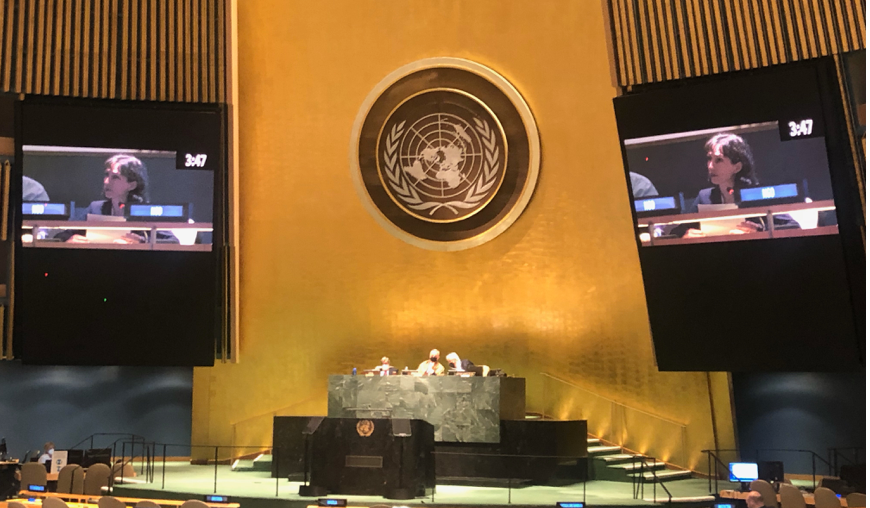
  • A Short Review of Israel’s Nuclear Program

    A Short Review of Israel’s Nuclear Program

    Click here for a longer version of this article.

    The State of Israel is considered to be the only country in the Middle East to possess nuclear weapons. It has never confirmed or denied this assertion, on the base of his policy of ambiguity – amimut – according to which Israel “de-emphasizes” the existence of its nuclear capacity.[1]

    Israel was given birth by the end of the British Mandate of Palestine in 1948. Inspired by the bombing of Hiroshima and Nagasaki, Israeli Prime Minister David Ben-Gurion ordered the development of a nuclear program, that crystallized both Ben-Gurion’s commitment to Zionism, and a defensive tool toward anything that could resemble the atrocity of the Holocaust that was so still vivid in the mind of people.  In 1949, the Israeli Defence Forces (IDF) Science Corps conducted a geographical survey of the Negev desert, where some uranium was found, and in 1952 the Israel Atomic Energy Commission (IAEC) was secretly established. Immediately, Israel established even stronger relationships of collaboration with France, and was allowed to observe the development of the nuclear program at French facilities. In the meanwhile, the United States granted Israel with the construction of a small nuclear research reactor in Nachal Soreq, and placed Israel under the auspices of the U.S. Atoms for Peace framework in 1955 on the promise that its intents were peaceful. However, the check mechanisms made available by the program weren’t adequate, and the relationship of privilege that (always) run between the United States and Israel never created the political will within U.S. administrations to inspect Israel thoroughly and stop its ambition to build the atomic bomb.

    The relationship with France facilitated the construction of a clandestine nuclear reactor in the Negev Desert near Dimona, which was established in 1957. The relationship with the French came to a close in 1966 forcing Israel to seek help and collaboration with Great Britain, Norway and South Africa. Through these newly established relationships Israel could accumulate large quantities of heavy water and uranium, and in 1979 proceeded to a nuclear test off the coast with South Africa. The U.S. Vela satellite detected a double flash of light in the Indian Ocean, off the cost of South Africa, and even though double flashes are associated with nuclear detonations, both Israel and South Africa had always denied any connection to it. However, the secrecy adopted by Israel in the development of its nuclear program has always placed a thick veil of doubt on the veracity of its declaration.

    Despite the existence of murky signs, and despite the fact that preventing the spread of nuclear weapons was at the core of U.S. strategy, no U.S. President has ever factually prevented Israel to develop its nuclear weapons program. Not even when Israel refused to sign the nuclear Non-Proliferation Treaty (NPT) in 1968 thus adding ambiguity to its conduct. Through historical recollections, it became clear that allowing Israel to develop its nuclear weapons program served the United States in various ways. First, it created a counterbalance against the Soviet Union and could, indirectly, help the United States to limit the threat of communism. During the Cold War years, Israel was in fact considered as an element that could ensure the victory of the U.S. over the Soviet Union. Secondly, as long as Israel maintained secrecy on its nuclear achievements, the possibility that this could induce alliance to the Arabs was reduced, and the danger of a U.S.-Soviet nuclear confrontation further decreased. Finally, the legacy of the Holocaust induced many American élites to legitimize Israel’s nuclear ambitions, and granted them with the right to pursue its nuclear weapons program wile avoiding public scrutiny.

    This mode of thinking takes the United States to the brink of hypocrisy, as it implies that Israel, unlike Iran for example, has the special “privilege” to base its sense of security on the manufacturing of the nuclear bomb without being questioned. With the compliance of the United States, Israel adopted an aggressive policy toward Iraq on June 7, 1981, by carrying out a preemptive strike on Iraq’s Osiraq nuclear reactor, arguing that it had been designed for the construction of nuclear weapons. Israel could do so in compliance with its unilaterally-established Begin Doctrine, a term referred to Israel’s preventive strikes against potential enemies as a counter-proliferation policy toward their capability to possess weapons of mass destruction, particularly nuclear weapons. For Israel the strike was legitimate as it served to preempt future threats to its very existence and would be repeated against Syria in 2007 (Operation Orchard) with total complacency of the Bush administration. Israel’s action contributed to Iran’s desire to pursue its nuclear ambition during the 1990s, which, in turn, propelled Israel’s decision to develop a sea-based second-strike capability. Israel’s aggressiveness in relying on ambiguity around its nuclear program was also evident with regard to the proposal – advanced on the occasion of the 1995 NPT Review Conference – to establish a Middle East Weapons of Mass Destruction Free Zone (MEWMDFZ), occasion that Israel exploited to establish its predominance against the Arab World, the Palestinians in particular.

    The lack of access to Israeli nuclear facilities made the work of historians very difficult. To quantify Israel’s nuclear armaments and capacity, they could rely only on U.S. declassified documents and the testimonies of those that had inside knowledge of Israel’s nuclear program. In its last report, issued in June 2019, the Stockholm International Peace Research Institute (SIPRI) claims that Israel is likely to possess nearly one hundred nuclear weapons,[2] comprising 30 gravity bombs capable of being delivered by fighter jets; an additional 50 warheads that can be delivered by land-based ballistic missiles; and an unknown number of nuclear-armed, sea-launched cruise missiles that would grant Israel a sea-based second-strike capability.

    What seems to be clear is that Israel, supported by the U.S. in its ambiguity, does possess nuclear weapons. On the occasion of a visit to the Dimona nuclear reactor in August 2018, Prime Minister Benjamin Netanyahu stated: “Those who threaten to wipe us out put themselves in a similar danger, and in any event will not achieve their goal.”[3] In addition to the danger posed by the retention of nuclear weapons, there have been revelations that the Dimona nuclear facility has leaked radioactive waste. Considering its ambiguous position Israel can only rely on the clandestine market to acquire outdated nuclear technology, making these revelations very plausible. The reactor is located only thirty miles from Tel Aviv. But the most serious concern is for the city of Dimona, only eight miles from the nuclear site. These warnings haven’t prompted the Israeli government to fix the leaks, allegedly because Dimona is predominantly populated by North African Jews – a marginalized community – and is surrounded by the Negev Desert, home to many Palestinian Bedouin villages,[4] which Israel considers illegal and subjects to cultural and physical annihilation.

    The choice to adopt amimut – as Israel does – is only possible because of the protection the Israeli government receives from a structure of power that privileges some at the expense of others, as the intermittent opposition Israel received, particularly from Washington, since its inception demonstrates. The case of Israel is emblematic and revealing at the same time. In fact, at its very core, amimut demonstrates symmetry between Israel’s nuclear thinking and its internal policies. Both are nothing but racist and genocidal.

    Footnotes

    [1] Israeli, Ofer (2015) “Israel’s nuclear amimut policy and its consequences,” Israel Affairs, Vol 21, no 4, pp. 541-558.

    [2] SIPRI Yearbook 2019. Armaments, Disarmament and International Security. (Retrievable at https://www.sipri.org/sites/default/files/2019-06/yb19_summary_eng_1.pdf Accessed on September 12, 2019).

    [3] Williams, Dan, “At Dimona reactor, Netanyahu warns Israel’s foes they risk ruin,” Reuters, August 29, 2018. (Accessed on September 12, 2019 https://www.reuters.com/article/us-israel-nuclear/at-dimona-reactor-netanyahu-warns-israels-foes-they-risk-ruin-idUSKCN1LE270). See also: Webb, Whitney, “Speaking in front of Israel’s nukes Netanyahu says IDF will hit Iranian forces in Syria with “all its might,” MPN News, August 30, 2018 (Accessed on September 12, 2019 https://www.mintpressnews.com/speaking-in-front-of-israels-nukes-netanyahu-says-idf-will-hit-iranian-forces-in-syria-with-all-its-might/248498/).

    [4] Webb, Whitney, “Israel’s secretive nuclear facility leaking as watchdog finds Israel has nearly 100 nukes,” MPN News, June 17, 2019. (Accessed on September 12, 2019 https://www.mintpressnews.com/international-watchdog-finds-israel-has-nearly-100-nuclear-weapons/259274/).

  • Israel’s Nuclear Program

    Israel’s Nuclear Program

    Click here for a short version of this article.

    The State of Israel is considered to be the only country in the Middle East to possess nuclear weapons, but has refused to confirm or deny this assertion. The author Ofer Israeli explains: “This approach is called amimut in Hebrew, which translates into ‘ambiguity’ or ‘opacity’. Accordingly, Israel has de-emphasized the existence of its nuclear capability, despite the fact that this approach is arguably incompatible with the norms and values of a liberal democracy.”[1] However, there is little ambiguity left about Israel’s possession of nuclear weapons.

    Early nuclear development

    When the British Mandate of Palestine came to a close in 1948, the State of Israel was officially recognized by the United Nations Partition Plan for Palestine, which called for the withdrawal of the colonial occupation of Palestine by the British. The Plan imposed the delineation of boundaries between an Arab and Jewish State, together with the internationalization of Jerusalem. Inspired by the bombing on Hiroshima and Nagasaki, and fuelled by nationalism, the Prime Minister of the newly created State of Israel, David Ben-Gurion, ordered the development of a nuclear program. Shimon Peres, who served as Minister of Defense, was Prime Minister twice, and then became President of Israel, declared that Ben-Gurion had believed that “Science could compensate us for what Nature has denied us.”[2] Ben-Gurion firmly believed that the nuclear bomb could back up his commitment to Zionism, the political movement that sustains the creation of an independent Jewish nation. In sum, the nuclear bomb was seen as a defensive tool in response to what the Jewish people endured during the Holocaust.

    Even before the 1948 Declaration of the State of Israel, Prime Minister Ben-Gurion had recruited some Jewish scientists from abroad with the mandate to develop a nuclear program. In 1949 the Israeli Defense Forces (IDF) Science Corps – the Hemed Gimmel – were ordered to conduct a geological survey of the Negev desert with the aim of finding sources of uranium, located in phosphate deposits in very small amounts. Also, a few Israeli students were sent abroad, including one who was sent to the University of Chicago to study under the supervision of Enrico Fermi, the creator of the first nuclear reactor. In 1952, the Hemed Gimmel was moved from the IDF to the Ministry of Defense, where it became the Emet, the Division of Research and Infrastructure. In this year, the Israel Atomic Energy Commission (IAEC) was secretly established and Prime Minister Ben-Gurion appointed Professor Ernst David Bergmann as its Chair.[3]

    As scientific works progressed, diplomatic relations between Israel and other countries followed suit. Pivotal for this purpose was Minister of Defense Shimon Peres, who was able to reinforce cooperation with France on the nuclear front since the early 1950s. Israel and France were close allies. In fact, France was the principal arm supplier for Israel, which, in turn, provided intelligence when instability spread in the French colonies in North Africa. Moreover, Israeli scientists helped build the G1 plutonium production reactor and the UP1 reprocessing nuclear plant in Marcoule (France), and earned in exchange the possibility that Israeli scientists could observe the development of the nuclear programs at French nuclear facilities.

    On July 12, 1955 Israel became part of the U.S. Atoms for Peace framework and signed a peaceful nuclear cooperation agreement with the United States, which allowed the U.S., two years later, to assist Israel with the construction of a small research reactor in Nachal Soreq. This site would later be used by Israel to conceal the construction of its clandestine nuclear reactor at Dimona.

    In 1956, Egyptian President Gamal Abdel Nasser decided to nationalize the Suez Canal. His decision prompted Israel, France and the United Kingdom to invade the Sinai with the aim to seize it. Israel was promised by France a nuclear reactor for its support, which it accepted. However, following the invasion of Suez on October 29, 1956, the Soviet Union threatened intervention. This, in turn, prompted the United States to exercise enormous pressure on its allies to induce them to retreat. Through diplomatic cooperation between the U.S. and the Soviet Union for preventing the latter to retaliate, France and the United Kingdom were forced to withdraw within a week, while Israel left only in March 1957. Feeling humiliated, France reinforced its decision to pursue a nuclear weapons program. In October 1957, both France and Israel finalized their relationship thanks to which Israel was able to obtain from France a larger heavy-water reactor (a 24 megawatt EL-102 reactor) together with a reprocessing plant. Israel agreed, in exchange, that the reprocessing of plutonium would only be for peaceful purposes through an agreement that remained secret, as both countries didn’t want to deal with international pressure. It was, therefore, decided that the construction of the Negev Nuclear Research Centre would start at the end of 1957 in the Negev Desert near Dimona, an operation that, since its very beginning, remained shrouded in extreme secrecy. To help with the building of the nuclear site, 2,500 Frenchmen had been secretly living in Dimona. In 2004, The Guardian reported: “In Dimona, French engineers poured in to help build Israel a nuclear reactor and a far more secret reprocessing plant capable of separating plutonium from spent reactor fuel. This was the real giveaway that Israel’s nuclear programme was aimed at producing weapons.”[4] To avoid further scrutiny, the French living in Dimona were forbidden to write directly to family members and friends in France. Instead, they had to send their mail to a mailbox in Latin America.[5]

    The rise of nationalist President Charles de Gaulle in 1959 put the cooperation between Israel and France at risk. President de Gaulle requested that Dimona be open to international inspections, and imposed as a condition for future collaborations that Israel would stop reprocessing plutonium. Through a two-year negotiation between Shimon Peres and the French Foreign Minister Maurice Couve de Murville, Peres secured France’s cooperation until 1966, but the supply of uranium ended in 1963. Due to this, Israel decided to buy uranium from other countries, such as Great Britain and Norway. In 2006, BBC Newsnight[6] reported that the United Kingdom made hundreds of shipments of restricted materials to Israel during the 1950s and 1960s. These shipments included uranium-235 and plutonium, despite the British Intelligence warning the British government that the deal could help Israel build a nuclear bomb. Ignoring the warning, Great Britain also shipped 20 tons of heavy water to Israel via a Norwegian company called Noratom, using the company as a front.[7]

    Israel reached out to Argentina, in addition to Great Britain, which agreed to sell the country 100 tons of uranium oxide, otherwise called yellowcake,[8] that was shipped to Israel between 1963 and 1966.[9] The relationship with Norway went so far that, in 1960, Norway repurchased 20 tons of heavy water it had originally sold to the U.K. and exported it directly from the U.K. to Israel.[10] Israel obtained fissile material from the U.K. and Norway on the promise that it would be used only for peaceful purposes, although, once again, intelligence warned that that could not be the case. Finally, in 1965, Israel received from South Africa 10 tons of yellowcake under the International Atomic Energy Agency (IAEA) Safeguards Agreements. It is estimated that this is the year when Dimona’s reactor became operational. The trading relationship between Israel and South Africa continued over the years, and was subject to yearly inspections by the South African Atomic Energy Board. Inspections lasted until 1976, when the two countries agreed to remove the bilateral safeguards through which Israel obtained 500 tons of uranium for plutonium production at the Dimona’s reactor, and gave South Africa, in exchange, 30 grams of tritium.[11]

    Although Israel has never publicly acknowledged that its nuclear program was aimed at building the atomic bomb, it is nonetheless believed that it managed to assemble enough material to build rudimentary nuclear devices during the crisis leading up to the 1967 Six-Day War, otherwise known Third Arab-Israeli War, which began on June 5, when Israel bombed Egyptian airfields and launched a ground invasion of the Sinai Peninsula. Historian Avner Cohen estimated that Israel had planned to give a demonstration of the bomb as a last resort on this occasion, but it turned unnecessary considering the overwhelming victory that Israel achieved at the end of the war, on June 10.[12] The following year, the Mossad secretly purchased 200 tons of yellowcake from the Belgian company Union Minière. Through this operation, known as Operation Plumbat, the Belgian company shipped the uranium from Antwerp to Genoa (Italy). However, on its way to Genoa, the uranium was transferred to another vessel directed to Israel.[13] In this period of time, although Israel’s nuclear capability could not be understood publicly and precisely, its policy of “nuclear opacity” became more prominent, especially when, in 1968, Israel refused to sign the nuclear Non-Proliferation Treaty (NPT), even if subjected to intense U.S. pressure. It must be said, however, that the pressure the United States exercised on Israel has always been very controversial. I will touch on this point more extensively later in this paper.

    An unconfirmed nuclear test

    During the 1970s, Israel is believed to have enlarged its nuclear arsenal considerably, producing at least 10 nuclear weapons, as well as aircraft and missiles for their delivery.  Historians believe that Israel was close to deploying its first nuclear-capable ballistic-missile in 1973,[14] the year when Israel was involved in the Yom Kippur War, otherwise called the Ramadan War. [15] On this occasion, Egypt and Syria launched a coordinated attack on Israel to reclaim the Sinai Peninsula and the Golan Heights. The attack was launched on Yom Kippur (October 6), the holiest day in Judaism, which also occurred that year during the Muslim holy month of Ramadan. Although the possibility of resorting to the use of a nuclear device was an option, Prime Minister Golda Meir did not believe Israel’s survival was at stake and declined dropping the nuclear bomb. This war ended, once again, with Israel’s victory.

    Maintaining its politics of ambiguity, Israel has never conducted a publicly recognized nuclear test. However, there are speculations that on September 22, 1979, a U.S. Vela satellite detected a double flash of light in the Indian Ocean, off the cost of South Africa. As Nuclear Threat Initiative explains: “Double flashes are associated with nuclear detonations, where the initial fireball of a nuclear explosion is ‘rapidly overtaken by expanding hydrodynamic shock wave,’ which hides the fireball.”[16] It is believed to have been a joint South African-Israeli nuclear test, but both governments have denied any connection to it.

    U.S.-Israeli relationship

    The policy adopted by the United States towards Israel is of paramount importance for understanding the development of Israel’s nuclear program and the possibility for it to maintain its opaque and destabilizing position over the possession of nuclear weapons. Galen Jackson explains: “Preventing the spread of nuclear weapons […] has been ‘a core, long-standing, and driving goal of U.S. grand strategy,’ one that Washington has pursued ‘since the start of the nuclear age, pursued across presidential administrations despite important changes in the international system.”[17] However, this approach has certainly not been adopted equally across the globe. As Jackson elucidates, President Dwight D. Eisenhower intended to arm NATO allies with nuclear weapons, while his successor, President John F. Kennedy, sought to establish a nuclear relationship with France. Europe wasn’t the only partner in the nuclear arena. Indeed, President Richard M. Nixon, together with his National Security Advisor Henry Kissinger, did not oppose China, Pakistan and India reinforcing their nuclear weapons programs, hoping that they could serve as a counterbalance against the Soviet Union.

    President Eisenhower believed that the spread of nuclear technology for peaceful purposes could be beneficial to U.S. global influence and a way to ensure victory in the Cold War. In this framework, Israel, by signing on to Eisenhower’s Atoms for Peace program, could obtain a small research reactor and start its own nuclear program. The safeguards intended to prevent the misuse of nuclear resources were inadequate and poorly enforced. In addition to the endemic dysfunction of the Atoms for Peace program, U.S. domestic politics was highly influenced by American Jewish organizations and voters, which largely affected the development of an acquiescent attitude toward Israel. In this regard, Long and Shifrinson write: “In an environment where policy guidance on nuclear issues was mixed and U.S. leaders faced domestic incentives not to unnecessarily antagonize Israel, intelligence on the Israeli program was limited,”[18] or discounted.

    Even thought President Eisenhower pressured Israel to abandon the Egyptian territory during the Suez Crisis in 1956, he dismissed, in the following years, the intelligence that assessed that the ongoing close cooperation between France and Israel was capable of providing Israel with nuclear weapons. Likewise, President Eisenhower left uncirculated a CIA report indicating that Norway had finalized the selling of heavy water to Israel, and dismissed photographic evidence of the secret nuclear reactor that was being built at Dimona. Only following media reports about a secret nuclear reactor being built in Israel, did Israeli Prime Minister Ben-Gurion publicly announce on December 21, 1960 that Israel was building a reactor at Dimona. Although Ben-Gurion stated that Israel nuclear program was for peaceful purposes, the secrecy surrounding the construction of the Dimona’s reactor left doubts over the veracity of his statement.

    President John F. Kennedy seemed to be more oriented to upholding non-proliferation policies. According to historians Avner Cohen and William Burr, Kennedy wanted to prevent Israel from getting the nuclear bomb, and considered this requirement “central to his efforts to avoid nuclear proliferation.”[19] They notice that since the very first moment of his presidency, Kennedy insisted that regular inspections take place at Dimona. However, he did virtually nothing to make this a reality. When inspections took place, they never challenged the suspicions that the Israelis were pursuing nuclear weapons capability. In fact, the inspections at Dimona were strictly controlled by the Israelis, and could only be conducted at the first floor of the nuclear facility. Moreover, U.S. inspectors could not use their technical instruments, or take measurements, or see the control room. Therefore, they couldn’t produce any evidence related to nuclear weapons activities. It was later acknowledged that, in order to cover up the real activities at the Dimona reactor, the Israelis had walled up elevator banks down to the underground reprocessing facility to evade discovery of plutonium production activities.[20] Galen Jackson comments on this point: “Aside from the fact that the visit, as is widely recognized, had been tightly controlled by the Israelis, the mission given to the Atomic Energy Commission (AEC) scientists who had visited Dimona, as Cohen points out in his book, had been “not to challenge what they were told, but to verify it.”[21]  Further in his paper he explains the reason behind the U.S. unwillingness to challenge Israel’s secret nuclear program:

    [T]he prime minister [Ben-Gurion] had regularly made the point that Israel could not afford to give up its nuclear program without getting something in return from the Americans. His successor, Levi Eshkol, was even more forthright on the matter. “[T]he question of whether or not nuclear weapons appear in the [Middle East],” he candidly told a British representative in July 1963, “depends on the Great Powers and their willingness to provide Israel with the security assurance it seeks.” The prime minister’s basic approach to the matter was to tell Kennedy, “If you want it, there will be no [nuclear weapons]. [But] give us something else which will deter [the Arabs].” Indeed, his position seems to have been quite clear: “[W]e have Dimona … . If you are opposed to that, what can you promise? If you can [give a security guarantee] please [tell us] how and why.” In any case, it was the Kennedy administration’s assumption by the spring of 1963, when the White House did finally turn its attention to the nuclear question, that to keep Israel nonnuclear the United States would need to grant it such an assurance. Washington’s “hole card with Israel,” National Security Council (NSC) staffer Robert Komer explained, was Jerusalem’s “desire for a US security guarantee; if possible we should tie this not only to Jordan but to Israeli agreement not to develop nuclear weapons.” Kennedy, Assistant Secretary of State Phillips Talbot wrote on 20 May, felt “it important to give serious consideration to Israel’s strong desire for a more specific security guarantee.” It was the president’s belief, he added, that “only through allaying Israel [sic] fears about the long-range threat to its existence that leverage to forestall possible Israel [sic] preventive warfare and to prevent proliferation of nuclear weapons can be maintained.” Kennedy, however, was deeply reluctant to make such a bargain, fearing it would undercut Washington’s ability to maintain a balanced policy between the Arabs and Israelis. “Each matter arising in our relationship with Israel,” the State Department stressed, “is carefully weighed in terms of its effect on our policy of impartiality as between Israel and the Arabs and of its effect on Israel’s security.” If the United States were to align itself more closely with Israel it “[w]ould constitute a direct challenge to the Arabs by the US” and “destroy growing Arab confidence in our impartiality.” Probably of even greater concern to Kennedy, an alliance of this type would “render the US responsible in Arab eyes for every Israeli military venture” and “encourage the more fanatical Arabs to seek a similar relationship with the Soviet Union.”[22]

    It is, therefore, important to understand how much weight the geopolitical context and the legacy of the Holocaust had in defining Kennedy’s policy towards Israel, as well as Dwight Eisenhower, who preceded Kennedy, and Richard Nixon and Lyndon B. Johnson, subsequently. During this period of time, in addition to the emergence of the Soviet Union as a rival nuclear power, the U.S. also feared West Germany’s potential nuclearization,[23] and the possibility that China also could acquire the atomic bomb.  However, with the signing of the Limited Test Ban Treaty by the United States, United Kingdom and Soviet Union in 1963, the West German and Chinese nuclear questions became less stringent. For this reason, Kennedy released some pressure. He adopted the policy through which he made sure that the Israelis could at least project the image of not wanting to pursue nuclear capability, while reassuring them that the U.S. would not protest Israel’s nuclear development.

    Lyndon Johnson, who became President of the United States in 1963, adopted a much subtler attitude toward Israel’s nuclear ambitions. In his paper, Jackson, states: “The president, it seems, only used tough language during his formal meeting with Eskol [then Israeli Prime Minister] to appease his subordinates and thereby neutralize them.”[24] Following the 1965 negotiations over Dimona, where the U.S. and Israel discussed the need to pursue inspections at the Israeli nuclear reactor, Israel simply reiterated that the nuclear program was intended for peaceful purposes, and the Johnson administration deployed a very limited scope of technical intelligence resources. To this point, Long and Shifrinson clarify that:

    Between on-site inspections, U.S. insight into Israeli nuclear operations was constrained. Furthermore, since the inspections were subject to Israeli whims, Israeli leaders could stymie U.S. collection efforts. Indeed, contemporary U.S. analysts worried that Israel would simply obtain fissile material by running fuel through the reactor between U.S. visits. Second, the IC [intelligence community] continued to play catch up with the Israeli program and often missed or only belatedly recognized subsequent developments that might have provided further warning that a nuclear weapon stockpile – more than just a breakout capacity – had become the Israeli objective.[25]

    The year 1965 also marks a pivotal event that depicts how loose the intelligence was around Israeli nuclear ambitions. Known as the 1965 Apollo Affairs, it refers to the stealing of approximately 200 kg of highly-enriched uranium from a nuclear reprocessing plant in Pennsylvania, which was owned by Zalman Shapiro who had close ties with the government of Israel. What reinforces the speculation around Israel’s responsibility in this matter is that the evidence collected by the FBI was barely analyzed, and the coordination between the FBI, the Department of Energy, and the CIA was very limited.

    The Non-Proliferation Treaty

    Two years later, in April 1967, National Security Advisor Walt Rostow wrote to President Johnson:

    Israel has never leveled with us on its nuclear intent. Our intelligence people have scattered – but as yet unconfirmed – evidence that Israel is quietly but steadily placing itself in a position to produce nuclear weapons on short notice. We also know that Israel is investing large sums in a French built surface-to-surface missile designed to carry a nuclear warhead. I must emphasize that we do not know exactly what Israel is doing or what its position on the [Non-Proliferation Treaty] will be. But we know enough to be seriously concerned. [26]

    Apart from confirming the seriousness of the situation, predominantly induced by Israel’s ambiguity around its nuclear program, Rostow’s words also refer to another important element: that is, the refusal by Israel to sign the nuclear Non-Proliferation Treaty, which was in the making at the time of Rostow’s report to Johnson, and became open for signature from 1968. As briefly mentioned before, on this point, the United States always succumbed to the refusal by Israel to be part of the Treaty, and kept its conventional arms trade open with Israel. For example, in 1968, the U.S. sold 50 F-4 Phantom aircrafts that Israel desperately wanted.[27] The U.S. could have used this occasion, like many others, as a lever against Israel to induce it to a) allow more thorough inspections, and b) sign the NPT. But it chose not to. Indeed, the U.S. attitude of ‘hear nothing, see nothing’ constituted tacit assurance of alliance against Soviet ambitions in the region. Jackson comments on this point:

    The administration feared that if the United States intervened, it would wreck its position in the Arab world—thereby polarizing the Middle East along Cold War lines—and potentially spark a region-wide war that could escalate to the superpower level. Moreover, because the United States was already involved militarily in Southeast Asia, Johnson lacked the necessary support at home for a major US operation in the Middle East. [28]

    Moreover, he adds:

    “The existence of a large, well-organized group of Israel sympathizers within the U.S. body politic,” one State Department paper noted, “obviously puts a limit on the degree to which the [United States government] might contemplate a different policy.”[29]

    Allowing Israel to become nuclear would therefore spare the United States the need to intervene in a future conflict to protect both Israeli and American interests.

    U.S. President Richard Nixon did not divert from the policy of subordinating nonproliferation goals to other political interests, as long as Israel maintained secrecy on its achievement, namely the manufacturing of nuclear weapons. Once again, the reason was to not “spark Soviet nuclear guarantees to the Arabs, tighten the Soviet hold on the Arabs and increase the danger of US-Soviet nuclear confrontation.”[30] Allowing Israel to publicly declare its possession of nuclear weapons, would have prevented, or largely complicated, an Arab-Israeli settlement, and exposed the United States to a “charge of complicity in helping Israel go nuclear […].”[31] Concern for nonproliferation wasn’t a priority. A final condition that explains U.S. policy toward Israel is the feeling, by many American élites, that the legacy of the Holocaust had somehow legitimized Israeli nuclear ambition, giving them “every right to acquire weapons that could prevent its destruction.”[32] It is for this reason, that on September 26, 1969, President Nixon had a meeting with Israeli Prime Minister Golda Meir in which they agreed that Israel could pursue its nuclear ambition without any interference by the U.S. with the only condition being that Israel would refrain from testing its nuclear devices and going public about their possession. In exchange, the U.S. would not press Israel to sign the NPT. The documents proving the discussion that Nixon and Meir had during this meeting – known as the Nixon-Meir Agreement – were kept secret until they were declassified by the Obama administration.[33]

    Hypocrisy

    This mode of thinking takes the United States to the brink of hypocrisy, as it implies that Israel, unlike Iran, for example, had the special “privilege” to base its sense of security on the manufacturing of the nuclear bomb without being questioned. In this fashion, all the evidence supporting the assembly of nuclear weapons by Israel in the context of the Yom Kippur War; the acquisition of uranium and plutonium via clandestine channels through the years; and the likely 1979 nuclear test off the coast of South Africa were dismissed or downplayed.

    Israel, with the compliance of the United States, adopted an aggressive policy toward Iraq on June 7, 1981, by carrying out a preemptive strike on Iraq’s Osiraq nuclear reactor, arguing that it had been designed for the construction of nuclear weapons. For Israel the strike was legitimate as it served to preempt future threats to its very existence. The government issued a statement on the strike: “On no account shall we permit an enemy to develop weapons of mass destruction against the people of Israel. We shall defend the citizens of Israel in good time and with all the means at our disposal,”[34] thus outlining what would become part of Israel’s counter-proliferation policy, known as the “Begin Doctrine.”[35] Contrary to Israel’s expectations, the strike reinforced Iraq’s nuclear ambition, and contributed to render even more clandestine its own nuclear program. In a snowball effect, Israel’s action contributed to Iran’s desire to pursue its nuclear ambition during the 1990s, which, in turn, propelled Israel’s decision to develop a sea-based second-strike capability. Israel would commission its first submarines from Germany at the end of the 1990s.[36]

    Israel’s aggressiveness in relying on ambiguity around its nuclear program would also be evident with regard to the proposal – advanced on the occasion of the 1995 NPT Review Conference – to establish a Middle East Weapons of Mass Destruction Free Zone (MEWMDFZ). At this time, the assurance that the Israeli government had obtained during Nixon’s presidency was no longer tenable under President George H. W. Bush. The Israeli government took the MEWMDFZ framework as an occasion to state that peace in the Middle East was a precondition to the establishment of a nuclear-free zone in the Middle East, while the Arab states were sustaining that peace would only be possible with the renouncing of nuclear weapons by Israel.[37] The same entitlement to a level of superiority and abuse that Israel has adopted through the years against the Palestinians – with more serious consequences for them – is directed, in nuclear matters, toward the rest of the Arab world.

    Everything that so far in this paper has been treated as speculation regarding Israel’s nuclear program came to light in 1986, when a nuclear technician, Mordechai Vanunu, revealed to the British Press that Israel had produced at Dimona dozens of kilograms of plutonium each year between 1980 and 1986, and was also producing fuel which could have been used for boosted fission or fusion weapons, with Israel possessing between 100-200 nuclear weapons.[38] Following his revelations, the Mossad managed to lure Vanunu to Italy, where he was kidnapped and taken to Israel. He was sentenced to eighteen years of prison, eleven of which he spent in solitary confinement. He still faces restrictions today, notably of speech and movement. Daniel Ellsberg has defined him “the preeminent hero of the nuclear era.”[39] Moreover, in 1987, he was awarded the Right Livelihood Award for “his courage and self-sacrifice in revealing the extent of Israel’s nuclear weapons programme.” Vanunu’s declarations exposed Israel’s nuclear program, supplemented by the underestimation of evidence gathered by U.S. intelligence by different U.S. administrations: General Ford, in charge when Israel crossed the nuclear threshold following the Yom Kippur War; Jimmy Carter, in charge when the Vela incident took place; and Ronald Reagan, who, following Vanunu’s revelations, didn’t change U.S. policy toward Israel.

    With regards to his policy toward Israel, President George H. W. Bush is credited for creating opportunities for Israeli-Palestinian peace talks to happen. His foreign policy, with regard to Israel, aimed at stopping the growth of Israeli settlements in the Occupied Palestinian Territories. He didn’t restrain Israel’s nuclear program because its policy toward Iraq constituted a reassurance for the United States during the 1991 Gulf War. His successor, President Bill Clinton, reportedly engaged in correspondence with the Israeli government to reassure “the Jewish state that no future American arms-control initiative would “detract” from Israel’s “deterrent” capabilities […].”[40] Under Clinton, Israel signed the Comprehensive Nuclear Test Ban Treaty (CTBT), but didn’t ratify it, and refused to participate in the negotiations that led to the drafting of the Fissile Material Cut-Off Treaty. As had happened in previous U.S. administrations, Israel was spared any pressure. President George W. Bush didn’t adopt a different policy either, but, apart from explicitly denying Israel an arrangement of peaceful nuclear assistance (as the U.S. did with India in 2005), he never effectively constituted an obstacle for Israel. Under Bush, Israel pursued Operation Orchard in 2007, a preventive strike launched by Israel as part of the Begin Doctrine on a facility in Syria suspected to be a nuclear reactor, without sparking any outcry within the U.S. administration.

    During the Obama years, Iran’s nuclear program became Israel’s number one security issue. Prime Minister Benjamin Netanyahu has often referred to Iran as an unacceptable threat to the region and to the very existence of Israel. There are also allegations that Israel was behind the assassination of a number of Iranian nuclear scientists.[41] As reported by the Nuclear Threat Initiative, even though Netanyahu has called for military action against Iran,[42] many within the Israeli establishment were against attacking Iran in the same fashion as Iraq and Syria were attacked.  They feared that both the Islamic Republic and its proxies, namely Hamas and Hezbollah, could retaliate against Israel. In this regard, President Barack Obama always declined Israel’s call to declare a “red line” over Iran’s nuclear program, which would have resulted in an open military confrontation on many fronts. Moreover, President Obama never agreed to attacking Iran because the latter never manufactured an atomic weapon. It goes without saying that the signing of the Joint Comprehensive Plan Of Action (JCPOA) by the P5+1 (China, France, Russia, the United Kingdom, the United States + Germany) and Iran on June 14, 2015 was not welcomed by Israel.

    All this said, and even though President Obama had a frosty relationship with Prime Minister Netanyahu, he never used U.S. aid and military assistance as a leverage to force Israeli concessions on either the nuclear front, nor on the advancement of the Israeli settlements on Palestinian Territories, despite the U.S. renewed call for the establishment of a nuclear weapons-free zone in the Middle East during the 2010 NPT Review Conference. However, Israel’s refusal to join has, once again, gone unchallenged. As reported by The New Yorker:

    Ahead of a nonproliferation conference in 2010, Netanyahu became concerned, once again, that Israel could come under international pressure to disarm. In response, Obama made a public statement that echoed the contents of [some] secret letters [between the U.S. and the Israeli government], without revealing their existence. “We discussed issues that arose out of the nuclear-nonproliferation conference,” Obama said, after meeting with Netanyahu on July 6, 2010. “And I reiterated to the Prime Minister that there is no change in U.S. policy when it comes to these issues. We strongly believe that, given its size, its history, the region that it’s in, and the threats that are leveled against . . . it, that Israel has unique security requirements. It’s got to be able to respond to threats or any combination of threats in the region. And that’s why we remain unwavering in our commitment to Israel’s security. And the United States will never ask Israel to take any steps that would undermine their security interests.”[43]

    President Donald Trump kept this condition of exclusivity intact. Moreover, he withdrew from the 2015 JCPOA on May 18, 2018, and from the INF (the Intermediate-Range Nuclear Forces Treaty)[44] on August 2, 2019, thus wiping away thirty years of efforts to reduce the nuclear race between the two countries that, together, retain more 90% of nuclear power in the world. On the Israeli front, President Trump has also reportedly signed a secret letter – a legacy stemming from Reagan, who initiated it in an oral form referred to in the above quotation – that pledged not to put Israel under pressure and induce it into relinquishing its nuclear weapons program.[45] It is obvious how the protection surrounding Israel’s nuclear program is undermining the project to realize a nuclear weapons-free zone in the Middle East, and the possibility that Israel could join the NPT. It also further increases division amongst the attendants at the NPT Review Conference scheduled to take place in 2020, and reduces the possibility that one of its stronger members – the United States – would finally decide to exercise its power over Israel. Finally, it diminishes even further the hope that both Israel and the United States could ratify the Treaty on the Prohibition of Nuclear Weapons (TPNW), adopted at the United Nations in July 2017. The TPNW is the first legally binding international agreement to prohibit nuclear weapons, with the goal of leading towards their total elimination. Specifically, “it prohibits nations from developing, testing, producing, manufacturing, transferring, possessing, stockpiling, using or threatening to use nuclear weapons, or allowing nuclear weapons to be stationed on their territory. It also prohibits them from assisting, encouraging or inducing anyone to engage in any of these activities.”[46] The TPNW will enter into legal force once 50 countries have signed and ratified it. As of August 29, 2019, seventy states have signed it and twenty-six[47] have ratified it. The U.S., like all other nuclear states, including Israel, refuses to sign and ratify it. More precisely, following the treaty’s adoption, the permanent missions of the United States, the United Kingdom and France issued a joint statement indicating that they did not intend “to sign, ratify or ever become party to it.”[48]

    In its last report, issued in June 2019, the Stockholm International Peace Research Institute (SIPRI) claimed that Israel is likely to possess nearly one hundred nuclear weapons,[49] comprising 30 gravity bombs capable of being delivered by fighter jets; an additional 50 warheads that can be delivered by land-based ballistic missiles; and an unknown number of nuclear-armed, sea-launched cruise missiles that would grant Israel a sea-based second-strike capability. As previously mentioned, other authors, such as Long and Shifrinson, quantify Israel’s nuclear arsenal between 100 and 200 warheads. Without access to Israel’s nuclear facilities, unfortunately, it is impossible to achieve an exact quantification in the same way that it was difficult, for historians and inspectors in the past, to measure the development of Israel’s nuclear program. To achieve quantification of Israel’s nuclear power, historians can only rely on limited access to U.S declassified government documents and on the testimonies of those who have inside knowledge of Israel’s nuclear program. What seems to be clear is that Israel, supported by the U.S. in its ambiguity, does possess nuclear weapons. On the occasion of a visit to the Dimona nuclear reactor in August 2018, Prime Minister Benjamin Netanyahu stated: “Those who threaten to wipe us out put themselves in a similar danger, and in any event will not achieve their goal.”[50]

    In addition to the danger posed by the retention of nuclear weapons by Israel, there have been revelations that the Dimona nuclear facility has leaked radioactive waste. It is very plausible, that, because of its ambiguous position, Israel can only rely on the clandestine market to acquire outdated nuclear technology. The reactor is located only thirty miles from Tel Aviv. But the most serious concern is for the city of Dimona, only eight miles from the nuclear site. These warnings haven’t prompted the Israeli government to fix the leaks, allegedly because Dimona is predominantly populated by North African Jews – a marginalized community – and is surrounded by the Negev Desert, home to many Palestinian Bedouin villages,[51] which Israel considers illegal and subject to cultural and physical annihilation.

    The possession of nuclear weapons, and, prior to that, their testing, is inherently genocidal, and racist. Some of the most powerful nuclear countries, namely France, the United Kingdom, and the United States, have repeatedly conducted their testing, dropped their atomic bombs and deployed uranium-enriched munitions on lands inhabited by indigenous, non-white populations; thus, polluting the environment, and condemning to death and disabilities people living in the Pacific Islands, Africa, South-East Asia, Iraq, and others, for generations to come. As Hayley Ramsay-Jones points out: “[N]uclear weapons are problematic because by nature they are genocidal. If we think about the idea of the willingness of a group of people, or a nation, to destroy in whole, or in part, another group of people, or another nation; to obliterate their culture, their way of life; to destroy their religious, ethnic, racial identities.  This is the very definition of genocide and that’s xenophobic and racist.”[52] The choice to adopt amimut – as Israel does – is only possible because of the protection the Israeli government receives from a structure of power that privileges some at the expense of others, as the intermittent opposition Israel received, particularly from Washington, since its inception demonstrates. The case of Israel is emblematic and revealing at the same time. In fact, at its very core, amimut demonstrates symmetry between Israel’s nuclear thinking and its internal policies. Both are nothing but racist and genocidal.

    Footnotes

    [1] Israeli, Ofer (2015) “Israel’s nuclear amimut policy and its consequences,” Israel Affairs, Vol 21, no 4, p. 542.

    [2] Cohen, Avner (1998) Israel And The Bomb, New York: Columbia University Press, p. 11.

    [3] https://www.nti.org/learn/countries/israel/nuclear/ (Accessed on September 12, 2019).

    [4] Borger, Julian, “The truth about Israel’s secret nuclear arsenal,” The Guardian, January 15, 2014. (Accessed on September 12, 2019 https://www.theguardian.com/world/2014/jan/15/truth-israels-secret-nuclear-arsenal).

    [5] Ibidem.

    [6] Meiron, Jones, “Secret sale of UK plutonium to Israel,” BBC Two – Newsnight, March 10, 2006 (Accessed on September 12, 2019 http://news.bbc.co.uk/2/hi/programmes/newsnight/4789832.stm).

    [7] Cohen, Avner and William Burr, “How Israel did its secret nucelar weapons program,” Politico, April 15, 2015 (Accessed on September 12, 2019 https://www.politico.com/magazine/story/2015/04/israel-nuclear-weapons-117014_Page2.html).

    [8] https://www.atomicheritage.org/history/israeli-nuclear-program (Accessed on September 12, 2019).

    [9] “Argentina sold Israel yellowcake uranium in 1960s,” The Jerusalem Post, July 2, 2013 (Accessed on September 12, 2019 https://www.jpost.com/International/Report-Argentina-sold-Israel-yellowcake-uranium-in-the-1960s-318432).

    [10] https://www.nti.org/learn/countries/israel/nuclear/ (Accessed on September 12, 2019).

    [11] Polakow-Suransky, Sasha (2010) The Unspoken Alliance: Israel’s Secret Relationship with Apartheid South Africa, New York: Vintage Books. See also: McGreal, Chris, “Israel and apartheid: a marriage of convenience and military might,” The Guardian, May 23, 2010 (Accessed on September 12, 2019 https://www.theguardian.com/world/2010/may/23/israel-apartheid-south-africa-nuclear-warheads). Tritium is one of the most valuable substances in the world per weigh, costing almost $30,000 per gram, approximately. Only Plutonium is within the list of most expensive material, costing $3,000 per gram, approximately (https://www.telegraph.co.uk/business/2016/05/18/the-most-valuable-substances-in-the-world-by-weight/tritium/). Uranium-235 is not even close, costing $60 per kilogram ($0,066 per gram), approximately, at the time of writing (https://sightlineu3o8.com/2019/02/uranium-is-it-a-dead-market/).

    [12]  Cohen, Avner (1998) Israel And The Bomb, New York: Columbia University Press.

    [13] Zoellner, Tom (2009) Uranium. New York: Penguin.

    [14] Jackson, Galen (2019) “The United States, the Israeli Nuclear Program, and Nonproliferation, 1961–69,” Security Studies, Vol. 28, no 2, pp. 360-393. See also Long, Austin G. & Joshua R. Shifrinson, (2019) “How long until midnight? Intelligence-policy relations and the United States response to the Israeli nuclear program, 1959–1985,” Journal of Strategic Studies, Vol. 42, no. 1, pp. 55-90.

    [15] The war is known to the Israelis as the Yom Kippur War, and to the Arabs as the October War. The root causes of this war were set six years prior, when in 1967 Israel attacked Egypt, Jordan and Syria, unleashing the June War. The June War resulted in the Israeli occupation of what remained of historic Palestine, as well as the Egyptian Sinai Desert, and the Golan Heights for Syria. Read more from “The October Arb-Israeli War of 1973: what happened?,” Aljazeera, October 7, 2018 https://www.aljazeera.com/indepth/features/2017/10/arab-israeli-war-of-1973-what-happened-171005105247349.html (Accessed on Septemebr 12, 2019).

    [16] https://www.nti.org/learn/countries/israel/nuclear/ (Accessed on September 12, 2019).

    [17] Jackson, Galen (2019) “The United States, the Israeli Nuclear Program, and Nonproliferation, 1961–69,” Security Studies, Vol. 28, no 2, p. 361.

    [18] Long, Austin G. & Joshua R. Shifrinson, (2019) “How long until midnight? Intelligence-policy relations and the United States response to the Israeli nuclear program, 1959–1985,” Journal of Strategic Studies, Vol. 42, no. 1, p. 66.

    [19] Cohen, Avner and William Burr, “How the Israelis hoodwinked JFK on going nuclear,” Foreign Policy, April 26, 2016. (Accessed on September 12, 2019 https://foreignpolicy.com/2016/04/26/how-the-israelis-hoodwinked-jfk-on-going-nuclear-dimona-atoms-for-peace/).

    [20] https://www.nti.org/learn/countries/israel/nuclear/ (Accessed on September 12, 2019).

    [21] Jackson, Galen (2019) “The United States, the Israeli Nuclear Program, and Nonproliferation, 1961–69,” Security Studies, Vol. 28, no 2, p. 369.

    [22] Ibidem., pp. 370-371.

    [23] Ibidem., p. 374.

    [24] Ibidem., p. 378.

    [25] Long, Austin G. & Joshua R. Shifrinson, (2019) “How long until midnight? Intelligence-policy relations and the United States response to the Israeli nuclear program, 1959–1985,” Journal of Strategic Studies, Vol. 42, no. 1, p. 73.

    [26] Ibidem., p. 75.

    [27] Rodman, David, “Phantom Fracas: the 1968 American sale of F-4 aircraft to Israel,” Middle Eastern Studies, November 2004, Vol. 4, no. 6, pp. 130-144.

    [28] Jackson, Galen (2019) “The United States, the Israeli Nuclear Program, and Nonproliferation, 1961–69,” Security Studies, Vol. 28, no 2, p. 383.

    [29] Ibidem., p. 384.

    [30] Ibidem., p. 387.

    [31] Ibidem., p. 388.

    [32] Ibidem., p. 391.

    [33] Oren, Amir, “Newly declassified documents reveal how U.S. agreed to Israel’s nuclear program,” Haaretz, August 30, 2014 (Accessed on September 12, 2019 https://www.haaretz.com/.premium-how-the-u-s-let-israel-go-nuclear-1.5262274).

    [34] Reuters, “Israeli and Iraqi statements on raid on nuclear plant,”, The New York Times, June 9, 1981. (Accessed on September 12, 2019 https://www.nytimes.com/1981/06/09/world/israeli-and-iraqi-statements-on-raid-on-nuclear-plant.html).

    [35] The Begin Doctrine is a term referred to Israel’s preventive strikes against potential enemies as a counter-proliferation policy toward their capability to possess weapons of mass destruction (WMD), particularly nuclear weapons. It took its name from the Prime Minister of Israel Manachem Begin who adopted in 1981 against Iraq.

    [36] Cohen, Avner (2010) The Worst Kept Secret: Israel’s Bargain with the Bomb, New York: Colombia University Press, p. 83.

    [37] https://www.nti.org/learn/countries/israel/nuclear/ (Accessed on September 12, 2019)

    [38] Long, Austin G. & Joshua R. Shifrinson, (2019) “How long until midnight? Intelligence-policy relations and the United States response to the Israeli nuclear program, 1959–1985,” Journal of Strategic Studies, Vol. 42, no. 1, pp. 80-81.

    [39] Ellsberg, Daniel, “Nuclear hero’s crime was making us safer,” Los Angeles Times, April 21, 2004. (Accessed on September 12, 2019 https://www.latimes.com/archives/la-xpm-2004-apr-21-oe-ellsberg21-story.html).

    [40] Entous, Adam, “How Trump and Three Other U.S. Presidents Protected Israel’s Worst-Kept Secret: Its Nuclear Arsenal,” The New Yorker, June 18, 2018. (Accessed on September 12, 2019 https://www.newyorker.com/news/news-desk/how-trump-and-three-other-us-presidents-protected-israels-worst-kept-secret-its-nuclear-arsenal).

    [41] https://www.nti.org/learn/countries/israel/nuclear/ (Accessed on September 12, 2019).

    [42] Israeli Prime Minister Benjamin Netanyahu has called for military action against Iran, for the only fact that the Islamic Republic is allegedly capable of manufacturing nuclear weapons, not for having actually made one. In this regard, the Nuclear Threat Initiative states: “Israeli officials argue that a “red line” should be drawn at a nuclear capability – defined vaguely in terms of “a stage in the enrichment or other nuclear activities that they cannot cross.” (See https://www.nti.org/learn/countries/israel/nuclear/ Accessed on September 12, 2019).

    [43] Entous, Adam, “How Trump and Three Other U.S. Presidents Protected Israel’s Worst-Kept Secret: Its Nuclear Arsenal,” The New Yorker, June 18, 2018. (Accessed on September 12, 2019 https://www.newyorker.com/news/news-desk/how-trump-and-three-other-us-presidents-protected-israels-worst-kept-secret-its-nuclear-arsenal).

    [44] The INF was a treaty signed between the U.S. signed with the Soviet Union on December 8, 1987, which banned the United States and the Soviet Union from possessing, testing and deploying ground-launched cruise and ballistic missiles with ranges between 300 and 3,400 miles.

    [45] Staff, Toi, “Trump signed secret pledge to safeguard Israeli nukes – report,” The Times of Israel, June 19, 2018. (Accessed on September 12, 2019 https://www.timesofisrael.com/trump-signed-secret-pledge-to-safeguard-israeli-nukes-report/). See also Entous, Adam, “How Trump and Three Other U.S. Presidents Protected Israel’s Worst-Kept Secret: Its Nuclear Arsenal,” The New Yorker, June 18, 2018. (Accessed on September 12, 2019 https://www.newyorker.com/news/news-desk/how-trump-and-three-other-us-presidents-protected-israels-worst-kept-secret-its-nuclear-arsenal).

    [46] http://www.icanw.org/the-treaty/ (Accessed on September 12, 2019).

    [47] The 26 states that have already ratified the Treaty are: Austria; Bolivia; Cook Islands; Costa Rica; Cuba; El Salvador; Gambia; Guyana; Holy See; Kazakhstan; Mexico; New Zealand; Nicaragua; Palau; Palestine; Panama; St Lucia; St Vincent & Grenadines; Samoa; San Marino; South Africa; Thailand; Uruguay; Vanuatu; Venezuela; Vietnam.

    [48] “Joint Press Statement From the Permanent Representatives to the United Nations of the United States, United Kingdom, and France Following the Adoption”, July 7, 2017, NYC (Retrievable at https://usun.usmission.gov/joint-press-statement-from-the-permanent-representatives-to-the-united-nations-of-the-united-states-united-kingdom-and-france-following-the-adoption/?_ga=2.6023674.872746484.1568326853-1959156917.1568326853 Accessed on September 12, 2019).

    [49] SIPRI Yearbook 2019. Armaments, Disarmament and International Security. (Retrievable at https://www.sipri.org/sites/default/files/2019-06/yb19_summary_eng_1.pdf Accessed on September 12, 2019).

    [50] Williams, Dan, “At Dimona reactor, Netanyahu warns Israel’s foes they risk ruin,” Reuters, August 29, 2018. (Accessed on September 12, 2019 https://www.reuters.com/article/us-israel-nuclear/at-dimona-reactor-netanyahu-warns-israels-foes-they-risk-ruin-idUSKCN1LE270). See also: Webb, Whitney, “Speaking in front of Israel’s nukes Netanyahu says IDF will hit Iranian forces in Syria with “all its might,” MPN News, August 30, 2018 (Accessed on September 12, 2019 https://www.mintpressnews.com/speaking-in-front-of-israels-nukes-netanyahu-says-idf-will-hit-iranian-forces-in-syria-with-all-its-might/248498/).

    [51] Webb, Whitney, “Israel’s secretive nuclear facility leaking as watchdog finds Israel has nearly 100 nukes,” MPN News, June 17, 2019. (Accessed on September 12, 2019 https://www.mintpressnews.com/international-watchdog-finds-israel-has-nearly-100-nuclear-weapons/259274/).

    [52] Robinson, Tony, “By definition, nuclear weapons are genocidial, xenophobic and racist,” Pressenza, November 11, 2018. (Accessed on September 12, 2019 https://www.pressenza.com/2018/11/by-definition-nuclear-weapons-are-genocidal-xenophobic-and-racist/).

  • A short overview of Iran-U.S. relationship

    A short overview of Iran-U.S. relationship

    Click here for a longer version of this article.

    The tensions that are currently characterizing the relationship between the United States and Iran have not always been the reality. It was rather colonialism and abuse of power that shaped the history of the Islamic Republic for so long, and motivated Iran to pursue its own nuclear program.

    When the country was still Persia, social movements seeking for constitutional reforms and the dismantling of the monarchy were crushed by Soviet and British interference. The first popular uprising in 1908 had the aim of establishing a constitutional system and was supported by an American teacher and missionary, Howard C. Baskerville, who gave his life for the revolution. The Iranian Constitution House in Tabriz still hosts a bronze bust bearing the writing: “Howard C. Baskerville – Patriot and Maker of History.”

    Following the initial success of the revolution, the Constitution was established. Moved by a sentiment of trust and administration, Persia turned to the United States and demanded a person that could help reorganize Persian finances. The Soviet Union and Great Britain started putting immense pressure on Tehran for it to refuse the U.S.’s help. Following its refusal to comply, the Soviet Union and Great Britain attacked Persia on December 24, 1911, and the monarchy was re-established.

    The First World War turned Persia into a battlefield where Germany, Great Britain, the Soviet Union and Turkey fought against each other. Moreover, Persia was denied by the British to claim compensation for the damages suffered during the war, nullifying its claims for national sovereignty. Moreover, the Persian monarch allowed the Anglo-Persian Oil Company to occupy an entire province in the southwest of Persia, and Britain could exploit Persian natural resources almost exclusively.

    The development of anti-British sentiments facilitated the development of strong ties between Persia – which changed its name to Iran in 1935 –[1] and Nazi Germany. However, the Soviet Union and Britain managed to re-establish the previous areas of influence, and led Iran to declare war on Germany during the Second World War.

    Following its entrance into WWII the United States could exert its influence in Iran. Having lost its trading partnership with Germany, which caused enormous economic problems, Iran asked for American help once again. The U.S. appointed Arthur Chester Millspaugh with the task of helping Iranian finances from 1942 to 1945, but he favored the advancement of U.S. ambitions in Iran.

    Subsequently, the history between Iran and the U.S. turned bitter with the occurrence of three major events. The first event occurred in 1953, when the Iranian Prime Minister, Mohammed Mossadegh, announced Iran would nationalize the country’s oil industry. The British found this unacceptable and convinced the United States that getting rid of Mossadegh would favor U.S. national interests. He was ousted through a coup d’état and replaced by Mohammad Reza Shah. It was at around this time that Iran started to develop a limited nuclear program, and received cooperation from western countries. The United States also, participated by selling Iran a 5-megawatt research nuclear reactor in 1957 and highly enriched uranium as part of the Atoms for Peace program.[2] Iran enjoyed a period of nuclear cooperation with the United States until 1979.

    The second event that badly affected U.S.-Iran relationships took place in 1979. Despite their cooperation in the nuclear sphere, many Iranians harbored deep anti-U.S. and anti-Shah sentiments, and became predisposed to revolution. During this revolution, on November 4, 1979, Iranian revolutionaries entered the U.S. Embassy in Tehran and held hostage 52 American diplomats for 444 days. At this point, the U.S. and Iran declared the end of their diplomatic relationship. The cutting supply of highly enriched uranium by the U.S. in the aftermath of the Iranian hostage crisis induced Iran to seek assistance from Argentina, France, and Russia in order to continue with the development of its own nuclear program. Suspicions that Iran was developing a clandestine nuclear weapons program frequently surfaced amongst the international community, and caused Iran to be subjected to harsh sanctions, pushed, in particular, by the U.S. The sanctions reinforced Iran’s desire to develop its own nuclear program, as it is legitimately entitled to do under the NPT. The harsh sanctions regime placed on Iran hasn’t taken in consideration the fact that Iran never breached its obligations under the Treaty on the Nonproliferation of Nuclear Weapons (NPT), which the Iranian government signed in 1968 and ratified in 1970.

    Finally, the third major event that badly impacted the U.S.-Iran relationship saw President George W. Bush listing Iran on to the “axis of evil.” Bush didn’t consider that Iranian President Mohammad Khatami, who was elected in 1997, had worked hard to achieve reconciliation with the U.S., and offered help to the U.S in Afghanistan in the aftermath of the 2001 attacks to the Twin Towers in New York and on the Pentagon in Washington D.C. Moreover, thousands of Iranians took to the streets in solidarity with the U.S.

    The election of President Barack Obama in 2008 brought an air of renewal. In his first year as president, Obama embarked on a tour of the Middle East and North Africa, attempting to stimulate open dialogue. He was also the first American president to officially state his willingness to move forward to overcome decades of mistrust that had built over the years between the U.S. and Iran. His commitment evolved into the 2015 Joint Comprehensive Plan of Action (JCPOA) in partnership with the other four permanent members of the UN Security Council – namely, China, France, Russia, and the UK – Germany and Iran (P5+1 and Iran). Although not perfect, the JCPOA dramatically reduced the tensions that had solidified though the years, and paved the way to more scrupulous and frequent inspections on Iran’s nuclear program by the International Atomic Energy Agency (IAEA).

    The efforts that led to adoption of the JCPOA were nullified by President Donald Trump, who, in May 2018, formally withdrew the United States from the JCPOA, reinstated the banking and oil sanctions previously lifted, and reignited the psychological war against Iran. Dramatically, Iran decided to stop abiding by the commitments established in the JCPOA in July 2019, and shortly thereafter exceeded the agreed-upon limits to its stockpile of low-enriched uranium, starting to enrich uranium to a higher concentration. This quantity is still far from the ninety percent purity required for nuclear weapons, but it adds elements of instability, fear and distrust within the international community. Because of the sanctions unilaterally imposed, the Trump administration has left the global community with few levers to mitigate Iran’s support for what the U.S. itself considers violent proxy groups in the Middle East. Once again, the United States and Iran seem to be on the brink of war, with an increased possibility that Iran could retaliate against Israel or the United States and vice versa. The U.S. violation of the 2015 deal has also increased the possibility of an arms race in the Middle East and the fueling of sectarian conflicts in Syria and Yemen. President Trump’s policies toward Iran have been disastrous, indeed.

    Footnotes

    [1] The Grand Ayatollah Ruhollah Khomeini, overthrew the last United States-backed monarch of Iran, Mohammad Reza Shah Pahlavi, and replaced his government with an Islamic Republic during the 1979 Islamic Revolution. On February 11, 1979 Ayatollah Khomeini changed the official name of Iran into “Islamic Republic of Iran.” “Iran” and Islamic Republic of Iran” will be used interchangeably in the text.

    [2] Bodansky, David (2005) (2nd ed.), Nuclear Energy: Principles, Practices And Prospects, New York: Springer, p. 481.

  • Historical Account of Iran-U.S. Relationship

    Historical Account of Iran-U.S. Relationship

    Click here for a short version of this article.

    History and background

    The relationship between the United States and Iran deserves a close examination for understanding how colonialism and abuse of power have shaped the history between these two countries and defined their relationship. For many, the time in history that marked the downfall of the relationship between Iran and the U.S. is November 4, 1979. On this day Iranian students invaded the American Embassy in Tehran and held U.S. hostages for 444 days. For this reason, in 1980, the U.S. formally ended the diplomatic relationship with Iran, one hundred and twenty-four years after it formally began in 1856. The two countries have not always been enemies.

    In the city of Tabriz, in the Constitution House in the northwest of Iran, there is a bronze bust bearing the writing: “Howard C. Baskerville – Patriot and Maker of History.” Howard Baskerville was an American teacher and missionary who went to Persia (now Iran) in 1907 to teach at the American Memorial School in Tabriz, a city that was historically the epicenter of progressive movements in the country. In 1908, the city became the center of the Persian constitutional revolution movement against the Shahs, who became unpopular because of their autocratic and economically unproductive rule of the country. Not only were they not benefitting the socio-economic conditions of the Persian people; they were also oriented to grant significant concessions to the main colonial powers that were dominating in Persia: namely, the Soviet Union and Great Britain.

    The constitutional revolution had its roots in a popular movement that arose in 1906, the year before Baskerville arrived in the country. The movement was supported by the clergy, journalists, businessmen, the general bazaar class and many others in society. It was directed at establishing an accountable and responsible government that could help establishing favorable socio-economic conditions for the people, and the assertion of the national sovereignty of Persia. Because of the revolution, the Shah was induced to make important concessions. First and foremost was a parliament, the Majlis, to be elected every two years, composed of elected officials and a cabinet that could function as its administrative-executive organ. The two entities were to write the new Constitution and had exclusive authority over legislative, financial and diplomatic matters. To the Persian people, the Constitution was the source of equality before the law, freedom, security of property, free press, universal education and other fundamental human, civil and political rights. On August 6, 1906, Muzaffar ad-Din Shah Qajar signed the Constitution shortly before dying (in 1907) and being replaced by his despotic son, Muhammad-Ali Shah Qajar. The new Shah denied that the parliament could play any role in matters of state and politics, and quickly rescinded the new Constitution with the help of Great Britain and the Soviet Union. In August 1907, he ratified the Anglo-Soviet agreement of St. Petersburg through which the north of Persia fell under Soviet influence, and the south became Great Britain’s zone of influence leaving a neutral zone in between that would be the object of dispute years later. The British Foreign Minister at that time, Lord Edward Grey, declared, “Persia … was not in reality a viable entity.”[1] In 1908 he bombarded the Majlis, with the military and political support of the colonial powers, and ordered the executions of the government functionaries. The main purpose of the constitutional movement became impossible to achieve: the socioeconomic condition of the Persian people didn’t get any better, and rather than affirming Persia’s national sovereignty, he caused the country to completely fall under foreign occupation. The people of Persia did not surrender, and turmoil developed in the city of Tabriz. In this fight, Baskerville, who supported the Persian revolution by joining the front-line fighting, was shot dead in 1909, making him a national hero. He is mostly remembered for this affirmation: “The only difference between me and these people is my place of birth, and this is not a big difference.”[2]

    The revolution against the autocratic colonial regime succeeded in many cities in Persia and the resistance fighters made their way to Tehran; Muhammad Ali Shah Qajar was forced into exile in the Soviet Union and the Constitution was reinstated in the summer of 1909. At this time, the Majlis appealed to the United States and asked for the recommendation of a person who could reorganize and manage Persia’s finances. This move was motivated by trust and admiration toward the U.S. administration, which suggested lawyer and banker William Morgan Shuster. His presence posed a problem for the Soviet Union and Great Britain because his main intention was to make Persia a sovereign state, free from colonialism. Unfortunately, this attempt failed and both the Constitution and the Majlis did not last long because of the exploitative and imperialistic dominion exercised by the Soviet Union and Great Britain over Persia. The Soviet Union and Great Britain exercised immense pressure on the Majlis, and when the Persian government refused to be subdued, the Soviet Union attacked Tehran and Great Britain moved its troops against the south of the country, causing the Persian government to fall on December 24, 1911.

    After the country went through a reign of colonial domination, things deteriorated further with the start of WWI: at this point, in fact, Persia turned into a battlefield between British, German, Soviet and Turkish forces. In four years of war, Persia had eight prime ministers, and its geopolitical position changed when the Bolshevik Revolution in 1917 caused the Soviet Union to evacuate Persia, leaving the country totally in the hands of the British, who wanted to extend their dominion to the north.

    When WWI ended, British Foreign Secretary George Curzon prohibited any discussion of Persia’s claim for compensation at the 1919 Paris Peace Conference, denying, in so doing, Persia’s claims to national sovereignty as well. President Woodrow Wilson didn’t do much to prevent it because Persia’s geographical location served Britain’s aims toward Egypt, Iraq, Afghanistan, India, Burma and Singapore. These ambitions did not materialize, however. The Soviet withdrawal left space for an anti-royal jangalis movement – a rebellion against the monarchist rule of the Qajar central government of Iran – that aimed to establish an Iranian Soviet Socialist Republic in Persia, and managed to gain terrain quickly and successfully. It proposed democratic-reformist reforms, not socialist, but elements of communism were still present in it. Other movements within Persian society were also present and active; this created a fragmented society that challenged the advancement of British interests. In response to this threat, Great Britain suppressed the jangalis and other leftist movements, and established the conditions through which Reza Shah Pahlavi could rise as the new Persian monarch. His authority was used to secularize society and centralize power in his hands. He used the military as a tool to suppress any autonomy movement in the country, and supported British interests in return. Under his reign Persia acquired new urban construction; the foundation of the University of Tehran; an improved education system; the advancement of women’s rights; and the protection of religious minorities. However, the regime established by Reza Shah prevented the Persian people from benefitting from their country’s natural resources because he allowed the Anglo-Persian Oil Company (APOC) to occupy an entire province in the southwest of Persia and exploit Persia’s oil resources. In fact, Britain owned most of the company shares. In 1932, when the British announced their intention to further reduce Persian shares, Reza Shah announced that he intended to cancel the concessions made to Great Britain. Great Britain reacted with military force and obtained 30 more years of concessions.

    The unpopular British presence in the country facilitated the development of ties between Persia – which changed its name to Iran in 1935 –[3] and Nazi Germany. In fact, Germany had a strong presence in Iran due to political and economic interest. This reinforced the bond between the two countries, and allowed Germany to exercise a large ideological influence on Iranian nationalists and become predominant in Iran’s foreign trade between 1939 and 1941.

    At the beginning of WWII Iran declared neutrality; however, Germany continued its activities in Iran. When Germany invaded the Soviet Union, the Soviet Union decided to join the Allies alongside Britain, and both demanded that Reza Shah expel Germany from Iran. Reza Shah did not respond promptly to this request and, as a consequence, the Soviet Union entered Iran alongside Great Britain on August 25, 1941, and the Shah was forced to abdicate. Again, the country was divided into two areas of influence: the Soviet Union in the north, Great Britain in the south. Reza Shah’s successor, Muhammad Reza Pahlavi, signed an alliance of non-military assistance with the Allies and Iran declared war on Germany.

    After the United States entered WWII in December 1941 its influence on Iran could be restored. Losing the trading partnership with Germany posed economic problems for Iran, which again asked for American help, and Arthur Chester Millspaugh was appointed with the task of helping Iranian finances from 1942 to 1945. However, with Millspaugh, the United States started advancing imperial ambitions in Iran. Together with the Soviet Union and Great Britain, the U.S. signed the Tehran Declaration, following a meeting among U.S. President Franklin Roosevelt, British Prime Minister Winston Churchill, and Soviet Premier Joseph Stalin in Tehran, which was held between November 28 and December 1, 1943. It was intended to guarantee independence and territorial integrity to Iran after the end of the war. In fact, the United States, the Soviet Union and Great Britain issued a “Declaration of the Three Powers Regarding Iran.” Within it, they thanked the Iranian government for its assistance in the war against Germany and promised to provide Tehran with economic assistance both during and after the war. Most importantly, the U.S., British, and Soviet governments stated that they all shared a “desire for the maintenance of the independence, sovereignty, and territorial integrity of Iran.”

    Subsequently, three major events contributed to enmity in the relationship between Iran and the U.S. The first one occurred in 1953, when the Iranian Prime Minister, Mohammed Mossadegh, announced Iran would nationalize the country’s oil industry. The British found this unacceptable and convinced the United States that getting rid of Mossadegh would favor U.S. national interests. Therefore, through the CIA, the U.S. conducted a coup d’état to forcefully topple the democratically elected government of Iran, and re-established Mohammad Reza Shah as the leader of the country. He became more dictatorial than his father was, and enforced policies that vastly benefitted the U.S.

    The second event took place more than twenty years later. Up to 1977, many Iranians harbored deep anti-U.S. and anti-Shah sentiments, and became predisposed to revolution. The leader of the uprising was Ayatollah Khomeini, a conservative cleric who championed Iranian independence and led the country to the toppling of the Shah. During this revolution, on November 4, 1979, the Iranian revolutionaries entered the U.S. Embassy in Tehran and held hostage 52 American diplomats for 444 days, until January 19, 1981, when the Algiers Accords were signed. This event caused U.S.-Iran relationship to totally break down, and diplomatic relations with Iran were severed in April 1980. Moreover, the American government froze $12 billion of Iranian assets, the vast majority of which remain frozen to this day.

    Immediately following the hostage crisis, the U.S. supported Iraq’s invasion of Iran in 1980. The ensuing eight years of war exacerbated the tensions between the two countries. During the war, Iraqi chemical weapons were used against Iranians, causing the death of thousands of military personnel and civilians. The U.S. engaged its own military directly against Iranian targets and prevented Iran from getting loans from international financial institutions. In July 1988, as the Iran‐Iraq war continued, the U.S. navy stationed in the Persian Gulf shot down an Iranian passenger plane (the Iran Air Flight 655) flying over Iranian airspace, killing 290 Iranian civilians, 66 of whom were children. A few years after the end of the war between Iran and Iraq, an opportunity to redefine positively the relationship between the U.S. and Iran opened with the presidential electoral victory of Mohammad Khatami in 1997. Khatami opted for conciliation with the West in general, and the U.S. in particular. Remarkably, he offered cooperation and help to the U.S in Afghanistan in the aftermath of the 2001 attacks to the Twin Towers in New York and on the Pentagon in Washington D.C, and thousands of Iranians took to the streets in solidarity with the U.S. Notwithstanding Iranian help, President George W. Bush listed Iran as a state on the “axis of evil” on the occasion of his infamous speech in 2002, when he declared that Iran threatened the peace of the world, along with Iraq and North Korea. Bush branding Iran as a member of the ‘axis of evil’ was the third event that negatively affected the relationship between the U.S. and Iran. As Sarah Witmer points out: “The truth that Iran had limited relations with North Korea and very poor relations with Iraq, and no connection to Osama bin Laden or to the 9/11 was irrelevant to Bush and his agenda.”[4]

    The last two major events were accompanied by the imposition of economic sanctions against Iran, which increased in recent years in response to Iran’s nuclear program. Sanctions have had little impact on the ruling establishment, but have had a massive impact for the Iranian people. In fact, Iran’s economy has been crushed by the sanctions, which have badly affected the economic, scientific and military sectors for more three decades. Economic sanctions not only limited commercial relations between the U.S. and Iran, but also imposed penalties and severe restrictions on U.S. and non‐U.S. companies that wanted to invest on Iran’s gas industry. Also, the U.S. has implemented a complete embargo on U.S. citizens’ abilities to deal with Iran. The imposition of economic sanctions was accompanied by the U.S. refusal to recognize the post-revolution Iranian government and further enforcement of policies that, throughout the years, have encouraged and supported separatist movements, thus compromising the stability of the country while putting its territorial integrity in jeopardy.

    Another factor that has created distance between Tehran and Washington is Iran’s financial support (together with Syria) to Hezbollah, a Shi’a paramilitary organization that emerged in Lebanon to fight Israel’s 1982 invasion of Lebanon during the Lebanese Civil War (1975-1990). The U.S. considers Hezbollah a terrorist organization and blames it, and by extension Iran, for several bombings during the Lebanese Civil War that resulted in American casualties (i.e. the 1983 U.S. Embassy Bombing in Beirut where 17 American soldiers, marines and CIA personnel died; the Beirut barracks bombing where 241 American servicemen were killed).[5]

    Finally, to fuel this complicated history of enmity from both sides, nuclear allegations against Iran have now become a focal point of Iran’s relationship not only with the U.S., but also with many of its allies.

    Iran’s nuclear history 
and position within the international community

    It is not proven that Iran is seeking nuclear weapons. However, in its quest for sovereignty, the pursuit of certain civilian nuclear capabilities is within Iran’s rights. The country has sought for many years a nuclear energy program, similar to one that the Shah of Iran established in the 1950s. Under the Shah, Iran started to develop a limited nuclear program, and received cooperation by western countries. The United States, in particular, sold Iran a 5-megawatt research nuclear reactor in 1957 as part of the Atoms for Peace program,[6] and Iran enjoyed a period of nuclear cooperation with the United States from the 1950s until the 1970s.

    This cooperation obviously ended with the 1979 Revolution and the end of the diplomatic relationship between the two countries during the hostage crisis. Because of a strong Iranian domestic opposition, foreign pressure, and bomb damage during the Iraq-Iran war, the country was compelled to end its nuclear program. The U.S. cut its supply of highly enriched uranium, but a few years later, the International Atomic Energy Agency (IAEA) was willing to assist Iran to advance its nuclear program, an attempt that was stopped by the U.S. In the late 1980s, however, Iran managed to obtain practical help from France (in 1985) and Argentina (1987-1993) and obtained the delivery of enriched uranium. Also in the 1990s, Russia became a major partner with Iran, and provided the country with technical information and experts.

    In September 2002, an Iranian dissident group revealed the existence of two previously undisclosed nuclear facilities in Iran, a discovery that led the IAEA to express concerns over Iran’s lack of transparency. The international community, and the U.S. in particular, became suspicious of Iranian nuclear ambitions, and feared that Tehran could establish a clandestine nuclear weapons program. The IAEA undertook intensive investigations, and found that Iran had pursued a secret nuclear program for several decades,[7] but no evidence related to a nuclear bomb was found. Following this discovery, Iran was requested to enter negotiations with the IAEA, France, Germany, and the United Kingdom, in order to regulate its nuclear program. The outcome of the negotiations was that Iran suspended its uranium enrichment process; however, it resumed it in August 2005.

    In March 2006, the IAEA referred the matter to the United Nations Security Council, citing “serious concern” at the lack of clarity in its dealings with Iran. In the aftermath of the referral, the United Nations Security Council issued a statement stressing the importance of Iran re-establishing its suspension of its uranium enrichment process and requesting a report from the IAEA on Iranian compliance within thirty days. One month later, the IAEA Director General, Mohammed El Baradei, reported to the Security Council, noting that Iran had failed to show full transparency and active cooperation. While the Agency acknowledged that Iran had continued to respect the IAEA Safeguards Agreement, it also noted that Iran had decided to cease implementation of the IAEA Additional Protocol, and emphasised the need for confidence-building measures on the part of Iran.

    As the United Nations Security Council members negotiated an appropriate response to the IAEA report, the EU took steps to resolve the dispute. On June 6, 2006, Javier Solana, then High Representative for Common Foreign and Security Policy,[8] presented Iranian leaders with a package of political and economic incentives aimed at convincing Iran to cease uranium enrichment, but established the cessation of all uranium enrichment processes as a pre-condition for the pursuit of formal negotiations. Iran refused to give a prompt reply, and was therefore referred back to the Security Council, which, on July 31, 2006, passed a resolution demanding suspension of “all enrichment-related and reprocessing activities, including research and development, to be verified by the IAEA.”[9] In addition, the Security Council requested a report on Iranian compliance from the Director General of the IAEA by August 31, 2006. The resolution carried an implied threat of sanctions or other “appropriate measures” under Article 41 of the United Nations Charter that didn’t involve the use of force. One month later, Iran had still not suspended its enrichment program, and in fact there remained “outstanding issues” with Iran’s dealings with the IAEA. In September 2006, talks between the EU and Iran resumed.[10]

    Iran has always declared that its nuclear program is solely for peaceful purposes and is in compliance with the Treaty on the Nonproliferation of Nuclear Weapons (NPT), although the IAEA Board of Governors concluded its non-compliance with the NPT’s Safeguards Agreement multiple times – i.e. 2003, 2005, and 2006. However, the Agency has never found evidence of any diversion of nuclear material for a non-peaceful use of its nuclear program, and most experts and the IAEA itself recognize that non-compliance with the Safeguards Agreement does not imply that Iran is in breach of the NPT. However, this is not the U.S. position. In fact, the U.S. has always described Iran’s nuclear activities as a direct breach of the NPT and as an attempt directed at fabricating nuclear weapons, as demonstrated by the September 2009 Congressional Research Service Report. In sustaining its position, the U.S. discounts the June 2007 conclusion of the Foreign Select Committee of the British Parliament: “Although Iran has been found in non-compliance with some aspects of its IAEA safeguards obligations, Iran has not been in breach of its obligations under the terms of the NPT.”[11]

    The United States has always made extensive use of the United Nations Security Council to demand that Iran suspend its nuclear enrichment activities. Since June 2006, the UN Security Council condemned Iran’s nuclear program by issuing ten resolutions in nine years. With the exception of the first one, all imposed heavy sanctions on Iran, such as an arms embargo, freezing assets, monitoring of Iranian banks, inspection of ships and aircraft, and the imposition of measures that prevented Iran from accessing the international economy through participation in organizations such as the World Trade Organization. In addition to targeting Iran with sanctions, in 2002, the Bush administration allegedly considered using nuclear weapons against underground Iranian nuclear facilities.[12]

    In 2003, France, Germany, and the United Kingdom began nuclear negotiations with Iran, after a resolution between the IAEA and Iran fell through. The negotiations secured an agreement, but the election of hardline conservative Mahmoud Ahmadinejad in 2005 created a fracture, and the negotiations were officially halted once it became known that he was continuing the development of Iran’s nuclear program. The United States officially entered the nuclear negotiations in 2006, but remained on the periphery and avoided direct contact with the Islamic Republic.

    In 2006, the New York Times published an article by Javad Zarif, then Iranian Ambassador to the United Nations, in which he elucidated the steps made by Iran to meet the requests advanced by the international community by doing the following:

    “[To] present the new atomic agency protocol on intrusive inspections to the Parliament for ratification, and to continue to put it in place pending ratification; permit the continuous on-site presence of IAEA inspectors at conversion and enrichment facilities; introduce legislation to permanently ban the development, stockpiling and use of nuclear weapons; cooperate on export controls to prevent unauthorized access to nuclear material; refrain from reprocessing or producing plutonium; limit the enrichment of nuclear materials so that they are suitable for energy production but not for weaponry; immediately convert all enriched uranium to fuel rods, thereby precluding the possibility of further enrichment; limit the enrichment program to meet the contingency fuel requirements of Iran’s power reactors and future light-water reactors; begin putting in place the least contentious aspects of the enrichment program, like research and development, in order to assure the world of our intentions; accept foreign partners, both public and private, in our uranium enrichment program. Iran has recently suggested the establishment of regional consortiums on fuel-cycle development that would be jointly owned and operated by countries possessing the technology and placed under atomic agency safeguards. Other governments, most notably the Russian Federation, have offered thoughtful possibilities for a deal. Iran has declared its eagerness to find a negotiated solution – one that would protect its rights while ensuring that its nuclear program would remain exclusively peaceful. Pressure and threats do not resolve problems. Finding solutions requires political will and a readiness to engage in serious negotiations. Iran is ready. We hope the rest of the world will join us.”[13]

    These offers did not divert the UN Security Council and Germany from uncompromisingly requesting that Iran suspend its enrichment program. This uncompromising attitude put forward by the U.S. and its European allies has exacerbated the tension. Iran has always asserted in response that there is no legal basis for it to be constantly referred to the UN Security Council since the IAEA has never proven that previously undeclared activities were conducted for the purpose of building nuclear weapons.

    The Joint Comprehensive Plan of Action (JCPOA): a small step toward conflict transformation

    The elections of President Barack Obama in the U.S. in 2008 and 2012, and President Hassan Rouhani in Iran in 2013 seemed to presage that relations could move forward, but both presidents were put under pressure by the distrust and hatred that people within their respective countries were still holding. In his first year as president, Obama embarked on a tour of the Middle East and North Africa, attempting to stimulate open dialogue. He was also the first American president to officially state his willingness to move forward to overcome the decades of mistrust that had built over the years between the two nations in his Cairo speech on June 4, 2009.[14] Moreover, while addressing the Iranian people, Obama recognized the achievements and historical prestige of the Persian Empire, and its contribution to civilization. He showed respect to the Islamic Republic, and emphasized his commitment to diplomacy. It was in this climate that, one year after Obama was elected President of the United States, his administration began full participation in the nuclear negotiations. At first the negotiations happened secretly and were mediated by Oman, but were interrupted because of very tense relationship that marked the relationship between Iranian President Mahmoud Ahmadinejad and the United States. However, when, in 2013, Rouhani succeeded Ahmadinejad and became the new President of Iran, the negotiations that had been interrupted during Ahmadinejad’s presidency resumed, showing more transparency on the Iranian side. They evolved into what would lead to one of Obama’s major achievements of his presidency: the 2015 Joint Comprehensive Plan of Action (JCPOA) in partnership with the other four permanent members of the UN Security Councils – namely, China, France, Russia, and the UK – Germany and Iran (P5+1 and Iran).

    The most important element in the negotiations was that Obama recognized Iran’s right to uranium enrichment, and accepted two of Iran’s requests: namely, the release of multiple Iranian prisoners and an increased number of visas for Iranian students. Four prisoners were released and the number of Iranian students accepted to study in the U.S. doubled. As Chase McCain explains: “When Obama came to office there were few concrete measures that he could take to amend relations with Iran—there was no war, there was no occupation to end. Shifting rhetoric was one of the few and one of the most effective ways to improve relations with the Islamic Republic.”[15] Moreover, recognizing Iran’s right to develop a nuclear program was a diplomatic move that recognized Iran’s national sovereignty, which it had sought for many years, especially because the pursuit of peaceful nuclear power is a right of all Nuclear Non-Proliferation Treaty signatories, including Iran.

    Part of Rouhani’s candidacy was the promise to regain dignity for Iran and the Iranian people. The P5+1’s only uncompromising position in the negotiations was preventing Iran from acquiring a nuclear weapon. The P5, Germany and Iran reached an historic agreement, which required the neutralization of half of Iran’s twenty percent enriched uranium, and the cessation of enrichment above five percent. It prevented any further development of enrichment plants or the heavy-water reactor at Arak; denied the possibility that Iran could develop new enrichment locations, reprocessing or development of a reprocessing facility, new centrifuges; and imposed a reduction by two-thirds of its current centrifuges. The IAEA was selected as the official inspector of Iran’s nuclear facilities, and the agreement determined that the IAEA could access Iran’s nuclear supply chain, and all uranium mines and mills. The negotiating parties agreed that these provisions would have moved Iran far from the breakout timeline – that is, the time that it would take for Iran to acquire enough fissile material for one weapon – from two or three months to one year.  In return for these concessions, Iran received sanctions relief – with the exception of trade embargo, and all sanctions related to human rights abuses, terrorism and ballistic missiles. The deal further clarified that the sanctions would be immediately put back in place in case of non-compliance with the JCPOA. With the relief of the sanctions, Iran could develop commercial relationships with China, India, and Russia, and become the eighteenth largest world economy. The 2015 pact effectively halted Iran’s nuclear advances and reopened a lucrative market for European trade.

    Steps toward retrogression

    As Sarah Witmer writes: “From an optimistic perspective, the JCPOA is a model for peaceful conflict resolution, a symbol of international and cross- cultural cooperation, and the hope-filled culmination of decades of complex, tumultuous history.”[16] However, immediately after the signing of the JCPOA, McCain wrote: “‘Those who cannot remember the past are condemned to repeat it.”[17] While perhaps a hackneyed phrase, George Santayana’s famous quote is an important lesson in diplomacy. […] The Joint Comprehensive Plan of Action is not destined for success no matter what: that is to say, it is vital that the United States government continues to promote positive relations with the Islamic Republic and hold up its end of the agreement. It is possible that, with the election of a Republican president, relations with the Islamic Republic would once again turn sour.”[18] This turned out to be an unfortunate prophecy.

    Trump, in his run for presidency, introduced elements of heavy criticism to the deal achieved by Obama. The fact that the IAEA certified, in January 2017, when Trump became the 45th President of the United States, that Iran had met all the nuclear agreement’s preliminary requirements, including taking thousands of centrifuges offline, rendering the core of the Arak heavy-water reactor inoperable, and selling excess low-enriched uranium to Russia, and that, as a response to this major achievement, the U.S., the European Union, and the United Nations repealed or suspended all the sanctions, was of no help for avoiding what followed next.

    Immediately after his inauguration, Trump asked the European Union to fix what he considered flaws in the deal, namely the fact that it does not address Iran’s missile development, its regional role and the fact that some of the JCPOA’s restrictions on Iran’s nuclear activities expire over time. The deal itself would have expired in 2025. However, “Iran’s total enrichment capacity would have been unchanged until 2028. Other restrictions would have remained in place until 2035. The ban on developing any kind of nuclear weapons would have been indefinite, as would the close monitoring by the International Atomic Energy Agency.”[19] Trump’s aggressive rhetoric against the JCPOA represented also, indirectly, an antagonist message against North Korea’s nuclear ambitions and would be a way to force North Korea into a permanent nuclear and missile disarmament deal. As history has proven so far, Trump’s attitude has not only exacerbated tensions with Iran to their maximum extent, but also convinced North Korea that the only reliable factor the country can rely upon is its own nuclear arsenal. In May 2018, Trump formally withdrew the United States from the JCPOA and reinstated the banking and oil sanctions previously lifted. He applied these sanctions not only to U.S. nationals, but also to foreign nationals. Trump’s decision rescinded a deal that, even though not perfect, had allowed eleven inspections of Iran’s nuclear facilities rigorously conducted by the IAEA in three years.

    In response to the U.S. unilateral decision, the EU countries, in order to keep the deal alive, launched a barter system, known as INSTEX, to facilitate transactions with Iran outside of the U.S. banking system for food and medicine. Other countries, including some U.S. allies, continued to import Iranian oil under waivers granted by the Trump administration. These waivers would be ended a year later in order to bring Iran’s oil export to zero and totally deprive the country of its principal source of revenue, affecting, in so doing, the lives of millions of Iranian people. On its side, Iran continued to abide by its commitments while also starting to sink back to sentiments of bitterness towards the U.S. that had been so pervasive before the 2015 deal. Moreover, Trump looked for support at the G20 Summit in Tokyo, Japan, in June 2019, for a new more aggressive deal with Iran. Facing this situation, the Islamic Republic formally declared the end of the diplomatic relationship with the United States.

    The end of waivers was identified by Iran as a “psychological war”[20] toward the Islamic Republic. Dramatically, Iran decided to stop abiding to the commitments established in the JCPOA and, in July 2019, exceeded the agreed-upon limits to its stockpile of low-enriched uranium, and then began enriching uranium to a higher concentration. This quantity is still far from the ninety percent purity required for nuclear weapons, but it adds elements of instability, fear and distrust within the international community. It must also be highlighted that the global community has been left without any comprehensive restrictions on Iran’s nuclear ambitions and no lever to mitigate Iran’s support for what the U.S. itself considers violent proxy groups in the Middle East. Once again, the United States and Iran seem to be on the brink of war, with an increased possibility that Iran could retaliate against Israel or the United States and vice versa. The 2015 deal repeal has also increased the possibility of an arms race in the Middle East and the fueling of sectarian conflicts in Syria and Yemen. President Trump’s policies toward Iran have been disastrous, indeed.

    Footnotes

    [1] Malici, Akan and Stephen G. Walker (2017) Role Theory And Role Conflict In U.S.-Iran Relations. Enemies Of Our Making, New York and London: Taylor & Francis, p. 25.

    [2] Ibidem., p. 26.

    [3] The Grand Ayatollah Ruhollah Khomeini, overthrew the last United States-backed monarch of Iran, Mohammad Reza Shah Pahlavi, and replaced his government with an Islamic Republic during the 1979 Islamic Revolution. On February 11, 1979 Ayatollah Khomeini changed the official name of Iran into “Islamic Republic of Iran.” “Iran” and “Islamic Republic of Iran” will be used interchangeably in the text.

    [4] Witmer, Sarah (2017) The Ghost Of History: US-Iran Relations and The Undermining of the JCPOA, BA Dissertation, Department of Political Science
School of General Studies, Columbia University, p. 24.

    [5] Shoamanesh, Sam S. (2009) “History Brief: Timeline of U.S.-Iran realtions until the Obama Administration,” MIT International Review. (Retievable at http://web.mit.edu/mitir/2009/online/us-iran-2.pdf Accessed on September 12, 2019).

    [6] Bodansky, David (2005) (2nd ed.), Nuclear Energy: Principles, Practices And Prospects, New York: Springer, p. 481.

    [7] Congressional Research Service Report – Iran’s Nuclear Program: Status, 2009, Congressional Research Service. (Retrievable at https://fas.org/sgp/crs/nuke/R40094 Accessed on September 12, 2009).

    [8] On June 4, 1999 Javier Solana was appointed by the Cologne European Council as the Secretary-General of the Council of the European Union, an administrative position. During his term, it was decided that the Secretary-General would also be appointed High Representative for the Common Foreign and Security Policy (CFSP). Javier Solana covered both roles for ten years during which he represented the EU abroad when there was an agreed common policy by EU member states. Prior to Solana, Jürgen Trumpf covered both roles from May 1, 1999 until October 18, 1999. After Solana, the two offices became separate, and, from then on, different representatives have covered each role.

    [9] United Nations Security Council Resolution 1696, UN Doc S/RES/1696.

    [10] Macpherson, Marisa (2006) “Iran, Uranium and the United Nations. The international legal implications of Iran’s nuclear program,” LL.B Dissertation, University of Otago.

    [11] https://publications.parliament.uk/pa/cm200708/cmselect/cmfaff/memo/496/ucm1002.htm (Accessed on September 12, 2019).

    [12] Norris, Robert S. and Hans M. Kristensen, “U.S. Nuclear Threats: Then and Now,” Bulletin of the Atomic Scientists, Vol. 62, Issue 5, September 1, 2006.

    [13] Zarif, Javad, “We in Iran don’t need this quarrel,” The New York Times, April 5, 2006. (Accessed on September 12, 2019 https://www.nytimes.com/2006/04/05/opinion/we-in-iran-dont-need-this-quarrel.html).

    [14] “The President’s Cairo Speech: A New Beginning” retrievable at https://obamawhitehouse.archives.gov/issues/foreign-policy/presidents-speech-cairo-a-new-beginning (Accessed on September 12, 2019).

    [15] McCain, Chase, (2015) “The History of US-Iran Relations and its Effect on the JCPOA Negotiations,” Independent Study Project (ISP) Collection, 2241, p. 21.

    [16] Witmer, Sarah (2017) “The Ghost Of History: US-Iran Relations and The Undermining of the JCPOA,” BA Dissertation, Department of Political Science
School of General Studies, Columbia University, p. 12.

    [17] Santayana, George (1954) The Life of Reason. New York: Scribner.

    [18] McCain, Chase, “The History of US-Iran Relations and its Effect on the JCPOA Negotiations” (2015). Independent Study Project (ISP) Collection. 2241, p. 29.

    [19] Borger, Jiulian, “Trump approach to Iran and North Korea is a gamble for glory,” The Guardian, May 1, 2018. (Accessed on September 12, 2019 https://www.theguardian.com/us-news/2018/may/01/trump-approach-to-iran-and-north-korea-is-a-gamble-for-glory).

    [20] Holpuch, Amanda, “Donald Trump says US will no longer abide by Iran deal – as it happened,” The Guardian, May 8, 2018. (Accessed on September 12, 2019 https://www.theguardian.com/world/live/2018/may/08/iran-nuclear-deal-donald-trump-latest-live-updates).

  • India and Pakistan’s Nuclear Programs (short version)

    India and Pakistan’s Nuclear Programs (short version)

    Click here for an expanded version of this article.

    For almost a century, India was ruled by the British Crown prior to its independence in 1947. The partition of India gave rise to two sovereign states – the Dominion of India and the Dominion of Pakistan. The partition process largely explains the reciprocal animosity, and can explain the development of their nuclear weapons programs.

    During the partition of India, 10 to 12 million people became refugees, flooding across the border in each direction, while thousands met with sectarian violence, resulting in death. The division of the Indian subcontinent is recalled to have created perhaps one of worst exodus of human history, and a perennial dispute over the region of Kashmir, home to both Muslims and Indians, which is divided by the Line of Control.

    In the aftermath of the partition, both India and Pakistan expressed the desire to invest resources in a nuclear program. India was the first to achieve it. In 1948, Indian Prime Minister Jawarhal Nehru created the Indian Atomic Energy Commission. Although this was aimed at the development of a nuclear program for peaceful purposes, Nehru declared: “I have no doubt India will develop her scientific researches and I hope Indian scientists will use the atomic force for constructive purposes. But if India is threatened she will inevitably try to defend herself by all means at her disposal.”[1]

    India started its atomic energy production process in 1954, with the establishment of the Bhabba Atomic Research Centre (BARC) in Trombay. It also benefitted from the cooperation with the governments of Canada, France, Great Britain and the United States and was placed under the auspices of the U.S. Atoms for Peace program. The creation of the Bhabba Centre prompted Pakistan to establish, in 1956, the Pakistan Atomic Energy Commission (PAEC).

    In the 1950s, concerned with India’s growing regional predominance, Pakistan advanced military and economic assistance requests to the United States, adding as a motivation that Pakistan’s geographical position could benefit the U.S. in its fight against communism. In addition to offering conventional support, the United States gave Pakistan its first nuclear reactor in 1962, the Pakistan Atomic Research Reactor (PARR-I), based in Nilore, Islamabad. The sympathy shown by the U.S. to Pakistan would exacerbate the tensions between both countries and India, and would induce India to align itself with the Soviet Union, thus extending Cold War dynamics to South Asia and motivating a long history of reprisals between the two Asian countries.

    Despite initial declarations that denied military aims for its nuclear program, the 1965 Indo-Pakistani War, which ended in victory for India, prompted Pakistani Minister of Foreign Affairs, Zulfikar Ali Bhutto, to declare: “If India builds the bomb, we will eat grass or leaves, even go hungry, but we will get one of our own.”[2]

    The refusal by India to sign the 1968 Treaty on the Nonproliferation of Nuclear Weapons (NPT), alongside inspections by the International Atomic Energy Agency (IAEA), would be reason for alarm for the international community, and first and foremost, for Pakistan. Fears were confirmed on May 18, 1974, when India exploded its first nuclear device – ironically called ‘Smiling Buddha’ (with official name ‘Pokhran I’)  – at its Pokhran test site, located in the Jaisalmer District of the Indian state of Rajasthan, very close to the Pakistani border. In 1996, India refused to sign the Comprehensive Test Ban Treaty (CTBT) and two years later proceeded with testing five nuclear devices, emerging officially as a nuclear weapons state.

    The perception of threat India represented had been the main factor that motivated Pakistan’s nuclear weapons program. Being part of the IAEA safeguards agreement since the first instances of the development of its nuclear program, and being in a net position of inferiority compared to India, Pakistan was induced to seek nuclear technology by entering a clandestine trade network originating in Western Europe. Following pressure by the United States to abandon its nuclear program, Islamabad opened its ties with Libya, Iran, Iraq, Libya, and North Korea, motivated by anti-imperialistic sentiments. In July 1977, the military, led by Mohammed Zia-ul-Haq, ousted Bhutto, who had become Prime Minister, through a coup, and had him hung in April 1979. Many Pakistanis started fearing U.S. interference and Pakistan’s nuclear program became a symbol of national sovereignty and prestige.[3]

    In 1997 Pakistan and India had a brief period of amicable relationship. This apparent harmony was disrupted by victory of the Bharativa Janata Party in India, whose stance was categorically against any compromise with Pakistan and in favor of an overt nuclear policy. After the rupture of their relationship Pakistan proceeded to its first testing of an atomic device on May 28 and 30, 1998, shortly after India conducted its second and third nuclear test, on May 11 and 13.

    The 1998 testing of nuclear devices by India and Pakistan, and the regime of sanctions that was imposed by the United States not only increased the tension between them, but threw the whole world into a state of emergency, even though the economic pressure on Pakistan prevented the country from achieving full-scale nuclear weaponization and dramatically affected its civil society.

    Though India’s conventional military forces are far bigger that Pakistan’s, the two countries possess similar nuclear arsenals. India currently has between 130 and 140 warheads, while Pakistan possesses between 140 and 150 nuclear warheads. India is considered more powerful than Pakistan because it possesses a nuclear triad, namely the ability to launch nuclear strikes by air, land and sea, while Pakistan’s sea-launched cruise missile system is still incomplete. However, unlike Pakistan, India has a strict no-first use policy, although high-level officials have recently threatened pre-emptive strikes to eliminate Pakistan’s nuclear capabilities. Uncertainty, therefore, dominates the region, with both countries heavily relying on conventional attacks against each other and the threat of use of nuclear weapons. Their possession does nothing but increase the militarization of Indo-Pakistani relationship, suggesting that the only safe choice is their dismantling.

    Footnotes

    [1] Newman, Dorothy (1965) (1st ed.) Nehru. The First 60 Years, Vol. 2, New York: John Day Company, p. 264.

    [2] “Eating Grass,” The Bulletin Of The Atomic Scientists, Editor’s note, Vol. 49, no. 5, June 1993, p. 2.

    [3] Ahmed, Samina, “Pakistan’s nuclear weapons program: turning points and nuclear choices”, International Security, Vol. 23, no. 4 (Spring 1999), p. 183.