Author: Lawrence Wittner

  • National Illusions and Global Realities

    This article was originally published by Huffington Post.

    For as long as they have existed, nations have clung to the illusion that their military strength guarantees their security.

    The problem with this kind of thinking is that the military power that one nation considers vital to its security fosters other nations’ sense of insecurity.  In this climate of suspicion, an arms race ensues, often culminating in military conflict.  Also, sometimes the very military strength that a nation intended for protection ends up emboldening it to engage in reckless, aggressive behavior, leading to war.

    By the twentieth century, the devastation caused by wars among nations had grown so great that the general public and even many government officials began to recognize that a world left to the mercies of national military power was a dangerous world, indeed.   As a result, after the mass slaughter of World War I, they organized the League of Nations to foster international security.  When this proved insufficient to stop the march of nations toward World War II and its even greater devastation, they organized a new and stronger global entity: the United Nations.

    Unfortunately, however, bad habits die hard, and relying on military force to solve problems is one of the oldest and most destructive habits in human history.  Therefore, even as they paid lip service to the United Nations and its attempts to create international security, many nations slipped back into the familiar pattern of building up their armed forces and weaponry.  This included nuclear weapons, the most effective instruments of mass slaughter yet devised.

    Not surprisingly, then, although the leaders of highly militarized nations talked about building “peace through strength,” their countries often underwent many years of war.  Indeed, the United States, the most heavily-armed nation since 1945, has been at war with other countries most of that time.  Other nations whose post-World War II military might has helped embroil them in wars include Russia, Britain, France, China, India, Israel, Egypt, Iraq, and Iran.

    Given this sorry record, it is alarming to find that the nine nuclear-armed nations (the United States, Russia, Britain, France, China, India, Israel, Pakistan, and North Korea) have ignored the obligation under the 1968 nuclear Non-Proliferation Treaty to divest themselves of nuclear weapons and, instead, recently embarked on a new round in the nuclear arms race.  The U.S. government, for example, has begun a massive, 30-year program to build a new generation of U.S. nuclear weapons and nuclear production facilities to last the United States well into the second half of the twenty-first century.  This program, slated to cost $1 trillion, includes redesigned nuclear warheads, as well as new nuclear bombers, submarines, land-based missiles, weapons labs, and production plants.

    However, as the nuclear powers renew their race to catastrophe, the non-nuclear powers are beginning to revolt.  Constituting most nations of the world, they have considerable clout in the UN General Assembly.  In late 2016, they brought to this body a resolution to launch negotiations on a treaty prohibiting nuclear weapons.  Critics of the resolution maintained that such a treaty was ridiculous, for, ultimately, only the nine nuclear powers could negotiate their disarmament―not an assembly of other nations.  But supporters of the resolution argued that, if the overwhelming majority of nations voted to ban nuclear weapons―that is, make them illegal under international law―this would put substantial pressure on the nuclear powers to comply with the world community by acting to eliminate their nuclear arsenals.

    To avoid this embarrassment, the nuclear powers and their allies fought back vigorously against passage of this UN resolution.  But, on December 23, 2016, the resolution sailed through the UN General Assembly by an overwhelming vote:  113 nations in favor and 35 opposed, with 13 abstentions.

    And so, on March 27, 2017, a diplomatic conference convened, at the UN headquarters in New York City, with the goal of crafting what the UN called a “legally binding instrument to prohibit nuclear weapons, leading towards their total elimination.”  Some 130 countries participated in the first round of these negotiations that included discussions with leaders of peace and disarmament groups and a range of experts on nuclear weapons.  But the nuclear powers and most of their allies boycotted the gathering.  In fact, at a press conference conducted as the conclave began, Nikki Haley, the U.S. representative to the United Nations, and representatives of other nuclear powers denounced the proceedings.

    Perhaps because of the boycott by the nuclear powers, the UN negotiations went forward smoothly.  On May 22, Ambassador Elayne Whyte of Costa Rica, president of the conference, released a first draft of the UN treaty, which would prohibit nations from developing, producing, manufacturing, possessing, or stockpiling nuclear weapons.  The UN conferees plan to adopt necessary revisions and, then, produce a final treaty for a vote in early July.

    To publicize and support the treaty, peace and disarmament groups have organized a June 17 march in New York City.  Although dubbed a Women’s Ban the Bomb March, it is open to people of different genders, ages, races, nationalities, and faiths.  It will assemble in midtown Manhattan, at Bryant Park, at noon, after which the marchers will head for Dag Hammarskjold Plaza, near the UN headquarters, for a rally.

    As this treaty directly challenges the long-time faith in the value of national military power, typified by the scramble for nuclear weapons, it might not get very far.  But who really knows?  Facing the unprecedented danger of nuclear war, the world community might finally be ready to dispense with this national illusion.


    Dr. Lawrence Wittner (http://www.lawrenceswittner.com) is Professor of History emeritus at SUNY/Albany.  He is the author of Confronting the Bomb (Stanford University Press).

  • Why Is There So Little Popular Protest Against Today’s Threats of Nuclear War?

    This article was originally published by LA Progressive.

    In recent weeks, the people of the world have been treated to yet another display of the kind of nuclear insanity that has broken out periodically ever since 1945 and the dawn of the nuclear era.

    On April 11, Donald Trump, irked by North Korea’s continued tests of nuclear weapons and missiles, tweeted that “North Korea is looking for trouble.” If China does not “help,” then “we will solve the problem without them.” North Korean leader Kim Jong Un responded by announcing that, in the event of a U.S. military attack, his country would not scruple at launching a nuclear strike at U.S. forces. In turn, Trump declared: “We are sending an armada, very powerful. We have submarines, very powerful, far more powerful than the aircraft carrier. We have the best military people on earth.”

    During the following days, the governments of both nuclear-armed nations escalated their threats. Dispatched to South Korea, U.S. Vice President Mike Pence declared that “the era of strategic patience is over,” and warned: “All options are on the table.” Not to be outdone, North Korea’s deputy representative to the United Nations told a press conference that “thermonuclear war may break out at any moment.” Any missile or nuclear strike by the United States would be responded to “in kind.” Several days later, the North Korean government warned of a “super-mighty preemptive strike” that would reduce U.S. military forces in South Korea and on the U.S. mainland “to ashes.” The United States and its allies, said the official statement, “should not mess with us.”

    Curiously, this North Korean statement echoed the Trump promise during his presidential campaign that he would build a U.S. military machine “so big, powerful, and strong that no one will mess with us.” The fact that both Trump and Kim are being “messed with” despite their possession of very powerful armed forces, including nuclear weapons, seems to have eluded both men, who continue their deadly game of nuclear threat and bluster.

    And what is the response of the public to these two erratic government leaders behaving in this reckless fashion and threatening war, including nuclear war? It is remarkably subdued. People read about the situation in newspapers or watch it on the television news, while comedians joke about the madness of it all. Oh, yes, peace and disarmament organizations condemn the escalating military confrontation and outline reasonable diplomatic alternatives. But such organizations are unable to mobilize the vast numbers of people around the world necessary to shake some sense into these overwrought government officials.

    The situation was very different in the 1980s, when organizations like the Nuclear Weapons Freeze Campaign (in the United States), the Campaign for Nuclear Disarmament (in Britain), and similar groups around the world were able to engage millions of people in protest against the nuclear recklessness of the U.S. and Soviet governments―protest that played a key role in curbing the nuclear arms race and preventing nuclear war.

    So why is there so little public protest today?

    One factor is certainly the public’s preoccupation with other important issues, among them climate change, immigration, terrorism, criminal justice, civil liberties, and economic inequality.

    Another appears to be a sense of fatalism. Many people believe that Kim and Trump are too irrational to respond to reason and too autocratic to give way to public pressure.

    Yet another factor is the belief of Americans and Europeans that their countries are safe from a North Korean attack. Yes, many people will die in a new Korean War, especially one fought with nuclear weapons, but they will be “only” Koreans.

    In addition, many people credit the absence of nuclear war since 1945 to nuclear deterrence. Thus, they assume that nuclear-armed nations will not fight a nuclear war among themselves.

    Finally―and perhaps most significantly―people are reluctant to think about nuclear war. After all, it means death and destruction at an unbearable level of horror. Therefore, it’s much easier to simply forget about it.

    Of course, even if these factors explain the public’s passivity in the face of a looming nuclear catastrophe, they do not justify it. After all, people can concern themselves with more than one issue at a time, public officials are often more malleable than assumed, accepting the mass slaughter of Koreans is unconscionable, and if nuclear deterrence really worked, the U.S. government would be far less worried about other nations (including North Korea) developing nuclear weapons. Also, problems―including the problem posed by nuclear weapons―do not simply disappear when people ignore them.

    It would be a terrible thing if it takes a disastrous nuclear war between the United States and North Korea to convince people that nuclear war is simply unacceptable. The atomic bombing of Hiroshima and Nagasaki should already have convinced us of that.


    Dr. Lawrence Wittner (http://www.lawrenceswittner.com) is Professor of History emeritus at SUNY/Albany. He is the author of Confronting the Bomb (Stanford University Press).

  • Why Should Trump – Or Anyone – Be Able to Launch a Nuclear War?

    This article was originally published by History News Network.

    The accession of Donald Trump to the U.S. presidency brings us face-to-face with a question that many have tried to avoid since 1945: Should anyone have the right to plunge the world into a nuclear holocaust?

    Trump, of course, is an unusually angry, vindictive, and mentally unstable American president. Therefore, given the fact that, acting totally on his own, he can launch a nuclear war, we have entered a very perilous time. The U.S. government possesses approximately 6,800 nuclear weapons, many of them on hair-trigger alert. Moreover, the United States is but one of nine nations that, in total, possess nearly 15,000 nuclear weapons. This nuclear weapons cornucopia is more than enough to destroy virtually all life on earth. Furthermore, even a small-scale nuclear war would produce a human catastrophe of unimaginable proportions. Not surprisingly, then, Trump’s loose statements about building and using nuclear weapons have horrified observers.

    In an apparent attempt to rein in America’s new, erratic White House occupant, Senator Edward Markey (D-MA) and Representative Ted Lieu (D-CA) recently introduced federal legislation to require Congress to declare war before a U.S. president could authorize nuclear weapons strikes. The only exception would be in response to a nuclear attack. Peace groups are rallying around this legislation and, in a major editorial, the New York Times endorsed it, noting that it “sends a clear message to Mr. Trump that he should not be the first since World War II to use nuclear weapons.”

    But, even in the unlikely event that the Markey-Lieu legislation is passed by the Republican Congress, it does not address the broader problem: the ability of the officials of nuclear-armed nations to launch a catastrophic nuclear war. How rational are Russia’s Vladimir Putin, or North Korea’s Kim Jong-un, or Israel’s Benjamin Netanyahu, or the leaders of other nuclear powers? And how rational will the rising politicians of nuclear armed nations (including a crop of rightwing, nationalist ideologues, such as France’s Marine Le Pen) prove to be? “Nuclear deterrence,” as national security experts have known for decades, might serve to inhibit the aggressive impulses of top government officials in some cases, but surely not in all of them.

    Ultimately, then, the only long-term solution to the problem of national leaders launching a nuclear war is to get rid of the weapons.

    This was the justification for the nuclear Non-proliferation Treaty (NPT) of 1968, which constituted a bargain between two groups of nations. Under its provisions, non-nuclear countries agreed not to develop nuclear weapons, while nuclear-armed countries agreed to dispose of theirs.

    Although the NPT did discourage proliferation to most non-nuclear countries and did lead the major nuclear powers to destroy a substantial portion of their nuclear arsenals, the allure of nuclear weapons remained, at least for some power-hungry nations. Israel, India, Pakistan, and North Korea developed nuclear arsenals, while the United States, Russia, and other nuclear nations gradually backed away from disarmament. Indeed, all nine nuclear powers are now engaged in a new nuclear arms race, with the U.S. government alone beginning a $1 trillion nuclear “modernization” program. These factors, including Trump’s promises of a major nuclear weapons buildup, recently led the editors of the Bulletin of the Atomic Scientists to move the hands of their famous “Doomsday Clock” forward to 2-1/2 minutes to midnight, the most dangerous setting since 1953.

    Angered by the collapse of progress toward a nuclear weapons-free world, civil society organizations and non-nuclear nations joined together to press for the adoption of an international treaty banning nuclear weapons, much like the treaties already in place that ban chemical weapons, landmines, and cluster bombs. If such a nuclear ban treaty were adopted, they argued, it would not itself eliminate nuclear weapons, for the nuclear powers could refuse to sign or comply with it. But it would make possession of nuclear weapons illegal under international law and, therefore, like the chemical and other weapons ban treaties, put pressure on nations to fall into line with the rest of the world community.

    This campaign came to a head in October 2016, when the member states of the United Nations voted on a proposal to begin negotiations for a treaty to ban nuclear weapons. Although the U.S. government and the governments of other nuclear powers lobbied heavily against the measure, it was adopted by an overwhelming vote: 123 countries in favor, 38 opposed, and 16 abstaining. Treaty negotiations are slated to begin in March 2017 at the United Nations and to be concluded in early July.

    Given the past performance of the nuclear powers and their eagerness to cling to their nuclear weapons, it seems unlikely that they will participate in the UN negotiations or, if a treaty is negotiated and signed, will be among the signatories. Even so, the people of their nations and of all nations would gain immensely from an international ban on nuclear weapons―a measure that, once in place, would begin the process of stripping national officials of their unwarranted authority and ability to launch a catastrophic nuclear war.

  • A Peace Agenda for the New Administration

    The looming advent of the Trump administration in Washington threatens to worsen an already deeply troubling international situation.  Bitter wars are raging, tens of millions of refugees have taken flight, relations among the great powers are deteriorating, and a new nuclear arms race is underway.  Resources that could be used to fight unemployment, poverty, and climate change are being lavished on the military might of nations around the world―$1.7 trillion in 2015 alone.  The United States accounts for 36 percent of that global total.

    Given this grim reality, let us consider an alternative agenda for the new administration―an agenda for peace.

    One key ingredient is improving U.S. relations with Russia and China.  This is not an easy task, for these countries are governed by brutal regimes that seem to believe (much like many politicians in the United States) that a display of military force remains a useful way to deal with other nations.  Even so, the U.S. government has managed to work out live-and-let-live relationships with their Soviet and Chinese predecessors―some of which were considerably more bellicose―and should be able to do so again.  After all, the three countries have a good deal to gain by improving their relations.  This includes not only avoiding a catastrophic nuclear war, but reducing their spending on useless, vastly expensive weapons systems and cooperating on issues in which they have a common interest:  countering terrorism; halting the international drug trade; and battling climate change.

    It is not hard to imagine compromise settlements of their recent conflicts.  Behind the hard line Russia has taken in Ukraine, including the annexation of Crimea and military meddling in what’s left of that country, lies NATO’s expansion eastward to Russia’s borders.  Why not show a willingness to halt that expansion in exchange for a Russian agreement to respect the sovereignty of Ukraine and other nations in Russia’s vicinity?  Similarly, when dealing with the issue of war-torn Syria, why not abandon the U.S. government’s demand for the ouster of Assad and back a UN-negotiated peace settlement for that country?  The U.S. government’s growing dispute with China over the future of islands in the South China Sea also seems soluble, perhaps within a regional security framework.

    The three nations could avoid a very dangerous arms race and, at the same time, cut their military costs substantially by agreeing to reduce their military expenditures by a fixed percentage (for example, 10 percent) per year for a fixed period.  This “peace race” would allow them to retain their current military balance and devote the savings to more useful items in their budgets.

    A second key ingredient in a peace agenda is moving forward with nuclear arms control and disarmament.   With over 15,000 nuclear weapons in the arsenals of nine nations, including 7,300 held by Russia and 7,100 by the United States, the world is living on the edge of nuclear annihilation.

    Although the Kremlin does not seem interested right now in signing further nuclear disarmament agreements, progress could be made in other ways.  The President could use his executive authority to halt the current $1 trillion nuclear “modernization” program, take U.S. nuclear weapons off alert, declare a “no first use” policy for U.S. nuclear weapons, and make significant reductions in the U.S. nuclear arsenal.  An estimated 2,000 U.S. nuclear warheads are currently deployed and ready for action around the world, but the Joint Chiefs of Staff have concluded that only 1,000 are necessary.  Why not cut back to that level?

    The new administration could even engage in international negotiations for a treaty banning nuclear weapons.  Peace and disarmament organizations have pushed for the opening of such treaty negotiations for years and, this October, the UN General Assembly rewarded their efforts by passing a resolution to begin negotiations in 2017.  Why not participate in them?

    A third key ingredient in a peace agenda is drawing upon the United Nations to handle international conflicts.  The United Nations was founded in 1945 in the hope of ending the practice of powerful countries using their military might to bludgeon other countries into accepting what the powerful regarded as their national interests.  National security was to be replaced by international security, thereby reducing aggression and military intervention by individual nations.  Critics of the United Nations have argued that it is weak and ineffectual along these lines and, therefore, should be abandoned―except, perhaps, for its humanitarian programs.  But, instead of abandoning the United Nations, how about strengthening it?

    There are numerous ways to accomplish this.  These include eliminating the veto in the Security Council, establishing a weighted voting system in the General Assembly, and giving General Assembly decisions the force of international law.  Two other mechanisms, often discussed but not yet implemented, are creating an independent funding mechanism (such as an international financial transactions tax) for UN operations and establishing a permanent, all-volunteer UN rapid deployment force under UN jurisdiction that could act to prevent crimes against humanity.

    Of course, at the moment, little, if any, of this peace agenda seems likely to become U.S. government policy.  Donald Trump has promised a substantial increase in U.S. military spending, and his new administration will be heavily stocked with officials who take a hardline approach to world affairs.

    Even so, when it comes to peace, the American public has sometimes been remarkably active―and effective.  In January 1981, when the Reagan administration arrived in Washington, it championed an ultra-hawkish agenda, highlighted by a major nuclear weapons buildup and loose talk of waging and winning a nuclear war.  Ultimately, though, an upsurge of popular opposition forced a complete turnabout in administration policy, with Reagan joining the march toward a nuclear-free world and an end to the Cold War.  Change is always possible―if enough people demand it.


    [Dr. Lawrence Wittner (http://www.lawrenceswittner.com) is Professor of History emeritus at SUNY/Albany and the author of Confronting the Bomb (Stanford University Press).  A different version of this article appeared recently in the magazine Democratic Left.]

  • Let’s Reduce the U.S. Nuclear Arsenal

    At present, nuclear disarmament seems to have ground to a halt.  Nine nations have a total of approximately 15,500 nuclear warheads in their arsenals, including 7,300 possessed by Russia and 7,100 possessed by the United States.  A Russian-American treaty to further reduce their nuclear forces has been difficult to secure thanks to Russian disinterest and Republican resistance.

    Yet nuclear disarmament remains vital, for, as long as nuclear weapons exist, it is likely that they will be used.  Wars have been fought for thousands of years, with the most powerful weaponry often brought into play.  Nuclear weapons were used with little hesitation by the U.S. government in 1945 and, although they have not been employed in war since then, how long can we expect to go on without their being pressed into service again by hostile governments?

    Furthermore, even if governments avoid using them for war, there remains the danger of their explosion by terrorist fanatics or simply by accident.  More than a thousand accidents involving U.S. nuclear weapons occurred between 1950 and 1968 alone.  Many were trivial, but others could have been disastrous.  Although none of the accidentally launched nuclear bombs, missiles, and warheads―some of which have never been found―exploded, we might not be as lucky in the future.

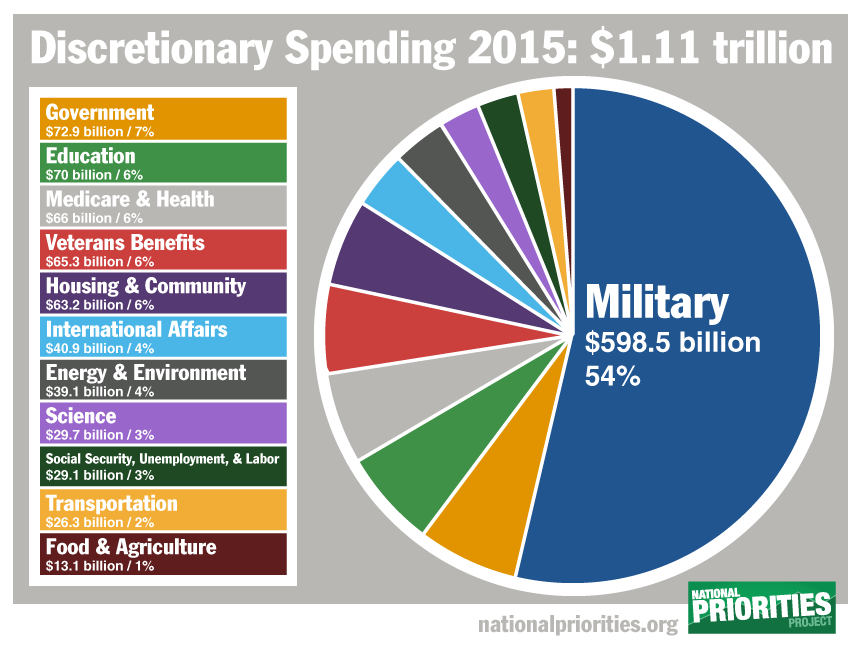
    Also, nuclear weapons programs are enormously costly.  Currently, the U.S. government plans to spend $1 trillion over the next 30 years to refurbish the entire U.S. nuclear weapons complex.  Is this really affordable?  Given the fact that military spending already chews up 54 percent of the federal government’s discretionary spending, an additional $1 trillion for nuclear weapons “modernization” seems likely to come out of whatever now remains of funding for public education, public health, and other domestic programs.

    In addition, the proliferation of nuclear weapons to additional countries remains a constant danger.  The nuclear Non-Proliferation Treaty (NPT) of 1968 was a compact between the non-nuclear nations and nuclear-armed nations, with the former forgoing nuclear weapons development while the latter eliminated their nuclear arsenals.  But the nuclear powers’ retention of nuclear weapons is eroding the willingness of other nations to abide by the treaty.

    Conversely, further nuclear disarmament would result in some very real benefits to the United States.  A significant reduction in the 2,000 U.S. nuclear weapons deployed around the world would reduce nuclear dangers and save the U.S. government enormous amounts of money that could fund domestic programs or simply be returned to happy taxpayers.  Also, with this show of respect for the bargain made under the NPT, non-nuclear nations would be less inclined to embark on nuclear weapons programs.

    Unilateral U.S. nuclear reductions would also generate pressures to follow the U.S. lead.  If the U.S. government announced cutbacks in its nuclear arsenal, while challenging the Kremlin to do the same, that would embarrass the Russian government before world public opinion, the governments of other nations, and its own public.  Eventually, with much to gain and little to lose by engaging in nuclear reductions, the Kremlin might begin making them as well.

    Opponents of nuclear reductions argue that nuclear weapons must be retained, for they serve as a “deterrent.”  But does nuclear deterrence really work?  Ronald Reagan, one of America’s most military-minded presidents, repeatedly brushed off airy claims that U.S. nuclear weapons had deterred Soviet aggression, retorting:  “Maybe other things had.”  Also, non-nuclear powers have fought numerous wars with the nuclear powers (including the United States and the Soviet Union) since 1945.  Why weren’t they deterred?

    Of course, much deterrence thinking focuses on the safety from nuclear attack that nuclear weapons allegedly provide.  But, in fact, U.S. government officials, despite their vast nuclear armada, don’t seem to feel very secure.  How else can we explain their huge financial investment in a missile defense system?  Also, why have they been so worried about the Iranian government obtaining nuclear weapons?  After all, the U.S. government’s possession of thousands of nuclear weapons should convince them that they needn’t worry about the acquisition of nuclear arms by Iran or any other nation.

    Furthermore, even if nuclear deterrence does work, why does Washington require 2,000 deployed nuclear weapons to ensure its efficacy?  A 2002 study concluded that, if only 300 U.S. nuclear weapons were used to attack Russian targets, 90 million Russians (out of a population of 144 million) would die in the first half hour.  Moreover, in the ensuing months, the enormous devastation produced by the attack would result in the deaths of the vast majority of survivors by wounds, disease, exposure, and starvation.  Surely no Russian or other government would find this an acceptable outcome.

    This overkill capacity probably explains why the U.S. Joint Chiefs of Staff think that 1,000 deployed nuclear weapons are sufficient to safeguard U.S. national security.  It might also explain why none of the other seven nuclear powers (Britain, France, China, Israel, India, Pakistan, and North Korea) bothers to maintain more than 300 nuclear weapons.

    Although unilateral action to reduce nuclear dangers might sound frightening, it has been taken numerous times with no adverse consequences.  The Soviet government unilaterally halted nuclear weapons testing in 1958 and, again, in 1985.  Starting in 1989, it also began removing its tactical nuclear missiles from Eastern Europe.  Similarly, the U.S. government, during the administration of U.S. president George H.W. Bush, acted unilaterally to remove all U.S. short-range, ground-launched nuclear weapons from Europe and Asia, as well as all short-range nuclear arms from U.S. Navy vessels around the world―an overall cut of several thousand nuclear warheads.

    Obviously, negotiating an international treaty that banned and destroyed all nuclear weapons would be the best way to abolish nuclear dangers.  But that need not preclude other useful action from being taken along the way.

  • Where Is That Wasteful Government Spending?

    In early September 2016, Donald Trump announced his plan for a vast expansion of the U.S. military, including 90,000 new soldiers for the Army, nearly 75 new ships for the Navy, and dozens of new fighter aircraft for the Air Force.  Although the cost of this increase would be substantial―about $90 billion per year―it would be covered, the GOP presidential candidate said, by cutting wasteful government spending.

    capitol_moneyBut where, exactly, is the waste?  In fiscal 2015, the federal government engaged in $1.1 trillion of discretionary spending, but relatively small amounts went for things like education (6 percent), veterans’ benefits (6 percent), energy and the environment (4 percent), and transportation (2 percent).  The biggest item, by far, in the U.S. budget was military spending:  roughly $600 billion (54 percent).  If military spending were increased to $690 billion and other areas were cut to fund this increase, the military would receive roughly 63 percent of the U.S. government’s discretionary spending.

    Well, you might say, maybe it’s worth it.  After all, the armed forces defend the United States from enemy attack.  But, in fact, the U.S. government already has far more powerful military forces than any other country.  China, the world’s #2 military power, spends only about a third of what the United States does on the military.  Russia spends about a ninth.  There are, of course, occasional terrorist attacks within American borders.  But the vast and expensive U.S. military machine―in the form of missiles, fighter planes, battleships, and bombers―is simply not effective against this kind of danger.

    Furthermore, the U.S. Department of Defense certainly leads the way in wasteful behavior.  As William Hartung, the director of the Arms and Security Project of the Center for International Policy, points out, “the military waste machine is running full speed ahead.”  There are the helicopter gears worth $500 each purchased by the Army at $8,000 each, the $2.7 billion spent “on an air surveillance balloon that doesn’t work,” and “the accumulation of billions of dollars’ worth of weapons components that will never be used.”  Private companies like Halliburton profited handsomely from Pentagon contracts for their projects in Afghanistan, such as “a multimillion-dollar `highway to nowhere,’” a $43 million gas station in nowhere, a $25 million `state of the art’ headquarters for the U.S. military in Helmand Province . . . that no one ever used, and the payment of actual salaries to countless thousands of no ones aptly labeled `ghost soldiers.’”  Last year, Pro Publica created an interactive graphic revealing $17 billion in wasteful U.S. spending uncovered by the U.S. Special Inspector General for Afghan Reconstruction.

    Not surprisingly, as Hartung reports, the Pentagon functions without an auditing system.  Although, a quarter century ago, Congress mandated that the Pentagon audit itself, it has never managed to do so.  Thus, the Defense Department doesn’t know how much equipment it has purchased, how much it has been overcharged, or how many contractors it employs.  The Project on Government Oversight maintains that the Pentagon has spent about $6 billion thus far on “fixing” its audit problem.  But it has done so, Hartung notes, “with no solution in sight.”

    The story of the F-35 jet fighter shows how easily U.S. military spending gets out of hand.   Back in 2001, when the cost of this aircraft-building program was considered astronomical, the initial estimate was $233 billion.  Today, the price tag has more than quadrupled, with estimates ranging from $1.1 trillion to $1.4 trillion, making it the most expensive weapon in human history.  The planes reportedly cost $135 million each, and even the pilots’ helmets run $400,000 apiece.  Moreover, the planes remain unusable.  Although the U.S. Marine Corps and the U.S. Air Force recently declared their versions of the F-35 combat ready, the Pentagon’s top testing official blasted that assertion in a 16-page memo, deriding them as thoroughly unsuitable for combat.  The planes, he reported, had “outstanding performance deficiencies.”  His assessment was reinforced in mid-September 2016, when the Air Force grounded ten of its first F-35 fighters due to problems with their cooling lines.

    U.S. wars, of course, are particularly expensive, as they require the deployment of large military forces and hardware to far-flung places, chew up very costly military equipment, and necessitate veterans’ benefits for the survivors.  Taking these and other factors into account, a recent study at Brown University’s Watson Institute for International and Public Affairs put the cost to U.S. taxpayers of the U.S. wars in Iraq and Afghanistan at nearly $5 trillion thus far.  According to the report’s author, Neta Crawford, this figure is “so large as to be almost incomprehensible.”

    Even without war, another military expense is likely to create a U.S. budgetary crisis over the course of the next thirty years:  $1 trillion for the rebuilding of the U.S. nuclear weapons complex, plus the construction of new nuclear missiles, nuclear submarines, and nuclear-armed aircraft.  Aside from the vast cost, an obvious problem with this expenditure is that these weapons will either never be used or, if they are used, will destroy the world.

    Wasted money, wasted lives, or maybe both.  That’s the promise of increased military spending.


    [Dr. Lawrence Wittner (http://www.lawrenceswittner.com) is Professor of History emeritus at SUNY/Albany.  His latest book is a satirical novel about university corporatization and rebellion, What’s Going On at UAardvark?]

  • Isn’t It Time to Ban the Bomb?

    This article was originally published by History News Network.

    Although the mass media failed to report it, a landmark event occurred recently in connection with resolving the long-discussed problem of what to do about nuclear weapons.  On August 19, 2016, a UN committee, the innocuously-named Open-Ended Working Group, voted to recommend to the UN General Assembly that it mandate the opening of negotiations in 2017 on a treaty to ban them.

    For most people, this recommendation makes a lot of sense.  Nuclear weapons are the most destructive devices ever created.  If they are used―as two of them were used in 1945 to annihilate the populations of Hiroshima and Nagasaki―the more than 15,000 nuclear weapons currently in existence would destroy the world.  Given their enormous blast, fire, and radioactivity, their explosion would bring an end to virtually all life on earth.  The few human survivors would be left to wander, slowly and painfully, in a charred, radioactive wasteland.  Even the explosion of a small number of nuclear weapons through war, terrorism, or accident would constitute a catastrophe of unprecedented magnitude.

    Every President of the United States since 1945, from Harry Truman to Barack Obama, has warned the world of the horrors of nuclear war.  Even Ronald Reagan―perhaps the most military-minded among them―declared again and again:  “A nuclear war cannot be won and must never be fought.”

    Fortunately, there is no technical problem in disposing of nuclear weapons.  Through negotiated treaties and unilateral action, nuclear disarmament, with verification, has already taken place quite successfully, eliminating roughly 55,000 nuclear weapons of the 70,000 in existence at the height of the Cold War.

    Also, the world’s other agents of mass destruction, biological and chemical weapons, have already been banned by international agreements.

    Naturally, then, most people think that creating a nuclear weapons-free world is a good idea.  A 2008 poll in 21 nations around the globe found that 76 percent of respondents favored an international agreement for the elimination of all nuclear weapons and only 16 percent opposed it.  This included 77 percent of the respondents in the United States.

    But government officials from the nine nuclear-armed nations are inclined to view nuclear weapons―or at least their nuclear weapons―quite differently.  For centuries, competing nations have leaned heavily upon military might to secure what they consider their “national interests.”  Not surprisingly, then, national leaders have gravitated toward developing powerful military forces, armed with the most powerful weaponry.  The fact that, with the advent of nuclear weapons, this traditional behavior has become counter-productive has only begun to penetrate their consciousness, usually helped along on such occasions by massive public pressure.

    Consequently, officials of the superpowers and assorted wannabes, while paying lip service to nuclear disarmament, continue to regard it as a risky project.  They are much more comfortable with maintaining nuclear arsenals and preparing for nuclear war.  Thus, by signing the nuclear Non-proliferation Treaty of 1968, officials from the nuclear powers pledged to “pursue negotiations in good faith on . . . a treaty on general and complete disarmament under strict and effective international control.”  And today, nearly a half-century later, they have yet to begin negotiations on such a treaty.  Instead, they are currently launching yet another round in the nuclear arms race.  The U.S. government alone is planning to spend $1 trillion over the next 30 years to refurbish its entire nuclear weapons production complex, as well as to build new air-, sea-, and ground-launched nuclear weapons.

    Of course, this enormous expenditure―plus the ongoing danger of nuclear disaster―could provide statesmen with a powerful incentive to end 71 years of playing with their doomsday weapons and, instead, get down to the business of finally ending the grim prospect of nuclear annihilation.  In short, they could follow the lead of the UN committee and actually negotiate a ban on nuclear weapons as the first step toward abolishing them.

    But, to judge from what happened in the UN Open-Ended Working Group, a negotiated nuclear weapons ban is not likely to occur.  Uneasy about what might emerge from the committee’s deliberations, the nuclear powers pointedly boycotted them.  Moreover, the final vote in that committee on pursuing negotiations for a ban was 68 in favor and 22 opposed, with 13 abstentions.  The strong majority in favor of negotiations was comprised of African, Latin American, Caribbean, Southeast Asian, and Pacific nations, with several European nations joining them.  The minority came primarily from nations under the nuclear umbrellas of the superpowers.  Consequently, the same split seems likely to occur in the UN General Assembly, where the nuclear powers will do everything possible to head off UN action.

    Overall, then, there is a growing division between the nuclear powers and their dependent allies, on the one hand, and a larger group of nations, fed up with the repeated evasions of the nuclear powers in dealing with the nuclear disaster that threatens to engulf the world.  In this contest, the nuclear powers have the advantage, for, when all is said and done, they have the option of clinging to their nuclear weapons, even if that means ignoring a treaty adopted by a clear majority of nations around the world.  Only an unusually firm stand by the non-nuclear nations, coupled with an uprising by an aroused public, seems likely to awaken the officials of the nuclear powers from their long sleepwalk toward catastrophe.

  • Are We in for Another Increase in Military Spending?

    At the present time, an increase in U.S. military spending seems as superfluous as a third leg.  The United States, armed with the latest in advanced weaponry, has more military might than any other nation in world history.  Moreover, it has begun a $1 trillion program to refurbish its entire nuclear weapons complex.  America’s major military rivals, China and Russia, spend only a small fraction of what the United States does on its armed forces―in China’s case about a third and in Russia’s case about a ninth.  Furthermore, the economic outlay necessary to maintain this vast U.S. military force constitutes a very significant burden.  In fiscal 2015, U.S. military spending ($598.5 billion) accounted for 54 percent of the U.S. government’s discretionary spending.

    Certainly most Americans are not clamoring for heightened investments in war and war preparations.  According to a Gallup poll conducted in February 2016, only 37 percent of respondents said the U.S. government spent too little “for national defense and military purposes,” compared to 59 percent who said it spent too much (32 percent) or about the right amount (27 percent).

    These findings were corroborated by a Pew Research Center survey in April 2016, which reported that 35 percent of American respondents favored increasing U.S. military spending, 24 percent favored decreasing it, and 40 percent favored keeping it the same.  Although these latest figures show a rise in support for increasing military spending since 2013, this occurred mostly among Republicans.  Indeed, the gap in support for higher military spending between Republicans and Democrats, which stood at 25 percentage points in 2013, rose to 41 points by 2016.

    Actually, it appears that, when Americans are given the facts about U.S. military spending, a substantial majority of them favor reducing it.  Between December 2015 and February 2016, the nonpartisan Voice of the People, affiliated with the University of Maryland, provided a sample of 7,126 registered voters with information on the current U.S. military budget, as well as leading arguments for and against it.  The arguments were vetted for accuracy by staff members of the House and Senate appropriations subcommittees on defense.  Then, when respondents were asked their opinion about what should be done, 61 percent said they thought U.S. military spending should be reduced.  The biggest cuts they championed were in spending for nuclear weapons and missile defense systems.

    When it comes to this year’s presumptive Presidential candidates, however, quite a different picture emerges.  The Republican nominee, Donald Trump, though bragging about building “a military that’s gonna be much stronger than it is right now,” has on occasion called for reducing military expenditures.  On the other hand, his extraordinarily aggressive foreign policy positions have led defense contractors to conclude that, with Trump in the White House, they can look forward to sharp increases in U.S. military spending.  Indeed, insisting that U.S. military power has shrunk to a pitiful level under President Obama, he has promised that, under his presidency, it would be “funded beautifully.”  In March 2016, when Trump appeared on Fox News, he made that commitment more explicit by promising to increase military spending.

    Given the considerably more dovish orientation of the Democratic electorate, one would expect Hillary Clinton to stake out a position more opposed to a military buildup.  But, thus far, she has been remarkably cagey about this issue.  In September 2015, addressing a campaign meeting in New Hampshire, Clinton called for the creation of a high-level commission to examine U.S. military spending.  But whether the appointment of such a commission augurs increases or decreases remains unclear.  Meanwhile, her rather hawkish foreign policy record has convinced observers that she will support a military weapons buildup.  The same conclusion can be drawn from the “National Security” section of her campaign website, which declares:  “As president, she’ll ensure the United States maintains the best-trained, best-equipped, and strongest military the world has ever known.”

    Although the big defense contractors generally regard Clinton, like Trump, as a safe bet, they exercise even greater influence in Congress, where they pour substantially larger amounts of money into the campaign coffers of friendly U.S. Senators and Representatives.  Thus, even when a President doesn’t back a particular weapons system, they can usually count on Congress to fund it.  As a Wall Street publication recently crowed:  “No matter who wins the White House this fall, one thing is clear:  Defense spending will climb.”

    Will it?  Probably so, unless public pressure can convince a new administration in Washington to adopt a less militarized approach to national and international security.


    Dr. Lawrence Wittner (http://www.lawrenceswittner.com) is Professor of History emeritus at SUNY/Albany.  His latest book is a satirical novel about university corporatization and rebellion, What’s Going On at UAardvark? He is also a NAPF Associate.

  • The Trillion Dollar Question

    [Dr. Lawrence Wittner (http://www.lawrenceswittner.com) is Professor of History emeritus at SUNY/Albany.  His latest book is a satirical novel about university corporatization and rebellion, What’s Going On at UAardvark?]

    Isn’t it rather odd that America’s largest single public expenditure scheduled for the coming decades has received no attention in the 2015-2016 presidential debates?

    The expenditure is for a thirty-year program to “modernize” the U.S. nuclear arsenal and production facilities.  Although President Obama began his administration with a dramatic public commitment to build a nuclear weapons-free world, that commitment has long ago dwindled and died.  It has been replaced by an administration plan to build a new generation of U.S. nuclear weapons and nuclear production facilities to last the nation well into the second half of the twenty-first century.  This plan, which has received almost no attention by the mass media, includes redesigned nuclear warheads, as well as new nuclear bombers, submarines, land-based missiles, weapons labs, and production plants.  The estimated cost?  $1,000,000,000,000.00—or, for those readers unfamiliar with such lofty figures, $1 trillion.

    Critics charge that the expenditure of this staggering sum will either bankrupt the country or, at the least, require massive cutbacks in funding for other federal government programs.  “We’re . . . wondering how the heck we’re going to pay for it,” admitted Brian McKeon, an undersecretary of defense.  And we’re “probably thanking our stars we won’t be here to have to have to answer the question,” he added with a chuckle.

    Of course, this nuclear “modernization” plan violates the terms of the 1968 nuclear Non-Proliferation Treaty, which requires the nuclear powers to engage in nuclear disarmament.  The plan is also moving forward despite the fact that the U.S. government already possesses roughly 7,000 nuclear weapons that can easily destroy the world.  Although climate change might end up accomplishing much the same thing, a nuclear war does have the advantage of terminating life on earth more rapidly.

    This trillion dollar nuclear weapons buildup has yet to inspire any questions about it by the moderators during the numerous presidential debates.  Even so, in the course of the campaign, the presidential candidates have begun to reveal their attitudes toward it.

    On the Republican side, the candidates—despite their professed distaste for federal expenditures and “big government”—have been enthusiastic supporters of this great leap forward in the nuclear arms race.  Donald Trump, the frontrunner, contended in his presidential announcement speech that “our nuclear arsenal doesn’t work,” insisting that it is out of date.  Although he didn’t mention the $1 trillion price tag for “modernization,” the program is clearly something he favors, especially given his campaign’s focus on building a U.S. military machine “so big, powerful, and strong that no one will mess with us.”

    His Republican rivals have adopted a similar approach.  When a peace activist questioned Ted Cruz on the campaign trail about whether he agreed with Ronald Reagan on the need to eliminate nuclear weapons, the Texas senator replied:  “I think we’re a long way from that and, in the meantime, we need to be prepared to defend ourselves.  The best way to avoid war is to be strong enough that no one wants to mess with the United States.”  Apparently, Republican candidates are particularly worried about being “messed with.”

    On the Democratic side, Hillary Clinton has been more ambiguous about her stance toward a dramatic expansion of the U.S. nuclear arsenal.  Asked by a peace activist about the trillion dollar nuclear plan, she replied that she would “look into that,” adding:  “It doesn’t make sense to me.”  Even so, like other issues that the former secretary of state has promised to “look into,” this one remains unresolved.  Moreover, the “National Security” section of her campaign website promises that she will maintain the “strongest military the world has ever known”—not a propitious sign for critics of nuclear weapons.

    Only Bernie Sanders has adopted a position of outright rejection.  In May 2015, shortly after declaring his candidacy, Sanders was asked at a public meeting about the trillion dollar nuclear weapons program.  He replied:  “What all of this is about is our national priorities.  Who are we as a people?  Does Congress listen to the military-industrial complex” that “has never seen a war that they didn’t like?  Or do we listen to the people of this country who are hurting?”  In fact, Sanders is one of only three U.S. Senators who support the SANE Act, legislation that would significantly reduce U.S. government spending on nuclear weapons.  In addition, on the campaign trail, Sanders has not only called for cuts in spending on nuclear weapons, but has affirmed his support for their total abolition.

    Nevertheless, given the failure of the presidential debate moderators to raise the issue of nuclear weapons “modernization,” the American people have been left largely uninformed about the candidates’ opinions on this subject.  So, if Americans would like more light shed on their future president’s response to this enormously expensive surge in the nuclear arms race, it looks like they are the ones who are going to have to ask the candidates the trillion dollar question.

  • Modernizing the Opportunities for Nuclear War

    Lawrence WittnerA fight now underway over newly-designed U.S. nuclear weapons highlights how far the Obama administration has strayed from its commitment to build a nuclear-free world.
    The fight, as a recent New York Times article indicates, concerns a variety of nuclear weapons that the U.S. military is currently in the process of developing or, as the administration likes to say, “modernizing.”  Last year, the Pentagon flight-tested a mock version of the most advanced among them, the B61 Model 12.  This redesigned nuclear weapon is the country’s first precision-guided atomic bomb, with a computer brain and maneuverable fins that enable it to more accurately target sites for destruction.  It also has a “dial-a-yield” feature that allows its handlers to adjust the level of its explosive power.

    Supporters of this revamped weapon of mass destruction argue that, by ensuring greater precision in bombing “enemy” targets, reducing the yield of a nuclear blast, and making a nuclear attack more “thinkable,” the B61 Model 12 is actually a more humanitarian and credible weapon than older, bigger versions.  Arguing that this device would reduce risks for civilians near foreign military targets, James Miller, who developed the nuclear weapons modernization plan while undersecretary of defense, stated in a recent interview that “minimizing civilian casualties if deterrence fails is both a more credible and a more ethical approach.”

    Other specialists were far more critical.  The Federation of Atomic Scientists pointed out that the high accuracy of the weapon and its lower settings for destructiveness might tempt military commanders to call for its use in a future conflict.

    General James E. Cartright, a former head of the U.S. Strategic Command and a retired vice chair of the Joint Chiefs of Staff, conceded that possessing a smaller nuclear device did make its employment “more thinkable.”  But he supported developing the weapon because of its presumed ability to enhance nuclear deterrence.  Using a gun as a metaphor, he stated:  “It makes the trigger easier to pull but makes the need to pull the trigger less likely.”

    Another weapon undergoing U.S. government “modernization” is the cruise missile.  Designed for launching by U.S. bombers, the weapon—charged William Perry, a former secretary of defense—raised the possibilities of a “limited nuclear war.”  Furthermore, because cruise missiles can be produced in nuclear and non-nuclear versions, an enemy under attack, uncertain which was being used, might choose to retaliate with nuclear weapons.

    Overall, the Obama administration’s nuclear “modernization” program—including not only redesigned nuclear weapons, but new nuclear bombers, submarines, land-based missiles, weapons labs, and production plants—is estimated to cost as much as $1 trillion over the next thirty years.  Andrew C. Weber, a former assistant secretary of defense and former director of the interagency body that oversees America’s nuclear arsenal, has criticized it as “unaffordable and unneeded.”  After all, the U.S. government already has an estimated 7,200 nuclear weapons.

    The nuclear weapons modernization program is particularly startling when set against President Obama’s April 2009 pledge to build a nuclear weapons-free world.  Although this public commitment played a large part in his receipt of the Nobel Peace Prize that year, in succeeding years the administration’s action on this front declined precipitously.  It did manage to secure a strategic arms reduction treaty (New START) with Russia in 2010 and issue a pledge that same year that the U.S. government would “not develop new nuclear warheads.”  But, despite promises to bring the 1996 Comprehensive Test Ban Treaty to the Senate for ratification and to secure further nuclear arms agreements with Russia, nuclear disarmament efforts ground to a halt.  Instead, plans for “nuclear modernization” began.  The president’s 2016 State of the Union address contained not a word about nuclear disarmament, much less a nuclear weapons-free world.

    What happened?

    Two formidable obstacles derailed the administration’s nuclear disarmament policy.  At home, powerful forces moved decisively to perpetuate the U.S. nuclear weapons program:  military contractors, the weapons labs, top military officers, and, especially, the Republican Party.  Republican support for disarmament treaties was crucial, for a two-thirds vote of the U.S. Senate was required to ratify them.  Thus, when the Republicans abandoned the nuclear arms control and disarmament approach of past GOP presidents and ferociously attacked the Obama administration for “weakness” or worse, the administration beat an ignominious retreat.  To attract the backing of Republicans for the New START Treaty, it promised an upgraded U.S. nuclear weapons program.

    Russia’s lack of interest in further nuclear disarmament agreements with the United States provided another key obstacle.  With 93 percent of the world’s nuclear weapons in the arsenals of these two nations, a significant reduction in nuclear weapons hinged on Russia’s support for it.  But, angered by the sharp decline of its power in world affairs, including NATO’s advance to its borders, the Russian government engaged in its own nuclear buildup and spurned U.S. disarmament proposals.

    Despite these roadblocks, the Obama administration could renew the nuclear disarmament process.  Developing better relations with Russia, for example by scrapping NATO’s provocative expansion plan, could smooth the path toward a Russian-American nuclear disarmament agreement.  And this, in turn, would soften the objections of the lesser nuclear powers to reducing their own nuclear arsenals.  If Republican opposition threatened ratification of a disarmament treaty, it could be bypassed through an informal U.S.-Russian agreement for parallel weapons reductions.  Moreover, even without a bilateral agreement, the U.S. government could simply scrap large portions of its nuclear arsenal, as well as plans for modernization.  Does a country really need thousands of nuclear weapons to deter a nuclear attack?  Britain possesses only 215.  And the vast majority of the world’s nations don’t possess any.

    Given the terrible dangers and costs posed by nuclear weapons, isn’t it time to get back on the disarmament track?