Blog

  • Commemorating the Treaty of Tlatelolco

    Rick Wayman delivered the Spanish version of this talk (below) on November 18. 2016, in Tijuana, Mexico, at an event commemorating the 50th anniversary of the Treaty of Tlatelolco.

    Thank you very much to all of the organizers of this important event, and to all of you for being here today. It is an honor to be a part of this event to commemorate the Treaty of Tlatelolco and the nuclear weapon-free zone in Latin America and the Caribbean.

    I am a dual citizen of the United States and United Kingdom. Both of my countries possess nuclear weapons and continue to cling to them. Mexico, on the other hand, has been a leader in the movement for the abolition of nuclear weapons for many decades. It is reassuring to know that my neighbor to the south is dedicated to working for nuclear disarmament.

    I have had the honor of working as a consultant to another nation that is standing up for nuclear abolition. Two years ago, the Republic of the Marshall Islands filed lawsuits against the world’s nine nuclear-armed nations at the International Court of Justice for their failure to negotiate in good faith for nuclear disarmament, as required under international law. They also filed a lawsuit in U.S. federal court against the United States. The International Court of Justice recently dismissed the lawsuits on a technicality, but the case against the United States continues. We expect oral arguments to take place in San Francisco in February 2017.

    Nuclear weapons pose a grave threat to every one of us. They threaten every person we love, every child, and every beautiful thing that has ever been created and cherished. They threaten the very future of life on our planet.

    In a few weeks, Donald Trump will have control of the U.S. nuclear arsenal. He is a man who has shown erratic, impulsive behavior. This is very dangerous. But just as dangerous is public apathy, which is why gatherings like this are so important. By working together, we will achieve our goal of a world free of nuclear weapons.

    On behalf of the Nuclear Age Peace Foundation and our 80,000 members around the world, thank you for inviting us to be a part of this distinguished ceremony.


    Quiero empezar por agradecerles a todos los organizadores de este importante evento y a todos ustedes por estar aquí hoy. Es un honor ser parte de este encuentro para conmemorar el Tratado de Tlatelolco y la zona libre de armas nucleares en Latinoamérica y el Caribe.

    Soy ciudadano de doble nacionalidad: soy tanto de los Estados Unidos como del Reino Unido. Lamentablemente, mis dos países poseen armas nucleares y siguen aferrándose a ellas. México, por el contrario, ha sido un líder en el movimiento para abolir las armas nucleares desde hace ya muchas décadas. Debo decir que es alentador saber que mi vecino del sur se dedica a trabajar por el desarme nuclear.

    Yo he tenido el honor de trabajar como consultor para otra nación que también está luchando por abolir las armas nucleares. Hace dos años, la República de las Islas Marshall demandó ante la Corte Internacional de Justicia a las nueve naciones nuclearmente armadas del mundo por su negativa a negociar de buena fe para lograr el desarme nuclear, tal y como lo exige el derecho internacional. También demandó a los Estados Unidos ante una corte federal estadounidense. Desafortunadamente, la Corte Internacional de Justicia recientemente desestimó las demandas debido a un tecnicismo, pero el caso en contra de los Estados Unidos sigue en pie. Esperamos que se presenten los argumentos orales en San Francisco en febrero de 2017.

    Las armas nucleares representan una terrible amenaza para todos y cada uno de nosotros. Amenazan a todas las personas que amamos, a todos los niños, y a cuanta creación hermosa que alguna vez fue admirada y querida. Amenazan el futuro de la vida en nuestro planeta.

    En unas semanas, Donald Trump controlará el arsenal nuclear de los Estados Unidos. Trump ha mostrado tener un comportamiento errático e impulsivo, lo que resulta sumamente peligroso. No obstante, igual de peligrosa es la apatía del público general, y es por eso que es importante que se den encuentros como este. Al trabajar juntos lograremos nuestro objetivo de un mundo libre de armas nucleares.

    En nombre de la Nuclear Age Peace Foundation y de nuestros 80.000 miembros en todo el mundo, quiero agradecerles habernos invitado a formar parte de esta distinguida ceremonia.

  • The Fierce Urgency of Nuclear Zero: Changing the Discourse – A Symposium Overview

    THE FIERCE URGENCY OF NUCLEAR ZERO: CHANGING THE DISCOURSE
    A SYMPOSIUM OVERVIEW
    By David Krieger

    From L to R: Front Row: Daniel Ellsberg, David Krieger, Noam Chomsky. Second Row: Paul K. Chappell, Rick Wayman, Elaine Scarry, Steven Starr, Richard Falk, Jackie Cabasso, Jennifer Simons, Peter Kuznick, Judith Lipton, Kimiaki Kawai. Third Row: Robert Laney, Mark Hamilton, Daniel Smith, John Mecklin, Hans Kristensen, Rich Appelbaum.
    From L to R: Front Row: Daniel Ellsberg, David Krieger, Noam Chomsky. Second Row: Paul K. Chappell, Rick Wayman, Elaine Scarry, Steven Starr, Richard Falk, Jackie Cabasso, Jennifer Simons, Peter Kuznick, Judith Lipton, Kimiaki Kawai. Third Row: Robert Laney, Mark Hamilton, Daniel Smith, John Mecklin, Hans Kristensen, Rich Appelbaum.

    The Nuclear Age Peace Foundation (NAPF) hosted a symposium on October 24-25, 2016 on “The Fierce Urgency of Nuclear Zero: Changing the Discourse.”  The symposium participants, long-time experts on nuclear dangers, included Noam Chomsky, Daniel Ellsberg and Richard Falk.  For a complete list of participants, click here.   Participants voiced concerns that nuclear dangers are increasing in many parts of the world, including Europe, the Middle East, South Asia and Northeast Asia.  Particular concern was expressed over the deterioration in US-Russian relations.  Speakers stressed that a war between the U.S. and Russia is possible, even likely, under current conditions; that such a war could escalate to nuclear exchanges; and could, in that case, trigger a Nuclear Famine or a Nuclear Winter and be a war to end civilization and even cause the extinction of the human species and many other forms of life on the planet.  These concerns are not meant to be alarmist, but they are meant to sound an alarm.

    Hope to Action

    There was general agreement that nuclear war poses an existential threat to humankind and that the warning sirens are now sounding.  There is hope that such a war can be avoided, but that hope, while necessary, is not sufficient to end the nuclear threat now facing humanity and complex life on the planet.  Hope must be joined with action to end the nuclear weapons era in order to abolish nuclear weapons before they abolish us.  And the action must be preventive in nature since there is virtually no possibility of recovery from a nuclear war.  In fact, if one side only were to launch its nuclear arsenal at the other and there were no retaliatory response, the likelihood is that the initial attack would be sufficient to destroy not only the opponent but the attacking side as well.  Thus, Mutual Assured Destruction (MAD) must not be reconsidered in light of Self-Assured Destruction (SAD), even for the attacking side.

    U.S.-Russia Temperatures Rise

    The U.S. and Russia must step back from the confrontations in which they have been engaged in Europe, Ukraine, Syria, the Middle East and elsewhere.  The discourse must be shifted from confrontation and military might to finding common ground through diplomacy to step back from the brink.  This is the only sensible way forward.  As many leaders, including Ronald Reagan and Mikhail Gorbachev, have long realized and stated, “A nuclear war cannot be won and must never be fought.”

    Citizens of the two countries, as well as leaders, have a role to play in assuring their common future.  It is time for citizens to enter the discourse in their own interests and those of their families and communities.  We have come too far to sacrifice the future on the dangerous shoals of nationalism, militarism and nuclearism.   As Einstein warned early in the Nuclear Age, “The unleashed power of the atom has changed everything save our modes of thinking, and thus we drift toward unparalleled catastrophe.”  We must change our modes of thinking, our discourse and our actions if we are to prevent a catastrophic nuclear war, one that could be initiated by malice or mistake, by anger or accident.

    The goal must be complete nuclear disarmament, and required negotiations to achieve a nuclear weapon-free world must commence now.  It is positive news that non-nuclear weapon states at the United Nations have voted to begin negotiations in March 2017 for a treaty to ban and eliminate nuclear weapons.  Unfortunately, all nuclear weapon states except North Korea voted against the resolution to begin negotiations or abstained, as did most of the U.S. allies who shelter under its nuclear umbrella.  Such attachment to nuclear weapons and the policies that sustain them is dangerous in the extreme and sends exactly the wrong message to the world.  It is a display of hubris when wisdom is desperately needed.  The question for the non-nuclear weapon states is: can they create a meaningful nuclear ban treaty – one with normative and moral strength – without the participation of key nuclear weapons states?  There was general agreement that the negotiations for a treaty to fill the legal gap in prohibiting and eliminating nuclear weapons is one of the most important and promising initiatives currently on the international agenda.

    Youth and the Media Must Take the Lead

    There was discussion that two groups in particular could lead the way toward ending the nuclear era: the media because of their power and influential outreach, and youth because of their larger stake in the human future.

    The media needs to get and convey the message that nuclear weapons pose far too great a risk to the human future, and nuclear war would be a catastrophe beyond our ability to imagine.  The media must awaken to the existential dangers of nuclear war and help to awaken people throughout the world to these dangers.  Just as the media has helped to propel a widespread understanding of the existential dangers of climate change, it must do the same for nuclear dangers through documentaries, feature films, news and analysis, fiction, and the use of various forms of social media.

    How to break through the ignorance and apathy of young people regarding nuclear dangers was recognized as a significant challenge.  It was noted that documentaries, like “The Untold History of the United States,” seem to hold promise for reaching this audience and that more of this educational work needs to be done.  The Bulletin of the Atomic Scientists “Voices of Tomorrow” program, which involves young writers in the Bulletin’s web content, also offers hope for the next generation’s involvement.  And capturing the attention of the Bernie Sanders movement could also offer a way to mobilize young people around the need for nuclear weapons abolition.  Further, it would be valuable to expand the use of NAPF’s Peace Literacy Program in schools, places of worship and social organizations such as Rotary International.

    The Wisdom of Russell and Einstein

    The symposium concluded with reference to a key paragraph from one of the most important documents of the 20th century, the Russell-Einstein Manifesto: “There lies before us, if we choose, continual progress in happiness, knowledge and wisdom.  Shall we instead choose death, because we cannot forget our quarrels?  We appeal as human beings to human beings: Remember your humanity and forget the rest.  If you can do so, the way lies open to a new Paradise; if you cannot, there lies before you the risk of universal death.”

    This warning is as valid today as when it was issued in 1955, but it has been largely overlooked or forgotten.  It could become the basis for a new discourse for humanity.


    For more information on the symposium, click here.

  • Donald Trump, the Bomb, and the Human Future

    donald_trumpDonald Trump and the Bomb are nearly the same age.  Which of them will prove to be more destructive remains to be seen, but in combination they are terrifying.

    Trump was born on June 14, 1946, less than a year after the first and, thus far, only nuclear weapons were used in war.  Given Trump’s surprising recent election as president of the United States, his fate and that of the Bomb are about to become seriously and dangerously intertwined with the fate of all humanity.

    On January 20, 2017, Trump will be sworn in as the 45th president of the United States, and he will be given the nuclear codes and the power to launch the U.S. nuclear arsenal, which is comprised of some 7,000 nuclear weapons.  A military officer will always be close to Trump, carrying the nuclear codes in a briefcase known as the “football.”  What does this portend for civilization and the future of humanity?

    The Singular Positive

    The most positive policy proposal Trump will bring to the table as president is his desire to improve and strengthen relations between the U.S. and Russia, which have deteriorated badly in recent years.  This is one hopeful sign that could lead to renewed efforts by the two countries to reduce their nuclear arsenals and reverse current plans to modernize these arsenals.

    The Numerous Negatives

    Trump’s behavior during the presidential campaign was often erratic, seemingly based on discernable personality traits, including narcissism, arrogance, impulsiveness, and a lack of predictability.  If these traits provide a fair characterization of Trump’s personality, what do they suggest for his control of the U.S. nuclear arsenal?

    Trump’s narcissism seems to be reflected in his need to be liked and treated positively.  During the primaries, if another candidate criticized him, Trump would respond with even stronger criticism toward his attacker.  On the other hand, if someone praised Trump, he would respond with praise.  This could result in creating a spiral in either a positive or negative direction.  A negative spiral could potentially get out of hand, which would be alarming with regard to anyone with a hand hovering near the nuclear button.

    His narcissism was also reflected in his need to be right.  Even though Trump is reported to not read very much and to have a limited range of experience, he is often certain that he is right and boldly asserts the correctness of his positions.  At one point, for example, he argued that he knew much more than military leaders about the pursuit and defeat of ISIS.  His assuredness of his own correctness seems also rooted in arrogance reflecting his fundamental insecurity.  This insecurity and his belief in his own rightness, when combined with his success at making money, leads him to be self-reliant in his decision-making, which could result in his taking risks with threatening or using nuclear weapons.  He said on MSNBC’s Morning Joe program, “My primary consultant is myself.”  While this may make consensus easy, the range of perspective is dangerously narrow.

    Two other personality traits could also make more likely Trump’s use of nuclear weapons: his impulsiveness and his lack of predictability.  Impulsiveness is not a trait one would choose for a person with the power to launch the U.S. nuclear arsenal.  When it comes to deciding to use the Bomb, a personality that is calm, clear and measured would seem to inspire more confidence that caution would be employed.  Predictability would also seem to inspire confidence that a President Trump would refrain from deciding to respond with overwhelming force when he is in a negative spiral and out of patience with a country or terrorist organization that is challenging the U.S., which he may interpret as mounting a challenge to himself personally.

    Where Does Trump Stand?

    On many issues, including on the use of nuclear weapons, it is not clear where Trump stands, due to his contradictory statements.  Here is what Trump said in March 2016 at a town hall event when host Chris Matthews asked him if he might use nuclear weapons:

    Trump: “I’d be the last one to use the nuclear weapons, because that’s sort of like the end of the ballgame.”

    Matthews: “So, can you take it off the table now? Can you tell the Middle East we are not using the nuclear weapon on anybody?”

    Trump: “I would never say that. I would never take any of my cards off the table.”

    Matthews: “How about Europe? We won’t use it in Europe.”

    Trump: “I’m not going to take it off the table for anybody.”

    Matthews: “You might use it in Europe?”

    Trump: “No. I don’t think so, but — I am not taking cards off the table. I’m not going to use nukes, but I’m not taking cards off the table.”

    Trump has also said that he would do away with the Iran Deal negotiated by the U.S. and five of its allies with Iran, and yet he recently backed away from vowing to scrap the Iran Deal for now.  He also said that he would encourage Japan and South Korea to develop their own nuclear arsenals to lower U.S. costs, and then has denied that he would encourage nuclear proliferation to allies (although he did say so).  He supports the modernization of the U.S. nuclear arsenal, while complaining about budget expenditures.  He presumably intends to go forward with the $1 trillion nuclear modernization plan.

    Conclusion

    Perhaps the singular positive of Trump’s desire to improve the deteriorating relations between the U.S. and Russia will lead to achieving progress toward a world free of nuclear weapons.  A lot will depend on who Trump chooses for key cabinet positions, but even more will depend on his consultations with his key advisor (himself).

    That so much power over the U.S. nuclear arsenal is placed in the hands of one man – any man – bodes ill for humanity, while completely undermining the war power granted to Congress in the U.S. constitution.  That the man in question should be Donald Trump, with all his personal flaws, challenges the United States and the world as never before in human history.


    David Krieger is president of the Nuclear Age Peace Foundation (www.wagingpeace.org).

    Vaya aquí para la versión española.

  • Donald Trump, La Bomba y el Futuro Humano

    Por David Krieger
    Traducción de Rubén D. Arvizu

    donald_trumpDonald Trump y la Bomba atómica tienen casi la misma edad. ¿Cuál de esto resultará ser más destructivo.?  Es algo que queda por verse, pero la combinación es aterradora.

    Trump nació el 14 de junio de 1946, menos de un año después del primer y, hasta ahora, único uso de  armas nucleares en la guerra. Dada la sorprendente elección reciente de Trump como presidente de Estados Unidos, su destino y el de la bomba están a punto de entrelazarse peligrosamente con el destino de toda la humanidad.

    El 20 de enero de 2017, Trump será juramentado como el 45.o presidente de los Estados Unidos, y le serán entregados los códigos nucleares y el poder de lanzar el arsenal de  EEUU, que está compuesto de cerca de 7.000 armas nucleares. Un oficial militar siempre estará cerca de Trump, llevando los códigos nucleares en un maletín conocido como el “fútbol”. ¿Qué presagia esto para la civilización y el futuro de la humanidad?

    Lo Positivo Singular

    La propuesta de política más positiva que Trump traerá a la mesa como presidente es su deseo de mejorar y fortalecer las relaciones entre  EE.UU. y Rusia, que se han deteriorado en los últimos años. Este es un signo esperanzador que podría llevar a renovar los esfuerzos de los dos países para reducir sus arsenales nucleares y revertir los planes actuales para modernizar este armamento.

    Lo Negativo Numeroso

    El comportamiento de Trump durante la campaña presidencial fue francamente errático, aparentemente basado en discernibles rasgos de personalidad, incluyendo narcisismo, arrogancia, impulsividad, y una falta de previsibilidad.  Si estos rasgos proporcionan una caracterización justa de la personalidad de Trump, ¿qué sugieren para su control del arsenal nuclear estadounidense?

    El narcisismo de Trump parece reflejarse en su necesidad de ser aceptado y tratado positivamente.  Durante las primarias de la campaña presidencial, si otro candidato lo criticaba, Trump respondía con críticas aún más fuertes hacia su atacante. Por otro lado, si alguien alababa a Trump, él respondía con alabanza. Esto resulta en la creación de una espiral en una dirección positiva o negativa. Una espiral negativa puede salirse de control, lo que sería alarmante con respecto a cualquier persona con la mano muy cerca del botón nuclear.

    Su narcisismo también se refleja en su necesidad de tener razón. A pesar de que se dice que Trump no lee mucho y tiene un rango limitado de experiencia, siempre asegura de que tiene razón y despreocupadamente afirma que sus posiciones son correctas.  En un momento, por ejemplo, argumentó que sabía mucho más que los líderes militares acerca de la persecución y derrota de ISIS. La seguridad con la que se empecina en estar correcto parece también estar arraigada en la arrogancia que refleja su inseguridad fundamental. Esta inseguridad y su creencia en su propia rectitud, cuando se combina con su éxito en hacer dinero, le lleva a ser autosuficiente en su toma de decisiones, lo que podría resultar en que tome riesgos ante amenazas o el uso de armas nucleares.  Él lo dijo en el programa Morning Joe de MSNBC, “Mi consultor principal soy yo mismo.”  Aunque esto puede hacer que el consenso sea simple la gama de perspectivas es peligrosamente estrecha.

    Otros dos rasgos de su personalidad también podrían hacer más posible que Trump decida usar armas nucleares: su impulsividad y su falta de previsibilidad.  Impulsividad no es un rasgo que se elija para una persona con el poder de lanzar el arsenal nuclear de los EE.UU.   Cuando se trata de decidir usar la bomba, una personalidad que es tranquila, clara y razonable inspira más confianza en que la precaución sería empleada.  La falta de  previsibilidad también inspira desconfianza de que el Presidente Trump se abstendría de responder con fuerza abrumadora cuando esté en una espiral negativa y pierda la paciencia con un país o una organización terrorista que esté desafiando a Estados Unidos, lo que él podría interpretar como un reto personal.

    ¿Cuál es su posición?

    En muchos temas, incluyendo el uso de armas nucleares, no está claro cuál es la posición de Trump, debido a sus declaraciones contradictorias. Esto es lo que dijo Trump en marzo de 2016 en un evento público de preguntas y respuestas cuando el anfitrión Chris Matthews le preguntó si consideraba usar armas nucleares:

    Trump: “Yo sería el último en usar las armas nucleares, porque eso es como el final del juego de pelota”.

    Matthews: “Entonces, ¿puede sacar el tema de la mesa ahora? ¿Puede decirle al Medio Oriente que no usaremos armas nucleares contra nadie?”

    Trump: “Nunca diría eso, nunca quitaría ninguna de mis cartas de la mesa”.

    Matthews: “¿Qué dice de Europa ? no la usaremos en Europa”.

    Trump: “No retiro la posibilidad para nadie”.

    Matthews: ¿Podría usarlas en Europa?

    Trump: No. Creo que no, pero no voy a sacar las cartas de la mesa, no voy a usar armas nucleares, pero no voy a sacar las cartas de la mesa.

    Trump también dijo que acabaría con el acuerdo negociado por los Estados Unidos y cinco de sus aliados con Irán, y sin embargo recientemente pareció decir que abandonaría la idea de terminar el acuerdo de Irán por ahora.  También dijo que alentaría a Japón y Corea del Sur a desarrollar sus propios arsenales nucleares para bajar los costos para EE.UU., y luego ha negado que alentaría la proliferación nuclear a sus aliados (aunque lo dijo). Apoya la modernización del arsenal nuclear estadounidense, mientras se queja de los gastos presupuestarios. Presumiblemente, se propone seguir adelante con el plan de modernización nuclear de 1 millón de millones de dólares.

    Conclusión

    Quizás el positivo deseo singular de Trump de mejorar las relaciones deterioradas entre Estados Unidos y Rusia podría conducir hacia un mundo libre de armas nucleares.  Mucho dependerá de quién elija Trump para puestos clave del gabinete, pero aún más dependerá de sus consultas con su asesor clave (él mismo).

    El que tanto poder sobre el arsenal nuclear estadounidense se coloque en las manos de un hombre – cualquier hombre – es un mal presagio para el mundo y socava completamente el poder de guerra otorgado por el Congreso en la Constitución de los Estados Unidos.  Y si el hombre en cuestión debe ser Donald Trump, con todos sus defectos personales, eso desafía a los Estados Unidos y al mundo como nunca antes en la historia de la humanidad.


    David Krieger es Presidente de  la Nuclear Age Peace Foundation (www.wagingperace.org)  Es autor y editor de

    muchas obras sobre la paz y la abolición de las armas nucleares, incluyendo “Hablando de Paz: Citas para inspirar

    acción.”

    Rubén D. Arvizu es Director para América Latina de NAPF,  Director General de Comunicaciones Internacionales de WorldArcticFund y

    Director General para América Latina de Ocean Futures Society.

    Click here for the English version.

  • Recordando al Almirante Gene La Rocque

    Por David Krieger
    Traducción de Rubén Arvizu

    Hace poco me enteré de que el almirante Gene La Rocque falleció el 31 de octubre de 2016 a la edad de 98 años. Fue sepultado en el cementerio de Arlington.  Gene tenía una larga carrera en el ejército, ascendiendo al rango de almirante. En 1971, después de su retiro del ejército, fue uno de los principales fundadores del Centro de Información de Defensa (CDI), una organización educativa sin fines de lucro y no partidista que se ocupaba del análisis de asuntos militares y particularmente abusos en gastos de defensa. El CDI fue dirigido por oficiales militares retirados, incluyendo a Gene, quien fue su primer director. La organización apoyó una defensa fuerte, pero se opuso a los gastos excesivos para las armas y también las políticas que aumentaban la probabilidad de una guerra nuclear.

    El almirante Gene La Rocque (I) y el presidente de la NAPF, David Krieger (D), en 1985 en la Noche de Paz de la Nuclear Age Peace Foundation.

    En 1985, la Nuclear Age Peace Foundation otorgó a Gene el Premio al Hombre de Estado Distinguido por su “valiente liderazgo en la causa de la paz” (El nombre del premio fue luego cambiado a Premio Líder Distinguido de la Paz).  Ahí habló sobre “El papel de los militares en la era nuclear”. En su discurso al recibir el premio de la Fundación, Gene compartió algunas ideas importantes. Dijo, por ejemplo, que, basándose en su larga experiencia militar, creía que “la guerra es una manera muy tonta de resolver las diferencias entre las naciones. Y la guerra nuclear es totalmente insana. Gene siempre decía las cosas con claridad.

    También comentó esto sobre la guerra nuclear: “Si vamos a tener una guerra nuclear, no podemos ganarla. ¿Podemos sobrevivir? No lo sé. Nadie lo sabe. Esa es la tragedia – nadie lo sabe. Cualquiera que diga que esta cantidad de gente va a morir y que muchos de ellos van a sobrevivir no sabe de qué está hablando “.

    Refiriéndose a una guerra entre Estados Unidos y la Unión Soviética, dijo: “Nos estamos acercando a una guerra que no queremos, a una guerra que no podemos controlar, a una guerra en la que no podemos defendernos, a una guerra  que no podemos ganar, y una guerra que probablemente no podamos sobrevivir.

    Sustituyamos “Rusia” por “Unión Soviética “, y estas palabras son tan verdaderas hoy como lo eran en 1985.

    Gene La Rocque era un hombre sabio y humilde, que estaba de pie al lado de la justicia y la paz. Sirvió durante muchos años como miembro del Consejo Asesor de la NAPF,  y siempre podíamos contar con él con sus sabios consejos y su decencia absoluta.  Nunca se sintió importante y tenía un gran sentido del humor. Vivió una larga y muy buena vida, e hizo todo lo posible para dejar al mundo como un lugar mejor.

    Les pido a todos que sigamos el consejo de Gene de “hacer algo todos los días si quieren evitar una guerra nuclear”. Ningún consejo de un líder militar podría ser más importante o más útil para el destino de la humanidad.


    David Krieger es Presidente de  la Nuclear Age Peace Foundation (www.wagingperace.org)  Es autor y editor de

    muchas obras sobre la paz y la abolición de las armas nucleares, incluyendo “Hablando de Paz: Citas para inspirar

    acción.”

    Rubén D. Arvizu es Director para América Latina de NAPF,  Director General de Comunicaciones Internacionales de WorldArcticFund y

    Director General para América Latina de Ocean Futures Society.

  • Remembering Admiral Gene La Rocque

    I recently learned that Admiral Gene La Rocque died on October 31, 2016 at the age of 98.  He is buried at Arlington Cemetery.  Gene had a long career in the military, rising to the rank of rear admiral. In 1971, after his retirement from the military, he was one of the principal founders of the Center for Defense Information (CDI), a non-profit, non-partisan educational organization concerned with analysis of military matters and particularly abuses in defense expenditures.  CDI was led by retired military officers, including Gene, who was its first director.  The organization supported a strong defense, but opposed excessive expenditures for weapons and also policies that increased the likelihood of nuclear war.

    Admiral Gene La Rocque (L) and NAPF President David Krieger (R) at the Nuclear Age Peace Foundation's 1985 Evening for Peace.
    Admiral Gene La Rocque (L) and NAPF President David Krieger (R) at the Nuclear Age Peace Foundation’s 1985 Evening for Peace.

    In 1985, the Nuclear Age Peace Foundation gave its Distinguished Statesman Award to Gene for “courageous leadership in the cause of peace.”  (The name of the award was later changed to Distinguished Peace Leadership Award.)  Gene came to Santa Barbara to receive the award and spoke on “The Role of the Military in the Nuclear Age.”  In his speech upon receiving the Foundation’s award, Gene shared some important insights.  He said, for example, that, based upon his long military experience, he believed “that war is a very dumb way to settle differences between nations.  And nuclear war is utterly insane.”  Gene was always a straight talker.

    He also had this to say about nuclear war: “If we are to have a nuclear war, we can’t win it.  Can we survive it?  I don’t know.  Nobody knows.  That’s the tragedy of it – nobody knows.  Anybody that tells you that this many people are going to be killed and this many are going to survive doesn’t know what he’s talking about.”

    Referring to a war between the U.S. and Soviet Union, he said, “We’re getting closer to a war we don’t want, a war we can’t control, a war in which we can’t defend ourselves, a war we can’t win, and a war we probably can’t survive.”  Substitute “Russia” for “Soviet Union,” and these words are as true today as they were in 1985.

    Gene La Rocque was a wise and humble man, who stood squarely on the side of justice and peace.  He served for many years as a member of the Nuclear Age Peace Foundation’s Advisory Council, when we could always count on him for his good advice and his abiding decency.  He was self-deprecating and had a great sense of humor.  He lived a long life and a good life, and he did his utmost to leave the world a better place.

    I urge you to follow Gene’s advice “to do something every day if you want to avert a nuclear war.”  No advice from a military leader could be more important or more useful to the fate of humanity.

    To read Admiral La Rocque’s 1985 speech on “The Role of the Military in the Nuclear Age,” click here.

  • Elections Have Consequences

    Nuclear weapons have posed an existential threat to humanity for decades. They undermine democracy by putting an unbelievable amount of destructive power in the hands of a single individual. They threaten every person we love, every child, and every beautiful thing that has ever been created and cherished. They threaten the very future of life on our planet.

    Elections have consequences. We woke up this morning to a situation in which control of the U.S. nuclear arsenal will soon be handed to President-elect Trump, a man who has shown erratic, impulsive behavior and a lack of understanding of nuclear weapons. This is dangerous. But just as dangerous is public apathy, which is where you come in.

    Will you join us in doing everything in your power to ensure that nuclear weapons are never used? Are you prepared to speak out against the “modernization” of the U.S. nuclear arsenal, which would lead to smaller, more “usable” nuclear weapons? Will you speak out for U.S. leadership to fulfill its obligations under the nuclear Non-Proliferation Treaty to negotiate to achieve a nuclear-zero world?

    We must remind the new president-elect of Ronald Reagan’s critical insight: “A nuclear war cannot be won and must never be fought.”

    Our world needs you. And we need you, as well. Please ask your friends and family to sign up for the free NAPF Sunflower Newsletter and Action Alert Network. Urge them to get engaged on this issue that is critical to our survival.

    Now, more than ever, the work of the Nuclear Age Peace Foundation is essential. We will continue working every minute for peace and the abolition of nuclear weapons. Please join us.

    In peace,

    team_napf


    Team NAPF

  • The United Nations Votes to Start Negotiations to Ban the Bomb

    This article was originally published by The Nation.

    In a historic vote on October 27 at the United Nations Committee for Disarmament, what has long seemed to be hopelessly clogged institutional machinery for abolishing nuclear weapons was upended when 123 nations voted to move forward with negotiations in 2017 to prohibit and ban nuclear weapons just as the world has already done for biological and chemical weapons. Civil-society participants broke out into cheers and shouts of jubilation in the normally staid halls of the UN basement conference room, accompanied by beaming smiles and muffled applause from some of the leading government representatives in the room, which included Austria, Brazil, Ireland, Mexico and Nigeria, along with South Africa, who had drafted and introduced the resolution, then sponsored by 57 nations.

    The most stunning realization after the vote was posted was the apparent breach in what had always been a solid, single-minded phalanx of nuclear-weapon states recognized in the Non-Proliferation Treaty (NPT), signed 46 years ago in 1970—the United States, Russia, the United Kingdom, France, and China. For the first time, China broke ranks by voting with a group of 16 nations to abstain, along with India and Pakistan, non-NPT nuclear-weapon states. North Korea actually voted yes in support of negotiations’ going forward to outlaw nuclear weapons. The ninth nuclear-weapon state, Israel, voted against the resolution with other 38 countries, including those in nuclear alliances with the United States such as the NATO states as well as Australia, South Korea, and, most surprisingly, Japan, the only country ever attacked with nuclear bombs. Only the Netherlands broke ranks with NATO’s unified opposition to ban treaty talks, as the sole NATO member to abstain on the vote, after grassroots pressure on its Parliament.

    All nine nuclear-weapon states had boycotted a special Open Ended Working Group for Nuclear Disarmament last summer, which was established at the 2015 UN General Assembly following three conferences in Norway, Mexico, and Austria with civil-society and government representatives to examine the catastrophic humanitarian consequences of nuclear war, opening a new pathway for how we think and speak about the bomb. The recently launched humanitarian initiative has shifted the conversation from the military’s traditional examination and explanations of deterrence, policy, and strategic security to an understanding of the overwhelming deaths and devastation people would suffer from the use of nuclear weapons.

    Today there are still 16,000 nuclear weapons on the planet, 15,000 of which are in the United States and Russia, now in an increasingly hostile relationship, with NATO troops patrolling on Russia’s borders, and the Russian Emergencies Ministry actually launching a sweeping nationwide civil-defense drill involving 40 million people. In the United States, President Obama has announced a $1 trillion program for new nuclear-bomb factories, warheads, and delivery systems, and Russia and other nuclear-weapon states are also engaged in modernizing their nuclear arsenals as well. Yet the issue has largely disappeared from public debate in a world lulled by the fall of the Berlin Wall and the dissolution of the Soviet Union.

    Back in the 1980s, during the Cold War, when there were some 80,000 nuclear bombs on our planet, most of which were stockpiled in the United States and Russia, the International Physicians for the Prevention of Nuclear War (IPPNW) held a series of widely promoted scientific, evidenced-based symposiums on the disastrous effects of nuclear war and were awarded the Nobel Peace Prize in 1985 for their efforts. The Nobel Committee noted that IPPNW “performed a considerable service to mankind by spreading authoritative information and by creating an awareness of the catastrophic consequences of atomic warfare.” It further observed:

    The committee believes that this in turn contributes to an increase in the pressure of public opposition to the proliferation of atomic weapons and to a redefining of priorities, with greater attention being paid to health and other humanitarian issues. Such an awakening of public opinion as is now apparent both in the East and the West, in the North and in the South, can give the present arms limitation negotiations new perspectives and a new seriousness. In this connection, the committee attaches particular importance to the fact that the organization was formed as a result of a joint initiative by Soviet and American physicians and that it now draws support from the physicians in over 40 countries all over the world.

    On October 15, at Tufts University in Boston, just two weeks before the historic UN vote to begin negotiations in 2017 to outlaw nuclear weapons, the US affiliate of IPPNW, Physicians for Social Responsibility (PSR), with the sponsorship of all the city’s medical schools as well as nursing schools and state and local public-health institutions, revived PSR’s distinguished heritage at a symposium modeled after the earlier ones that had put nuclear disarmament front and center in the public consciousness and led to the largest demonstration in history when over 1 million people showed up in Central Park in 1982 in NY and called for a nuclear freeze. In this new millennium, the symposium was organized to address the links and similarities between nuclear war and catastrophic climate change.

    Dr. Susan Solomon, of MIT, delivered a brutal overview of projected environmental catastrophes from the effects of growing carbon emissions—air pollution, rising sea levels, more frequent and severe droughts, the destruction of the very fertility of our soil…—noting that in 2003 more than 10,000 people died in Europe from a protracted and unprecedented heat wave. She demonstrated the inequality between haves and have-nots with evidence that 6 billion people in the developing world produce four times less CO2 than the 1 billion people in the developed world, who, with fewer resources, will unjustly be unable to protect themselves from the ravages of climate change—more floods, wildfires, soil erosion, and unbearable heat.

    Dr. Barry Levy, at Tufts University, demonstrated the devastation that would be wreaked on our food and water supplies, with rising cases of infectious diseases, mass migrations, violence, and war. Dr. Jennifer Leaning, at Harvard University, explained how the war and violence in Syria was initially caused by a drought in 2006 leading to massive crop failures that precipitated mass migrations of over 1 million northern Sunni Syrian farmers to urban centers populated by Alawite and Shia Muslims, creating unrest and the initial impetus for the devastating war now raging there.

    Bill McKibben, founder of 350.org which encircled the White House to protest global warming and organized marches with millions of people around the world to halt climate change, reflected, via Skype, that with the coming of the bomb, humanity’s relationship to the earth changed from the vision of the Old Testament’s book of Job— how weak and puny man was in relation to God. For the first time, humanity has achieved overwhelming power to destroy the Earth. Nuclear war and climate change are our two greatest existential threats, since both of these man-made catastrophes, for the first time in history, could destroy the human species.

    Dr. Zia Mian, at Princeton University, outlined the frightening prospects of nuclear war between India and Pakistan, which is more likely now that climate change is already affecting their access to clean water. The 1960 Indus Water Treaty regulated the three rivers flowing out of Kashmir between the two countries. India and Pakistan have had a series of wars and skirmishes since 1947, and after a recent attack on India by Pakistani terrorists, the Indian government warned that “blood and water cannot flow together,” threatening to block Pakistan’s access to the rivers.

    Dr. Ira Helfand, xhair of PSR’s Security Committee, presented a gut-wrenching cascade of facts demonstrating that even the use of only 100 nuclear weapons would cause a steep drop in temperature, causing crops to fail and producing global famine and the death of possibly 2 billion people. Helfand has presented these shocking facts to governments examining the humanitarian consequences of nuclear war in the series of international conferences that led to this week’s UN vote to hold negotiations to ban the bomb.

    PSR’s executive director, Dr. Catherine Thomassen, presented information on the medical responsibility to act. She noted a poll that showed that from a list of professions the American public selected nurses, pharmacists, and doctors as those they respected the most. She urged the participants that this was all the more reason for them to take action.

    John Loretz of IPPNW, whose Australian affiliate initiated the campaign to outlaw the bomb in 2007, www.icanw.org, reviewed the stalled “progress” in nuclear disarmament over the years leading up to this week’s historic vote. Adopting a resolution to ban nuclear weapons, just as we have banned chemical and biological weapons as well as landmines and cluster bombs, may be the most significant development since the end of the Cold War. It will stigmatize the bomb in a new way and put grassroots pressure from their parliaments on other states in the US nuclear alliance who are being heavily lobbied by the United States to resist this initiative—NATO members as well as Japan, South Korea, and Australia—to come out in support of the ban, as just occurred this month with Sweden, which was persuaded to vote in favor of starting the ban talks, or to abstain from voting against the ban, as the Netherlands did, even though it is part of the NATO alliance that relies on nuclear weapons in its security policy.

    One way citizens in the nuclear-weapon states can support the ban is to check out a new divestment campaign from institutions that rely on nuclear weapons manufacturers, Don’t Bank on the Bomb. For those in the United States, Loretz urged that we start a debate on our military budget and the obscene trillion-dollar projection for nuclear weapons over the next 30 years. It is still clear that if the ICAN campaign actually fulfills its goal for the successful abolition of nuclear weapons, we need a change in the current US-Russian relationship which has deteriorated so badly in Obama’s second term. One reason the Nobel Prize was awarded to the IPPNW physicians in 1985, as set forth in the citation, was “the fact that the organization was formed as a result of a joint initiative by Soviet and American physicians and that it now draws support from the physicians in over 40 countries all over the world.” While IPPNW still has an affiliate in Russia, the Russians physicians have been inactive on this issue. Just as the US affiliate, PSR, has only recently refocused on nuclear issues through the ban campaign and the new humanitarian initiative, efforts will be made to renew relationships with Russian physicians, and to also develop possibilities for meetings with physicians in the Asian nuclear-weapon states that took the world by surprise when four of them broke with the big-power nuclear consensus, to block negotiations on a nuclear -weapons ban, by either voting to abstain on the resolution or by actually voting in favor of moving forward with the talks.

  • Let’s Reduce the U.S. Nuclear Arsenal

    At present, nuclear disarmament seems to have ground to a halt.  Nine nations have a total of approximately 15,500 nuclear warheads in their arsenals, including 7,300 possessed by Russia and 7,100 possessed by the United States.  A Russian-American treaty to further reduce their nuclear forces has been difficult to secure thanks to Russian disinterest and Republican resistance.

    Yet nuclear disarmament remains vital, for, as long as nuclear weapons exist, it is likely that they will be used.  Wars have been fought for thousands of years, with the most powerful weaponry often brought into play.  Nuclear weapons were used with little hesitation by the U.S. government in 1945 and, although they have not been employed in war since then, how long can we expect to go on without their being pressed into service again by hostile governments?

    Furthermore, even if governments avoid using them for war, there remains the danger of their explosion by terrorist fanatics or simply by accident.  More than a thousand accidents involving U.S. nuclear weapons occurred between 1950 and 1968 alone.  Many were trivial, but others could have been disastrous.  Although none of the accidentally launched nuclear bombs, missiles, and warheads―some of which have never been found―exploded, we might not be as lucky in the future.

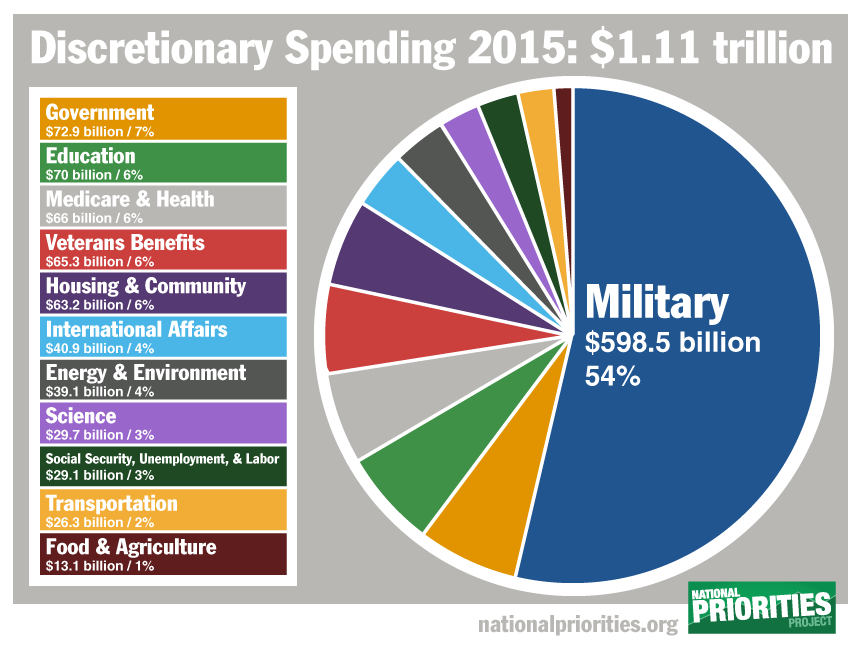
    Also, nuclear weapons programs are enormously costly.  Currently, the U.S. government plans to spend $1 trillion over the next 30 years to refurbish the entire U.S. nuclear weapons complex.  Is this really affordable?  Given the fact that military spending already chews up 54 percent of the federal government’s discretionary spending, an additional $1 trillion for nuclear weapons “modernization” seems likely to come out of whatever now remains of funding for public education, public health, and other domestic programs.

    In addition, the proliferation of nuclear weapons to additional countries remains a constant danger.  The nuclear Non-Proliferation Treaty (NPT) of 1968 was a compact between the non-nuclear nations and nuclear-armed nations, with the former forgoing nuclear weapons development while the latter eliminated their nuclear arsenals.  But the nuclear powers’ retention of nuclear weapons is eroding the willingness of other nations to abide by the treaty.

    Conversely, further nuclear disarmament would result in some very real benefits to the United States.  A significant reduction in the 2,000 U.S. nuclear weapons deployed around the world would reduce nuclear dangers and save the U.S. government enormous amounts of money that could fund domestic programs or simply be returned to happy taxpayers.  Also, with this show of respect for the bargain made under the NPT, non-nuclear nations would be less inclined to embark on nuclear weapons programs.

    Unilateral U.S. nuclear reductions would also generate pressures to follow the U.S. lead.  If the U.S. government announced cutbacks in its nuclear arsenal, while challenging the Kremlin to do the same, that would embarrass the Russian government before world public opinion, the governments of other nations, and its own public.  Eventually, with much to gain and little to lose by engaging in nuclear reductions, the Kremlin might begin making them as well.

    Opponents of nuclear reductions argue that nuclear weapons must be retained, for they serve as a “deterrent.”  But does nuclear deterrence really work?  Ronald Reagan, one of America’s most military-minded presidents, repeatedly brushed off airy claims that U.S. nuclear weapons had deterred Soviet aggression, retorting:  “Maybe other things had.”  Also, non-nuclear powers have fought numerous wars with the nuclear powers (including the United States and the Soviet Union) since 1945.  Why weren’t they deterred?

    Of course, much deterrence thinking focuses on the safety from nuclear attack that nuclear weapons allegedly provide.  But, in fact, U.S. government officials, despite their vast nuclear armada, don’t seem to feel very secure.  How else can we explain their huge financial investment in a missile defense system?  Also, why have they been so worried about the Iranian government obtaining nuclear weapons?  After all, the U.S. government’s possession of thousands of nuclear weapons should convince them that they needn’t worry about the acquisition of nuclear arms by Iran or any other nation.

    Furthermore, even if nuclear deterrence does work, why does Washington require 2,000 deployed nuclear weapons to ensure its efficacy?  A 2002 study concluded that, if only 300 U.S. nuclear weapons were used to attack Russian targets, 90 million Russians (out of a population of 144 million) would die in the first half hour.  Moreover, in the ensuing months, the enormous devastation produced by the attack would result in the deaths of the vast majority of survivors by wounds, disease, exposure, and starvation.  Surely no Russian or other government would find this an acceptable outcome.

    This overkill capacity probably explains why the U.S. Joint Chiefs of Staff think that 1,000 deployed nuclear weapons are sufficient to safeguard U.S. national security.  It might also explain why none of the other seven nuclear powers (Britain, France, China, Israel, India, Pakistan, and North Korea) bothers to maintain more than 300 nuclear weapons.

    Although unilateral action to reduce nuclear dangers might sound frightening, it has been taken numerous times with no adverse consequences.  The Soviet government unilaterally halted nuclear weapons testing in 1958 and, again, in 1985.  Starting in 1989, it also began removing its tactical nuclear missiles from Eastern Europe.  Similarly, the U.S. government, during the administration of U.S. president George H.W. Bush, acted unilaterally to remove all U.S. short-range, ground-launched nuclear weapons from Europe and Asia, as well as all short-range nuclear arms from U.S. Navy vessels around the world―an overall cut of several thousand nuclear warheads.

    Obviously, negotiating an international treaty that banned and destroyed all nuclear weapons would be the best way to abolish nuclear dangers.  But that need not preclude other useful action from being taken along the way.

  • Sunflower Newsletter: November 2016

    Issue #232 – November 2016

    Donate Now!

    Why wait for Giving Tuesday? Please support the Nuclear Age Peace Foundation by making a tax-deductible gift today and receive A New Map for Relationships: Creating True Love At Home and Peace on the Planet, an innovative new book by Dorothie and Martin Hellman.

    Facebook Twitter Addthis

    • Perspectives
      • 2016 Evening for Peace Introduction by David Krieger
      • Revolt by Ray Acheson
      • Nuclear Weapons – The Time for Abolition Is Now by Robert Dodge
    • Nuclear Disarmament
      • United Nations Committee Calls for Outlawing Nuclear Weapons
    • U.S. Nuclear Weapons Policy
      • U.S. Nuclear-Armed Submarine Visits Guam
      • Air Force Wins Golden Fleece Award for Refusing to Disclose Costs of New Nuclear Bomber
      • Watchdog Groups Call for New Environmental Impact Statement at Nuclear Weapons Facility
    • Nuclear Proliferation
      • Russia Suspends Nuclear Agreements with U.S.
    • Nuclear Modernization
      • Sequestration Could Threaten Nuclear Modernization Programs
    • Nuclear Zero Lawsuits
      • Marshall Islands Can’t Sue the World’s Nuclear Powers, International Court of Justice Rules
    • Resources
      • This Month in Nuclear Threat History
      • My Journey at the Nuclear Brink
      • Nuclear Disarmament: The Missing Link in Multilateralism
      • Science and Society
    • Foundation Activities
      • Noam Chomsky Receives NAPF Distinguished Peace Leadership Award
      • Symposium: The Fierce Urgency of Nuclear Zero
      • Peace Literacy Skills at Quantico Marine Corps Base Middle/High School
    • Quotes


    Perspectives

    2016 Evening for Peace Introduction

    By training and profession, Noam Chomsky is one of the world’s leading linguists. By choice and commitment, he is one of the world’s leading advocates of peace with justice. His ongoing analysis of the global dangers confronting humanity is unsurpassed. He is a man who unreservedly speaks truth to power, as well as to the People. Like Socrates, he is a gentle gadfly who does not refrain from challenging authority and authoritarian mindsets.

    He is a man who punctures hubris with wisdom. He confronts conformity with critical thinking. He is a dedicated peace educator and his classroom is the world. The Boston Globe calls him “America’s most useful citizen.”

    It is an honor to have him with us, and it is my great pleasure, on behalf of the Directors and members of the Nuclear Age Peace Foundation, to present Noam Chomsky with the Foundation’s 2016 Distinguished Peace Leadership Award.

    To read more, click here.

    Revolt

    The adoption of resolution L.41, establishing a conference in 2017 to negotiate a legally binding treaty prohibiting nuclear weapons, represents a meaningful advancement towards the elimination of nuclear weapons. It also represents a revolt of the vast majority of states against the violence, intimidation, and injustice perpetuated by those supporting these weapons of mass destruction.

    Revolt, wrote philosopher Albert Camus in The Myth of Sisyphus, is “one of the only coherent philosophical positions…. It challenges the world anew every second.” Camus explored the theme of revolt across many books and novels, finding that struggle not only “gives value to life” but also that it is an obligation, even in the face of adversity, power, and overwhelming odds.

    The act of prohibiting nuclear weapons is an act of nonviolent, positive, courageous revolt.

    To read more, click here.

    Nuclear Weapons – The Time for Abolition Is Now

    Nuclear weapons present the greatest public health and existential threat to our survival every moment of every day. Yet the United States and world nuclear nations stand in breach of the 1968 Nuclear Non-proliferation Treaty which commits these nations to work in good faith to end the arms race and to achieve nuclear disarmament. The rest of the world is finally standing up to this threat to their survival and that of the planet. They are taking matters into their own hands and refusing to be held hostage by the nuclear nations. They will no longer be bullied into sitting back and waiting for the nuclear states to make good on empty promises.

    At the United Nations on October 27, 123 nations voted to commence negotiations next year on a new treaty to prohibit the possession of nuclear weapons. Despite President Obama’s own words in his 2009 pledge to seek the security of a world free of nuclear weapons, the U.S. voted “no” and led the opposition to this treaty.

    To read more, click here.

    Nuclear Disarmament

    United Nations Committee Calls for Outlawing Nuclear Weapons

    On October 27, the First Committee of the United Nations General Assembly passed a resolution calling for negotiations in 2017 on a “legally binding instrument to prohibit nuclear weapons, leading towards their total elimination.” The vote was 123 nations in favor, 38 opposed, and 16 abstaining.

    The United States, Russia, United Kingdom, France and Israel – all of which possess nuclear weapons – opposed the resolution. China, India and Pakistan – also nuclear-armed states – abstained. Most notable among the world’s nine nuclear-armed nations was North Korea, which voted in favor of the resolution.

    The resolution was originally sponsored by Austria, Brazil, Ireland, Mexico, Nigeria and South Africa, but had 55 co-sponsors when it came to a vote. The resolution will now go to a full UN General Assembly vote in December. According to the resolution, negotiations will take place in March, June and July of 2017.

    United Nations Committee Calls for Outlawing Nuclear Weapons,” Associated Press, October 27, 2016.

    U.S. Nuclear Weapons Policy

    U.S. Nuclear-Armed Submarine Visits Guam

    The USS Pennsylvania, one of the United States’ 14 nuclear-armed submarines, is visiting Guam. A U.S. Navy statement said, “This specific visit to Guam reflects the United States’ commitment to its allies in the Indo-Asia-Pacific” region. Other countries in the region – most notably China and North Korea – will undoubtedly view this overt activity with nuclear weapons to be a direct threat.

    The USS Pennsylvania carries 24 Trident II D-5 missiles, each of which can carry multiple independently targeted nuclear warheads. Each nuclear warhead on board is many times more powerful than the atomic bombs that destroyed Hiroshima and Nagasaki.

    Barbara Starr and Brad Lendon, “U.S. Sends Message to Adversaries with Nuclear Sub Visit, Drills,” CNN, November 1, 2016.

    Air Force Wins Golden Fleece Award for Refusing to Disclose Costs of New Nuclear Bomber

    Taxpayers for Common Sense has awarded the U.S. Air Force the “Golden Fleece Award” for refusing to release the overall costs of the B-21 bomber program. The B-21 is intended to be a new delivery vehicle for the Air Force’s nuclear weapons.

    Refusing to release the overall costs, the Air Force argues that doing so would give too much information about the proposed nuclear bomber to U.S. adversaries. Senator John McCain, Chairman of the Senate Armed Services Committee, said, “I am having a difficult time understanding how the public disclosure of a single contract award value funded from an unclassified budget request is going to give the enemy more information on the capabilities of a new bomber than what the Air Force has already disclosed. All I can see is that keeping it a secret deprives the American taxpayer of the transparency and accountability they deserve.”

    Golden Fleece: The Air Force B-21 Raider Attack on Your Wallet,” Taxpayers for Common Sense, October 4, 2016.

    Watchdog Groups Call for New Environmental Impact Statement at Nuclear Weapons Facility

    The Oak Ridge Environmental Peace Alliance and Nuclear Watch New Mexico sent a letter to Secretary of Energy Ernest Moniz calling for a new Site-Wide Environmental Impact Statement for the Y-12 Nuclear Weapons Complex in Oak Ridge, Tennessee. Y-12 is a manufacturing plant that produces the thermonuclear cores (secondaries) for U.S. nuclear warheads and bombs.

    In August 2016, the National Nuclear Security Administration (NNSA) gave itself the green light to proceed with construction of the Uranium Processing Facility, a bomb plant originally intended to replace aging facilities. However, the letter notes, a new Environmental Impact Statement is required when “there are substantial changes to the proposal or significant new circumstances of information relevant to environmental concerns.”

    “This is about safety — protection of workers, the public and the environment,” said OREPA coordinator Ralph Hutchison. “When it comes to nuclear weapons materials, there can be no shortcuts. They (NNSA) have changed their plan significantly, and the law requires them to re-do the environmental analysis. It’s as simple as that.”

    Watchdogs Call for New Environmental Impact Study for Nuclear Bomb Plant,” Nuclear Watch New Mexico, October 28, 2016.

    Nuclear Proliferation

    Russia Suspends Nuclear Agreements with U.S.

    Russia has backed out of three nuclear agreements with the United States in the latest indications of rising tensions between the two nuclear-armed nations. Russia and the United States together possess over 90% of the world’s nuclear weapons.

    Perhaps the most significant agreement that the Russians have backed out of is the plan to “dispose of” 34 metric tons of weapons-grade plutonium. Russia also backed out of an agreement to cooperate on nuclear- and energy-related scientific research, as well as an agreement to work together to convert six Russian research reactors to use low-enriched uranium.

    In 2002, U.S. President George W. Bush unilaterally abrogated the Anti-Ballistic Missile Treaty, which has led to the development and deployment of U.S. missile defense systems in Europe.

    Lidia Kelly, “Russia Suspends Nuclear Agreement, Ends Uranium Research Pact with United States,” Reuters, October 5, 2016.

    Nuclear Modernization

    Sequestration Could Threaten Nuclear Modernization Plans

    Frank Klotz, head of the United States’ National Nuclear Security Administration (NNSA), stated that if Congress does not ease budget caps for the coming year, “all bets are off” for nuclear weapons modernization programs. Klotz was advocating for an exemption to budget restraints, similar to what NNSA has received in the past two budget cycles. NNSA has oversight of the development, maintenance and disposal of nuclear warheads.

    The United States is in the midst of a planned 30-year, $1 trillion “modernization” effort to upgrade its nuclear arsenal, delivery systems and production infrastructure. Klotz said, “God forbid if sequestration rears its ugly head again, [all bets are] doubly off.”

    Aaron Mehta, “NNSA Head: ‘All Bets Are Off’ for Warhead Modernization Under Sequestration,” Defense News, October 4, 2016.

    Nuclear Zero Lawsuits

    Marshall Islands Can’t Sue the World’s Nuclear Powers, International Court of Justice Rules

    On October 5, the International Court of Justice (ICJ), the world’s highest court, declared that the Court does not have jurisdiction in lawsuits filed by the Republic of the Marshall Islands against the United Kingdom, India and Pakistan. The decisions focused only on the question of jurisdiction and did not address the merits of the cases.

    The judges voted 8-8 on the question of jurisdiction in the case of the Marshall Islands vs. the United Kingdom. Judge Ronny Abraham of France, President of the Court, issued the casting vote in favor of the United Kingdom’s position that the ICJ lacks jurisdiction.

    Phon van den Biesen, Co-Agent of the Marshall Islands in the cases, said, ““We are extremely disappointed. The court is very divided and turned down the case on a microformality. It’s difficult to understand that it finds no jurisdiction even when the parties have ‘opposite views.’ The opposing views on nuclear weapons are obvious to anyone.”

    Marlise Simons, “Marshall Islands Can’t Sue the World’s Nuclear Powers, UN Court Rules,” The New York Times, October 5, 2016.

     Resources

    This Month in Nuclear Threat History

    History chronicles many instances when humans have been threatened by nuclear weapons. In this article, Jeffrey Mason outlines some of the most serious threats that have taken place in the month of November, including the November 24, 1961 incident in which all communication links between Strategic Air Command and NORAD went dead, leading officials to assume a full-scale Soviet nuclear attack was underway.

    To read Mason’s full article, click here.

    For more information on the history of the Nuclear Age, visit NAPF’s Nuclear Files website.

    My Journey at the Nuclear Brink

    On October 24, 2016, William Perry, former U.S. Secretary of Defense, delivered a lecture at All Souls Unitarian Church in New York City. The event, co-sponsored by Lawyers Committee on Nuclear Policy, All Souls Nuclear Disarmament Task Force, and Peace Action New York State, was based on Secretary Perry’s recent book entitled My Journey at the Nuclear Brink.

    Click here to access a video of the event.

    Nuclear Disarmament: The Missing Link in Multilateralism

    In a new paper for Chatham House, Patricia Lewis, Beyza Unal and Sasan Aghlani outline the connections between nuclear disarmament and some of the key issues facing humanity today. So far, enormous effort has been invested in tackling these challenges; for example, in climate change prevention and mitigation, socio-economic development, and establishing and implementing the rule of law. Furthermore, recent efforts over the protection of cultural heritage in conflict, stemming the rise of terrorism, developing cybersecurity, understanding gendered impacts and addressing urgent public health issues have all benefited from energized governmental and non-governmental diplomatic actions.

    To download a copy of the paper, click here.

    Science and Society

    An updated and enlarged edition of the book Science and Society, by John Scales Avery, will be published this month by World Scientific. The book was developed by Avery as a text for a class he was teaching at the University of Copenhagen about the vast social consequences of scientific and technological progress. The sections of the course dealing with modern times addressed topics such as genetic engineering, nuclear weapons, sustainability and climate change.

    For more information and a link to order the book at a discount, click here.

    Foundation Activities

    Noam Chomsky Receives NAPF Distinguished Peace Leadership Award

    Noam Chomsky was honored with NAPF’s Distinguished Peace Leadership Award at this year’s Evening for Peace on October 23 in Santa Barbara, California.

    A capacity crowd of over 300 people, including 100 students from local high schools and universities, attended the event. Video and photos of the event will be available here by mid-November.

    Thanks to all of the generous sponsors, attendees and volunteers who made this memorable event possible.

    Symposium: The Fierce Urgency of Nuclear Zero

    On October 24-25, the Nuclear Age Peace Foundation hosted a symposium with leading nuclear disarmament academics and activists. The symposium, entitled “The Fierce Urgency of Nuclear Zero: Changing the Discourse,” was an intimate brainstorming session designed to elicit new and innovative thinking on how to arrive at nuclear zero.

    There was general agreement that a nuclear war poses an existential threat to humankind and that the warning sirens are now sounding.  There is hope that such a war can be avoided, but that hope, while necessary, is not sufficient to end the nuclear threat now facing humanity and other forms of complex life on the planet.  Hope must be joined with action to end the nuclear weapons era in order to abolish nuclear weapons before they abolish us.

    Click here to view selected items from the symposium. In the coming weeks, we will be adding more photos, video and audio of symposium sessions.

    Peace Literacy Skills at Quantico Marine Corps Base Middle/High School

    At the Quantico Marine Corps Base Middle/High School in Quantico, VA, the Parent Educator Association (PEA) invited NAPF Peace Leadership Director Paul K. Chappell to address their Model UN class and an assembly of 8th grade and high school students, teachers, and administrators.

    Helene Brown, PEA chair and married to a Marine with two sons in the school, said, “Paul really impressed them with how different our world is today in terms of freedom and equality, providing us hope for our future. Many were also impressed by how different things can be even in different parts of the world.”

    “As a child in school, I spent many years learning to read and write, but I did not learn peace literacy skills,” Chappell said. “The ideals and skills I use to wage peace I learned in the military.”

    To read more about Paul’s recent trip, click here.

    Quotes


    “We must teach an elemental truth: that status and prestige belong not to those who possess nuclear weapons, but to those who reject them.”

    Ban Ki-moon, Secretary-General of the United Nations. This quote appears in the book Speaking of Peace: Quotations to Inspire Action, which is available for purchase in the NAPF Peace Store.


    “As others prepare for war, we must prepare for peace. We must answer the mindless call to arms with a thoughtful, soulful call to resist the coming build up for war. A new, resolute peace movement must arise, become visible and challenge those who would make war inevitable.”

    Dennis Kucinich, former member of the U.S. House of Representatives.


    “I am deeply convinced that a nuclear weapon-free world is not a utopia, but an imperative necessity. We need to constantly remind world leaders of this goal and of their commitment. As long as nuclear weapons exist, there is a danger that someday they will be used: as a result either of accident or technical failure, or of evil intent of man – an insane person or terrorist. We must therefore reaffirm the goal of prohibiting and eliminating nuclear weapons.”

    Mikhail Gorbachev, former President of the Soviet Union, in a speech marking the 30th anniversary of the Reykjavik Summit.

    Editorial Team


    David Krieger
    Carol Warner
    Rick Wayman