Blog

  • Guernica

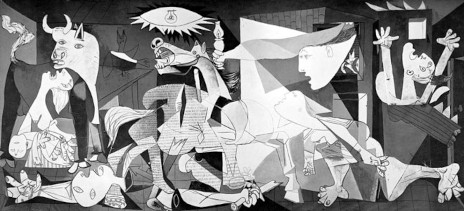
    Guernica

    Picasso’s passion for peace
    Symbol of war’s horrors
    Screams of death and agony
    Fallen man, fallen horse

    Nazi Luftwaffe bombs falling
    On small Basque village
    It was market day, market day
    The streets were jammed

    Nazis bombed and strafed
    Planes diving, machine guns firing
    The young Luftwaffe pilots
    Found the marketplace

    Screaming villagers and peasants
    Running for their lives
    As death blurted from the sky that day
    Seventeen hundred murdered and maimed

    Picasso shared his human outrage
    In his unforgettable Guernica
    The Guernica of screams and death
    Of fallen man, fallen horse

    Cowardly diplomats and generals
    Try to hide Guernica but they cannot;
    Cover Guernica and it emerges
    Starker, stronger, truer

    Guernica was painted for you
    Watch the ones who avert their eyes
    As they slink by in shame
    Planning new wars, new sorrow
    Guernica

    Guernica is a small Basque village that was brutally attacked by the Nazi Luftwaffe on April 27, 1937, during the Spanish Civil War. The attack on the unarmed inhabitants of Guernica left 1,700 villagers and peasants dead or maimed. It was still unusual at that time for an air force to deliberately bomb a civilian population.

    The tragedy and brutality that occurred at Guernica was immortalized by Pablo Picasso in his impassioned mural expressing his outrage at the murderous attack. It is one of Picasso’s masterpieces that is known throughout the world. It depicts the horrors of war, the silent screams of men and beasts.

    Of late, Picasso’s Guernica has been in the news. The tapestry reproduction of the famous mural that hangs outside the entrance to the United Nations Security Council was covered with a blue curtain on the occasion of US Secretary of State Colin Powell presenting his evidence to the Council for war against Saddam Hussein. UN officials said that the blue curtain was to provide a better background for the television cameras. Certainly it is a more comfortable background, far easier on the eyes and minds of those who plead for war than the twisted, tormented figures portrayed in Picasso’s Guernica.

    No leader should be protected from Picasso’s Guernica. The tapestry of Guernica hanging outside the Security Council is a reminder to leaders of the brutality of war. To cover such art is to hide from the truth, and is made all the worse when it is done to protect the sensibilities of leaders who would wage war.

    Those leaders who would promote war for any reason should at a minimum have the courage to look straight at Picasso’s Guernica. War should never be sanitized or made to appear heroic. There is nothing heroic about middle aged war hawks sending young men and women off to kill and die. It was not heroic at Guernica, and it is no more so today.

  • A Diary of Two Iraqi Girls

    The following diary passages were given to the Foundation by Ramzi Kysia, a member of the Iraq Peace Team (IPT) an initiative of Voices in the Wilderness. According to Kysia, the passages are from the diary of Amira, a 14-year-old Iraqi girl, and her 9-year-old sister, Layla. The girls wrote these entries during the last 2 months of 2002, and gave them to IPT to be translated and published in the US. For more information on the Iraqi Peace Team click here.
    AMIRA
    My name is Amira and I didn’t go to school because of the financial circumstances. I left school at the age of 8 years old. I was in the third grade. No one in our family completed school. Not my father, mother or brothers. I have 2 brothers, 2 sisters and my parents. Father is an old, sick man and he and my mother don’t work. I, Amira, is the only one who works.

    I wake up at 7am and go to the bathroom, wash my face with soap and water, then eat bread and tea for breakfast, and go to work. I say, “with God’s blessing,” and go to the market and buy 30 packs of chewing gum and go to work in Karrada Street, and work until 3 or 4pm. Then I go home, enter the bathroom for a bath, wash my clothes, and read with my younger sister, Layla.

    A man told me to go to school and study. I get ashamed a lot, and said, “please, Allah, remove the sanctions from the Iraqi people.” And I am in pain because I didn’t attend school. I see girls go to school and regret that I cannot, because it is a treasure, and man’s future.

    ***

    LAYLA
    My name is Layla. I am nine years old. I am a student in the third grade elementary school. I wake up at 7am, wash my face with water, then go to the market to get breakfast which is egg and bread. After breakfast, I wear the school uniform and go to school by 8am. My school is far away. It’s 15 minutes. I go to home by 12pm, then enter my home and my mother would be preparing lunch which is a potato sandwich. Then I go to sleep and wake up in the afternoon to write my homework, and stay awake until 9pm. I don’t watch TV because ours is broken and we can’t buy one. Every day I go to the neighbors to watch TV, and then stay with my sister at home. My mother says that she’ll work to buy us a TV and so my sister Amira doesn’t have to work. I will work to save money and buy a TV.

    ***

    AMIRA
    My name is Amira and on Tuesday I wake up at 7am. My mother said that she’ll go and buy breakfast, then I would wash my face with water and soap and change my clothes and wear work clothes. Then my mother came with eggs, bread and tea, and I said to myself that I would like to sit at home, but our finances would not help. Then my mother said, “take care, Amira.” I said, “don’t worry, I know,” and she said, “go, Amira, Allah be with you my dear daughter.” Then I left home at 8am and went to the market to get chewing gum to sell in the street. I made 3000 dinar [$1.50 US] and gave it to my mother.

    By 12 noon I eat a cheese sandwich, and at 3pm I went to the market to buy bread and paid 500 dinar [25 cents] for some dates, grapes and cheese. I went home and all my family was awaiting me. My younger brothers were waiting at the door. When they saw me they ran towards me and took the bag and ate. After eating we stayed until 9pm and then went to sleep. I went to bed, but my mother said, “let me heat the water for you to wash.” I bathed and went to bed by 10pm. I was very tired and sleep until 3am to open the water and help my mother until 4am, then go to sleep again.

    ***

    AMIRA
    Sometimes I don’t go to work because I am sick. It’s a nasal disease, and I have a headache. Once I went to work and a man said to me, “Why are you like that -you are a little girl. Go to school.” I was very sick. I went to the park, sat there and had a gloomy mood. I said if there were no sanctions I would have attended school.

    Sanctions has affected us like that, effected the Iraqi people. Sometimes there children, women and men sleeping in the street. They are poor and feel bad and say, “Allah, remove these sanctions.”

    I wake up at 6am, and my mother would say, “are you going to work?,” and I say, “yes.” My sister, Layla, said, “will you be back at 4pm?,” and I said, “I don’t know. God knows.” When I would leave the house, mother would look at me with a tear in her eyes and say, “until when my Amira will be like this?” And I would smile and say, “Don’t be sad, God is merciful.” Then she would say, “God be with you my daughter,” and I would leave the house.

    I am 14 years old and work in the streets. I love to go to school and sometimes I am ashamed of myself. My friends say, “Amira, where do you go?” I say, “to work.” Yasmeen, my friend, says, “why do you go to work?” I say, “Who’ll support my family?” Deep in my heart I wish I didn’t have to go to work in the street. I go home in the evening very tired. I have rice and soup for dinner, and go to bed. I send this letter to the dearest people in America, who are against the sanctions and the Zionists. I hope from Allah to give you good health and all that you hope for.

    ***

    LAYLA
    I wake up at 7 in the morning and go to the bathroom to wash my face with water and soap. Then my mother prepares breakfast which is yogurt, bread and tea. I go to school at 8am. I study at school then I go home. My mother prepares lunch, so I would eat and change my clothes and go to the bath. Then I sleep in the afternoon. Then I write my homework with my mother’s help.

    I don’t go out with my friends because I have no money. I said to my mother if we have some money? And mother said we have just 10,000 dinars [$5 US], and I want you to go to the market and buy tomatoes, potatoes, and bread so I can prepare food for you because Amira is going to come tired from work. Amira comes from work and goes to the bathroom and came out of the bathroom. We ate dinner. I said why don’t we save money so we can buy a TV?, and Amira said “Allah is a great giver.” Then we went to bed at 9pm.

    ***

    AMIRA
    Once upon a time I was at work around 3pm on Sunday. I was playing with my friend Selma. I told Selma that we should go home, but she said that we’ll go at 6pm. A boy named Mahmoud came from a distance holding a big, iron bar in his hand. Mahmoud threw the iron bar in the street, but it hit my food and I had a big wound.

    My foot started bleeding a lot. I went to the hospital in a taxi while my foot is bleeding. We had only 2000 dinar [$1 US] on us, and went to a nurse who said that she would clean the wound and took 1500 dinar, and I had only 2000. So I said, “how much do you want after dressing my wound?” Then I went home and my mother was sad to see what happened to my foot.

    Day after day I went to the hospital and they would clean it and dress it, and I would pray to Allah to heal my foot. After 9 days an old man came and said, “what’s wrong with your foot?,” and I told him the story. The man said, “would you go to a doctor?” I said that I have no money. He said, “come with me to the hospital.” We went to the hospital and they sew my foot with stitches. Then the doctor prescribed me medicines. After all of this the man paid 15,000 dinar [$7.50 US]. After paying 15,000 at the hospital for the stitching and medicine, the man said to me go and stay at home and I’ll pay you the money. Stay for 7 days. I said, “you can’t do that,” and the man said, “no problem.” I will give you $20 US so you can stay at home. I went home and stayed for 7 days taking medicine. Then my wound healed and I thanked Allah and said to the man, “bless you and thank Allah for my good condition.”

    ***

    AMIRA
    Oh God, remove the sanctions on the Iraqi people and Mohammad’s nation.
    God protect our people.

    When I go to work, I won’t sit, but keep running and walking, and stopping a little bit and then get back to work. All of this to get money to buy food for my family. All of this because of the sanctions. This life has destroyed my life and my family’s life. I work so my family will have food. I pay rent for the house which is 30,000 dinar [$15 US] a month. I didn’t study because of the bad circumstances for 5 years now. I left school and I regret that. I see the children study and I feel very sad.

    Today, I wake up at 6am and go to the bathroom. I wash my face with water and soap. My mother makes my breakfast wish is tea, bread and yogurt. I get full, thank God. I am change to my work clothes. Before going to work my mother would say, “take care, Amira,” and I would say, “yes, don’t worry.”

    I go to work, go to the market and buy chewing gums to sell in the street, and work until 11am, then buy an egg sandwich and tea, then go back to work. A man said to me, “why don’t you go to school?” I said, “I don’t go to school.” The man said, “school is best, daughter.” I said, “our circumstances is not helping.”

    The man said, “how many are you at home?” I said, “Six, and no one works but me.” The man said, “are they old?” And I said, “No, they are young. One is 2 years old, one is 11 years old, one is 9 years old, I am 14 years old, and my parents.” The man said, “God is merciful, hopefully your circumstances will change.”

    I got really sad, then it was 1pm in the afternoon and I had a fight with a boy who hit me on the mouth and I started bleeding. He ran away and I started to cry. A man came from the restaurant and gave me a bottle of water and a tissue and 100 dinars [5 cents]. I thanked the man then I went home.

    My little brothers was waiting for me at the door. They came running happily towards me and I entered the home, and my mother was sad. I said, “why are you sad, mother?” My mother said, “I am sad because you have to work to support us and not go to school like the other children.” I said, “it’s okay, mother,” and laughed. Sadness is in the heart, not the eyes.

    ***

    AMIRA
    In the middle of winder it’s very cold. I go to work with other children and we all wonder until how log we are going to be that way. My father can’t work, and I have to get the bread and food for the family, and all this is due to the sanctions.

    I got very sick in mid-winter. My nose started hurting me and I didn’t go to the doctor, so now I have nasal problems. Sometimes I would wake up with a painful headache, and I have no money to go to the hospital to do a nasal operation. They want 100,000 dinar [$50 US] and I have no money. Everyday I pray to God to heal me. Then I sit a little bit to stop the dizziness, and hurry to buy medicine which doesn’t help me. Some people say, “why don’t you do the operation and get rid of it?” And I would say, “I have no money.” When I have money I buy medicine from the pharmacy or buy clothes for my brothers and food for the house. I buy cakes and fruits for the family when I have money, and I would say, “the money goes and comes.” From today I decided to save money for the operation to be good.

    If there were no sanctions, life would not be expensive. Life would be beautiful. Sanctions has effected all of us, and Palestine is in the hand of Zionist criminals. God willing, sanctions will go from Iraq and Palestine, and Palestine will be liberated from the criminals. And I, Amira, would go back to school and won’t have to work, and won’t get hurt when seeing the other girls at school.

    ***

    AMIRA
    I sat at home on Friday. I woke up at 9am, then went to the bath and washed my face with soap and water, and ate bread, tea and eggs for breakfast. Then I washed the dishes and changed my clothes to help my mother with the house work. Then I cleaned the house and went to the market to buy meat, tomatoes, onions and bread. I worked with my mother until 12pm. Mother made us lunch and we ate it. Mother said to me and my sister, Layla, that we’ll go to our aunt’s house. Auntie was happy to see us, and brought us tea and cake, and I had 2000 dinars [$1 US] and gave them to my aunt who refused to take them, but I insisted and said, “if you don’t take it I won’t see you again.” My aunt is in need for me, and I have her all that I had. She would prepare food for her children, and I am happy for that.

    ***

    AMIRA
    I went to work and saw a 13 year old girl go to school with my friend, and I became sad when I saw her. I went to work, bought chewing gums to sell, and went to work. When I see a girl my age and my sister’s age happy with clothes and I would give her good words.

    A man asked me, “why don’t you go to school? Why stay in the street? You are pretty, why are you in the streets?” I said, “our circumstances doesn’t allow me to go to school. My father is sick and mother works at home, and I have a little sister and two younger brothers. No one works but me.” The man became sad and said, “may God make it better for you.”

    All of what the man said to me made me sad, and I was going to cry, but was careful for my tear not to drop. All of this was at 1pm, and I made 3000 dinar [$1.50 US], and this is the memorial day of the Prophet, and I want a lot of money on this day, and all I have is 3000. I went to a man friend and asked him to give me 2000 dinar and I will pay him tomorrow. He agreed and gave me 2000 dinar. I thanked him and went to the marked and bought nuts and sweets and candles and incense, and went home and saw guests in our house. It was my aunt and her kids, and all the things I bought were 3500 dinar, and I still had 1500 on me and it wasn’t enough. So I went to my friend to borrow 3000, and I would pay her tomorrow, and told her I would give her 4000 for her 3000, and she agreed.

    I went to the market and bought meat, tomatoes, bread, dates and onions, and felt better. It was 5pm, and I prepared the table, candles and incense, and kept sweets in the plates and the nuts too. It was 6pm and we were celebrating the birthdate of the Prophet. I gave a small plate of sweets and nuts to the neighbors who are poor, and to my aunt and her kids. We celebrated until 8pm, and then mother prepared dinner, and we ate and thanked God for the food, and stayed awake until 10pm and mother laid beds, but it wasn’t enough, so Layla and I slept on the carpet.

    Then at morning I went and bought bread and cheese and came back to prepare breakfast. They all wake up and saw the food ready, and my mother said, “God give you long life.” We all ate. My aunt’s husband is dead, and I have my aunt money for the taxi and we said goodbye. Then I went to work.

    God is merciful. He sent me a man who paid me 8000 dinar [$4 US]. I paid my friends the debt I owed them and thanked them. I thanked God again for his mercy, and that he gave me money to feed my aunt and her children. I went home happy because I paid my debts. And I pray God to remove the sanctions from the children of Iraq and Palestine.

    ***

    AMIRA
    I didn’t study. I didn’t go to school. I am not like other girls who go to school, go to relatives, have friends, games. I go to work, come home, and that’s it. So far life isn’t pretty.

    I get sad when people are leading a happy life and we live a bad life. I am not supposed to think of life at this age, but I can’t but think when seeing my family in a bad situation. But I pray and say, “God is merciful.” Girls my age should go to school, and parks, and play games, have friends and visit relatives. But so far I didn’t see but bad things and sadness. I smile in front of people, but I am sad inside. No one knows what’s in my heart but God.

  • Appeal to Resist War: International Network of Engineers and Scientists for Global Responsibility

    Appeal to the International Academic Community

    We oppose a US-led war against Iraq and support all non-violent opposition to the planned war. We appeal to scientists, engineers and academics throughout the world to work in solidarity to prevent this war in both their personal and professional capacities.

    We call for teach-ins, hearings and other meetings to take place at all universities. These should consider the consequences of the planned war on the people of Iraq; the stability of the Middle East; the Future of the United Nations and international law; international relations and the dialogue among cultures; the global economy and the environment; and the development, proliferation and use of weapons of mass destruction.

    We call upon universities throughout the world to engage in all forms of peaceful protest. We call upon universities in those countries supporting the war to go on strike should a war begin and to announce their intention to do so in advance.
    *The International Network of Engineers and Scientists for Global Responsibility (INES) is an international non-governmental organization affiliated with the UN and UNESCO. INES works for peace, sustainability and the constructive uses of science and technology. Further Information is available at http://www.inesglobal.org.

    Please contact INES at ines.office@web.de with information on activities at your university.

  • Israelis and Palestinians: Two Traumatized Peoples

    I have long loved Israel. When I was there in the sixties, I found that little country a rare and refreshing spiritual, political, and social experiment. It had taken, I felt, the best from a variety of governing systems and had blended them in a remarkable way. I had hoped each of my sons and daughters would spend time on a Kibbutz.

    When I returned in the 80’s, I found a very different ambience. Israel was heavily armed, frightened, defensive, and persecuting the Palestinians. What had happened to this promising nation and its people to become so bellicose?

    A whole new chapter of my life opened. I wondered why people tortured other people, and thought that if I could know that answer, there might be new possibilities for peacemaking and reconciliation. And, as a Quaker Pacifist, I believed that I should have no enemy and should care for the wounded on all sides of any battle.

    That year I worked on both sides of the Green Line – moving back and forth, interviewing peace people, both Israelis and Palestinians. The suffering of the Palestinians under Israeli rule was horrifying. It seemed madness; I wondered whether the behavior of the Israeli government and the military had anything to do with the suffering from the Holocaust. I began reading everything I could find on the Holocaust syndrome. In the ensuing years, I learned about post-traumatic-stress disorder (PTSD) – a tragic condition which frequently affects soldiers when they emerge from battle – and often years later.

    I learned that in World War I people called the behavior of men returning from wars “Battle Fatigue” and the behavior was similar to one suffering from a catastrophic event “outside the range of normal human experience.” Symptoms can include depression, isolation, withdrawal, rage, inability to feel – numbing, alienation, intrusive thoughts, horrifying flash-backs, a form of hyper-vigilance akin to paranoia, and more. We began calling it PTSD.

    I looked at the histories of these two adversaries, the Israelis and the Palestinians. I saw them as two traumatized people who have both suffered from and committed acts of terrorism and violence against one another. Today the Israeli government is in a position of power and is oppressor to the Palestinians. There is, of course, retaliation. While there is a strong, and active peace movement against the Israeli government’s policies—at least 50% of Israeli citizens are said to disagree with their government—the people have not been able to change its policy to one of just and peaceful coexistence.

    Today it’s easy to see the Palestinian suffering and the injustices they experience. It is not so easy to see the suffering of Israelis, and to consider them brutal, relentless, and unapproachable.

    I see this differently. I have come to believe that violence springs from our unhealed wounds, and our attitude toward violent people requires a compassionate approach, while we stand steadfast against cruel actions. I believe we must listen compassionately to both sides of all conflicts, and explore the history and fears of both. This is called “Compassionate Listening” and is being practiced in the Middle East, Alaska, the US, and Canada with interesting results.

    I studied every thing I could find on the Holocaust Syndrome, and returned to the area many times to learn more about both suffering peoples. I felt it might be the unseen and unhealed wound of both parties to this tragic conflict.

    There is a new consciousness of the long-term effects of the concentration camp on their survivors. There is a new awareness that no healing processes were available at the time people were released from concentration camps, and a disturbing lack of care since then. Some people are beginning to refer to the violent actions of their government and the refusal to grant Palestinians a home of their own, as PTSD on both sides. The survivors in Israel experience a deep fear that it will happen again. Many Israelis appear to be affected by a “siege mentality,” and they believe they live in a dangerous “war zone.”

    Rabbi Jeremy Milgrom was born in the US and is now an Israeli citizen. When I was there in the ‘90s he was head of Israel’s Clergy for Peace. This tall, young man, intense, and compassionate said: “The holocaust left many Jews so scarred that they believe powerlessness is a sin. They feel the whole world is hostile to us – this is sick behavior. Our politics are the opposite of forgiveness – mainly rebellion against mistreatment suffered in the Holocaust, and violent treatment from Palestinians who demand their freedom.”

    Rabbi Milgrom is second generation from the Holocaust and finds his government irrational because the Jewish State has been implemented at the expense of the Palestinians who formerly lived on the land, and because Spiritual Zionism has changed into Statehood after the Nazi persecution. There was a war with the Palestinians which Israelis won and Rabbi Milgrom maintains the “Israeli agenda is corrupt because we’re not permitting Palestinians to re-unify. We Jews feel guilt toward the Palestinians, and we’re unwilling to have a dialogue with them because it will be so unpleasant.”

    Rabbi Milgrom was also struggling with the issue of forgiving Germans, for he said, “as long as we withhold forgiveness of the Germans, we’re corrupted. It’s very hard to trust after the Holocaust, (but) if we can have this redemptive dialogue with the Germans, then we can break down the resistance to having it with the Palestinians. Forgiveness is a release from the past. You don’t have to forget.”

    Another Rabbi, Rabbi Jonasson Gershom, in his article Breaking the Cycle of Abuse, wrote: “On a conscious level, the Israelis are not purposely punishing the Palestinians for the Holocaust. The very suggestion is horrifying to most Jews – didn’t we collectively vow ‘never again?’ But it is also true that people who have been abused will, when they come to power, abuse others because they do not have healthy models for exercising power. Abuse is passed down from generation to generation…unless there is some kind of therapy to teach new ways of coping with frustration and anger.”

    Rabbi Gershom also addresses the question of abuse in its’ application to nations. It is relatively easy to overthrow a government, but far more difficult to oust the internalized oppression which causes us to demonize others. The abuse cycle is not logical. It is a set of totally irrational behaviors based on pain, fear, shame, guilt, and anger… rather than forgive and forget, we need to forgive and move forward… Nonviolence does not mean passive resistance; it means holding to the truth, using truth, faith, and love as our ‘weapons’ for waging peace.

    I agree with Rabbi Gershom. There is a Buddhist tale of the snake who learned to practice nonviolence. Like the snake, I reserve the right to “hiss” and warn others of danger.

    Last night I met with editor-in-chief of New Outlook magazine, Chaim Shur. He was a lovely, generous, gentle man who told me “the Holocaust is the worst trauma in Jewish history. The whole world was killing us. No one did anything to prevent it. The Holocaust Syndrome invades a large part of our lives. Five hundred thousand people in Israel are Holocaust survivors – and now there is a second generation…”

    When I asked him if he thought survivors suffer from PTSD, he answered, “PTSD is not a scientific diagnosis. I have a daughter-in-law whose parents are Holocaust survivors. I don’t accept it.”

    After this journey, I returned to the Middle East to listen to Palestinians. By this time I had learned new things: that people become “terrorists” when they feel their grievances are not heard, their concerns not addressed. I believe that our work as peacemakers is not to take sides, but to seek truth, and, there will never be peace unless both sides are listened to. We must care about those who hurt others, and listen with respect to those who disagree or oppose us. I believe that through such listening we can open new avenues for communication where people are in conflict. We hope that one day they will be able to listen to each other.

    Now to Palestine, or the occupied territories: How can I make Gaza real to you? Gaza, a Muslim strip of land on the Israeli-Egyptian border – the most densely populated area in the world. Perhaps by telling you how people looked, what they said, and what I saw and heard.

    In the outskirts of Gaza, fruit trees blossom, wild grasses cover the fields – and people suffer.

    The main street had chuckholes full of dirty water, broken buildings, blind stores, their locked doors covered with anti-occupation graffiti. A woman walked down the broken sidewalk, a baby on her hip, talking and gesticulating excitedly. A barefoot old man carried a knotted staff; he limped.

    Gaza in 1996. Desolate, harsh, dark corners, prostheses, crutches, braces, scabies. 15,000 demolished homes, miscarriages from gas attacks, rubber fragmentation bullets, plastic bullets over an explosive metal core. Prison sentences of 150 years, 700,000 people in 360 square kilometers, 45% of their land confiscated by 2,500 Israeli Settlers, Xeroxed pictures of sons of Gaza who were martyrs, on lamp posts. Young men and children shot for throwing stones.

    Refugee camps, rag walls on houses, sewage flowing in the central gutter down narrow streets. “There’s not even enough room to carry our dead through these streets!” Malnutrition, worms, parasites infesting the people.

    And still, there is life in Gaza.

    We drove into a parking lot across a shallow lake of dirty water left by the rains. The buildings are faded blue and white. A sign reads American Friends Service Committee: Early Childhood Education Center. We are taken to a pale green room with a desk and chairs. We wait for Mary Khass, a Palestinian Quaker and pacifist who is the director of this little Center. She has suffered the fate of most Palestinians: a son was killed, her family disrupted, desolation and despair. Yet Mary is said to have a sturdy faith in life; and she lives in this childcare center.

    Mary Khass enters. She is full-figured, Western dressed. Her face is carved into lines of pain and compassion. She stands before us telling her story. I trust Mary Khass.

    “My deepest concern is the children. We and the Israelis are raising a generation of haters. It is important for the Palestinians and Israelis to come to an understanding before the Palestinians lose all the land. There is no survival without sharing. We and the Israelis will have to live here – the sooner, the better.

    “What can you do to help us? Work hard for the two states. Respect and support Israeli progressive groups, but remember, they haven’t done enough unless they refuse military service in the occupied territories. If they are against the occupation, they must not serve.

    And then, her cry of anguish: “How can they sleep? There is a hospital next to this place. I have seen Israeli soldiers raid the hospital. They shot and beat patients, nurses, doctors. I saw an Israeli soldier crying and beating his head against the wall. A Palestinian mother comforted this soldier. ‘Malesh. It’s all right, my son.’ That young man could have said ‘no.’ Why didn’t he say no? Can Israelis not see it’s more courageous to work for peace than war?

    “We have unwanted refugees all over the world. We didn’t cause the Holocaust. We advocate a peaceful and just solution for both. But my people have learned that depending on justice and the politicians is fruitless. We must pay the price and bring about change ourselves. Our children are suffering emotional horror, hypocrisy, violence, and fear. The little ones learn how to solve problems with violence. They are out-of-control. They are controlling us. The hand that throws the stone needs understanding and love. Educators need education to deal with opening the minds of these little ones.

    “Recently a bullet was shot in a camp. Nobody was hurt. All the camp was placed under curfew for twelve days. One hundred and eighty young men were arrested. All the citrus groves were demolished. Three houses were destroyed. Many men between the ages of sixteen to sixty were beaten.

    “The Israelis must learn to live with guilt. To do this, they must stay in camps with us. As long as they don’t stay in our camps, they haven’t crossed the line emotionally. As long as they don’t discourage their military from serving in the territories, they wipe my tears with one hand, and slap me with the other.”

    That night we heard shooting in the streets; fires blazed in the sky. The next day, fighting continued with rock throwing and sporadic shots. Soldiers and rock-throwers faced-off on a street in which we were riding; our driver turned hastily and left. We later learned a nine year old boy was killed.

    We were taken from refugee camp to refugee camp – more stories.

    “I was in prison; so was my husband – he for 440 years. I was pregnant, near term. The guards insisted the baby should be born – now – dead. They said I have five living children; this one must die. They drove me for two hours over rough roads. I was forced to lie on my stomach. The baby did not come. They took me to a room in the prison and manacled me to the bed. They threatened and probed and pushed. Still the baby did not come. They called my baby a terrorist. At last, my baby came. He lived! I called him Yasser. God wanted Yasser to live.

    More voices from the camps: “I have two martyrs in my family; two of my sons were shot. See their pictures on the wall…My son was seventeen when he was killed by open fire on demonstrators…Mine was shot in the head…My son is in Anssar III, the prison of suffering…My youngest son is serving his ninth prison sentence…”

    “Do not feel sorry for us. We are parents of Martyrs. We are proud. For thirty-eight years we were silent and compliant. Then we began the Intifada – our uprising. We do not use weapons. We use our skills. We now have hope and a purpose. We will not stop until we get our independent State and our own identity.”

    I feel there are always new possibilities if we look for them. The therapist, Alice Miller, is confident that we can find ways to free ourselves of hatred and rage by doing the painful and rewarding work of feeling and experience it “in its original context.” She is confident that we can save life on our planet by “questioning present dangerous and ubiquitous blindness (denial) – above all, as it exists in ourselves.”

    I agree with Alice Miller, and I feel, if we can see the sorrow and suffering of those who commit heinous violence, some new dimensions will open for our lives and for peacemaking. I see peacemaking as a healing process, and know that if we include this dimension in our efforts, our efforts will have new power and persuasion.

  • North Korea Incites More US Nuclear Hypocrisy

    David KriegerOn January 10th, North Korea announced its withdrawal from the Nuclear Non-Proliferation Treaty (NPT). US Secretary of State Colin Powell responded by stating, “North Korea has thumbed its nose at the international community. This kind of disrespect for such an agreement cannot go undealt with.” Dick Cheney opined that North Korea’s withdrawal from the NPT “could undermine decades of non-proliferation efforts.”

    Yet, those who have read and understand the NPT appreciate that the treaty intertwines the issues of nuclear non-proliferation and nuclear disarmament. The one is dependent on the other. Since the US and the other declared nuclear weapons states have failed in their obligations to achieve nuclear disarmament, particularly in the aftermath of the Cold War, they should expect, sooner or later, that one result will be a breakdown of the NPT regime.

    The NPT was created in 1968 by the US, UK and Russia as a means of preventing the spread of nuclear weapons. Non-nuclear weapons states agreed not to acquire or develop nuclear weapons and, in return, the nuclear weapons states agreed to engage in good faith negotiations for nuclear disarmament.

    In the years since 1970 when the treaty entered into force, 187 countries have signed and ratified the treaty. All of these countries are non-nuclear except for the five declared nuclear weapons states (US, UK, France, Russia and China). The only four states that are not parties to the treaty are India, Pakistan, Israel and Cuba, and Cuba has indicated its intention to join the treaty.

    India, Pakistan and Israel have all developed nuclear arsenals outside the framework of the treaty. India made clear for many years that it was willing to forego its nuclear option if the five declared nuclear weapons states would take seriously their obligations for nuclear disarmament. After years of waiting in vain for the implementation of serious nuclear disarmament efforts by the nuclear weapons states, India went nuclear in 1998 and Pakistan followed suit.

    In 1995 when the NPT was extended indefinitely, the declared nuclear weapons states promised “[t]he determined pursuit of systematic and progressive efforts to reduce nuclear weapons globally, with the ultimate goals of eliminating those weapons….”

    In 2000, when the parties to the NPT held their sixth review conference, the nuclear weapons states again promised “[a]n unequivocal undertaking…to accomplish the total elimination of their nuclear arsenals leading to nuclear disarmament….” In addition to violating this obligation, the US has also withdrawn from the Anti-Ballistic Missile Treaty after promising in 2000 that it would preserve and strengthen this treaty “as a cornerstone of strategic stability.”

    The US also agreed to apply the “principle of irreversibility” to nuclear disarmament, meaning that deactivated warheads would be destroyed. Instead of following this principle, however, the US pushed the Russians to agree to the Strategic Offensive Reductions Treaty that is based upon the opposite principle, that of reversibility. The US announced that at its discretion the strategic nuclear weapons taken off active deployment pursuant to the agreement would be kept in storage for potential future redeployment.

    After the US promised “the early entry into force of the Comprehensive Nuclear-Test-Ban Treaty” in 2000, the Bush administration has refused to re-send this treaty to the Senate for ratification (the Senate failed to ratify in 1999). The Bush administration has also sought to reduce the time needed to resume nuclear testing.

    Bush spokesperson Ari Fleischer commented on North Korea’s withdrawal from the NPT, “There is a light at the end of the tunnel, and that begins with North Korea’s immediately dismantling its nuclear weapons programs and coming into compliance with its obligations around the world.” The light at the end of the tunnel could also begin with the United States coming into compliance with its obligations around the world, starting with its obligation under the Non-Proliferation Treaty to achieve total nuclear disarmament.

    To defuse the current crisis with North Korea, the US should pursue a policy of engagement. It should accept North Korea’s offer to enter into negotiations for a non-aggression pact. The US should also offer to provide North Korea with additional development assistance to help them in building their economy and eliminating starvation.

    Assurances of peace and non-aggression on the Korean Peninsula would make all of North Korea’s neighbors more comfortable. Such assurances would also be an acceptable trade-off for North Korea to end its nuclear weapons program and to allow inspectors from the International Atomic Energy Agency back into the country to verify the termination and dismantlement of any nuclear weapons program. These assurances would allow North Korea to return to the Non-Proliferation Treaty and the 1994 Agreed Framework.

    *David Krieger is president of the Nuclear Age Peace Foundation. He is the co-author of Choose Hope, Your Role in Waging Peace in the Nuclear Age.

  • D.C. Students Skip Classes to Protest War: Activists from Wilson, Deal Demonstrate Against Military Strike on Iraq

    Eighteen-year-old Dante Furioso stood near the flagpole outside Woodrow Wilson Senior High School yesterday morning, and a few minutes before 9 turned his back on the principal and led a procession of teenagers away from campus to a nearby Metro station.

    This adventure in class-cutting was not for kicks. It was for a cause.

    Furioso was one of a few dozen Wilson students who boycotted classes as a symbolic gesture against a potential war with Iraq. Most participants were from Wilson in Northwest Washington and neighboring Alice Deal Junior High School. About 100 Wilson and Deal students sat out some or all of their classes at an antiwar rally outside the Tenleytown-AU Metro station, said Furioso, one of the Wilson students who coordinated the rally. D.C. school officials estimated that 50 students joined the protest.

    “This is a small sacrifice to make,” said Furioso, a senior.

    What Furioso and other students had sacrificed was unclear. Wilson Principal Stephen Tarason said students who took part in the protest face undetermined disciplinary action for cutting class, with possibilities ranging from detention to suspension. Deal officials would say only that 15 to 20 Deal students attended the protest, some with their parents.

    “I think the students have the right to protest,” Tarason said. “It’s always good for students to exercise their rights.”

    Wilson teacher Michele Bollinger collected 25 faculty signatures on a petition opposing disciplinary action for the students.

    The protest was timed to draw attention to this weekend’s antiwar demonstrations in Washington and elsewhere. International ANSWER (Act Now to Stop War and End Racism), organizer of the upcoming events, said tens of thousands are expected for a march and rally Saturday, including scores of college and high school students who plan a second demonstration Sunday.

    Many at yesterday’s rally said a U.S. military strike against Iraq would be unjustified and called for the billions of dollars that would be needed to fight a war to be put toward funding education. Several criticized federal laws that require high schools to provide military recruiters access to students.

    “I think it’s really important that we’re doing something about [a potential war] rather than sitting in class talking about it,” said Deal eighth-grader Enise Conry, 13.

    Students took the event seriously, holding meetings with Tarason, attending a training session on nonviolent protest and working with police on a march route. “I wholeheartedly do not agree with this war,” said Wilson senior Liz Gossens, 17. “Every part of me is against this. I would do almost anything to show how strongly I feel.”

    Furioso said he was amazed at the turnout. When he and other Wilson students began planning the protest after attending an October antiwar demonstration, he said, they expected that it would become a “10- to 15-student operation.”

    But yesterday, as students chanted and waved banners outside the Metro station at Wisconsin Avenue and Albemarle Street NW, the event turned into something larger, attracting more students than expected, along with teachers, parents and other adult peace activists.

    The students scribbled antiwar messages in chalk on the sidewalk, beat bongo drums in shivering morning temperatures and handed out leaflets promoting Saturday’s rally. The yellow-and-blue chalk messages read: “Books are good, guns are bad.” Handwritten signs read: “Bombing Iraq is so 10 years ago.”

    During the rally and march, which ran from about 9 a.m. to 2 p.m., drivers of garbage trucks and passing cars honked their horns in support, to the cheers of students. One Wilson English teacher took students from her first-period class on a field trip to the rally, with their blessing. “We finished our Chaucer work, too, so the teacher’s happy,” said the teacher, Heleny Cook. District and Metro police kept a close watch on the rally, as did some parents and grandparents.

    “I support it, but I want to be here,” said Mary Pat Rowan, mother of a Deal ninth-grade protester.

    Just as supportive yet watchful was Michal Hunter, Furioso’s mother. “What better reason to miss a day of school,” said Hunter. “It’s a real life experience.”
    © 2003 The Washington Post Company

  • Back to the Framework

    There is an eerie case of deja vu in Korea. Nearly nine years ago, President Kim Il Sung expelled international inspectors and threatened to process plutonium from spent fuel at an old graphite-moderated nuclear reactor in Yongbyon. The Clinton administration had rejected negotiations with North Korea, was contemplating a military strike to destroy the nuclear facility and was seeking U.N. Security Council economic sanctions. The North Koreans announced that such sanctions would be considered an act of war. It was clear the United States and South Korean militaries could prevail, but there would be massive casualties from the formidable ground forces of North Korea.

    As now, the isolated and economically troubled nation was focused on resolving basic differences with the United States. Deeply suspicious and perhaps paranoid, the North Koreans were demanding assurances against a nuclear attack and opportunities for normal bilateral relations.

    At the invitation of Kim Il Sung, and with the approval of the White House, I went to Pyongyang and negotiated directly with the man known as the “Great Leader.” He agreed to freeze the nuclear situation at Yongbyon and permit international inspectors to monitor the agreement. In return, the United States was to pledge that nuclear weapons would not be used against North Korea and that two modern light-water reactors would be built to replace the Yongbyon facility. In the meantime, a monthly supply of fuel oil would help provide electrical power. The subsequent death of Kim Il Sung, who was replaced by his son, Kim Jong Il, interfered with the more rapid timetable that we envisioned, but these nuclear proposals were accepted officially in the Agreed Framework, also involving South Korea and Japan.

    Kim Il Sung wanted to discuss long-term issues, with the goal of achieving normal relations between the Koreas and with America. He agreed to an immediate summit meeting with South Korea’s president to discuss cross-border visitation among Korean families and the implementation of general principles adopted in 1992 regarding reunification. His suggestions for future talks with the United States included cooperation in recovering the remains of U.S. soldiers, a step-by-step reduction of Korean armed forces to 100,000 men on each side, with U.S. troops to be reduced in the same proportion, withdrawal of long-range artillery and other aggressive military forces from near the demilitarized zone, and mutual inspections to ensure the de-nuclearization of the Korean peninsula.

    Although the promised light-water reactors were not built, substantial progress was made between North Korea and the United States, illustrated by Secretary of State Madeleine Albright’s successful discussions in Pyongyang.

    The Bush administration brought a change in relationship with both Koreas.

    Rejection of the “sunshine policy,” which had earned the Nobel Peace Prize for South Korean President Kim Dae Jung; announcements that North Korea, like Iraq and Iran, was part of an “axis of evil”; public statements that the new “Great Leader” was loathed as a “pygmy” who deliberately starved his own people, that America was prepared to fight two wars at the same time, and that our missile defense system was a shield against North Korea — all this helped cause many in that country to assume that they were next on America’s hit list after Iraq.

    With evidence that Pyongyang was acquiring enriched uranium, in direct violation of the Agreed Framework, President Bush announced that there would be no discussions with North Korea until after its complete rejection of a nuclear explosives program, and the monthly shipments of fuel oil were terminated.

    Now, once again, international inspectors have been expelled, and the North Koreans have announced they will no longer be bound by the nuclear Non-Proliferation Treaty or an agreement to forgo testing of ballistic missiles. This is a serious threat to regional and world peace. North Korea has offered inspectors from the United States access to its nuclear sites to confirm that they are not developing weapons, but only complete international monitoring can determine whether they have decided to develop a nuclear arsenal or are using threats as a ploy to promote bilateral agreements with the United States.

    It is clear that the world community cannot permit the North Koreans to develop a nuclear arsenal. They must be convinced that they will be more secure without nuclear weapons, and that normal diplomatic and economic relations with the United States are possible.

    The announced nuclear policies of North Korea and the American rejection of direct talks are both contrary to regional and global interests. Unfortunately, both sides must save face, even as the situation deteriorates dangerously.

    To resolve this impasse, some forum — perhaps convened by Russia or China — must be found within which these troubling differences can be resolved. The principles of the Agreed Framework of 1994 can be reconfirmed, combined with North Korea’s full and verifiable compliance with the nuclear Non-Proliferation Treaty and a firm U.S. declaration of nonaggression against North Korea, so long as all agreements are honored.

    Then perhaps the more far-reaching proposals discussed with Kim Il Sung can be implemented and a permanent peace can come to the reconciled Koreas.
    *Former president Carter is chairman of the Carter Center in Atlanta.

  • Let Us Use Our Strength in a Decade of Service to Humanity

    We the people of the United States are members of the most fortunate, most successful, most powerful nation that ever existed upon this planet. Recent outbursts of terrorism have frightened us into forgetting how strong we are, how many resources we have, what great things we can achieve if we decide to evoke the creative qualities of every human being on earth.

    This country was founded upon universal principles of freedom and equality. It offered possibilities and opportunities that drew millions of immigrants to its shores. It finally eliminated the scourge of slavery which marred its history. It has risen to tremendous heights of productivity and prosperity. It has friends and enemies everywhere.

    We the people can put this giant nation under a new course – a course which can transform the world. It is true that God blessed America. Let us share our blessings as we did when we helped many nations recover from the ravages of World War II. We helped our former enemies to shake off totalitarian systems and reach heights they had never known before. We helped to create the United Nations and other international organizations which have brought benefits to people on every continent. Now the time has arrived for us to take the lead in launching a Decade of Service to Humanity.

    It is time for all of us to adopt the personal policy described by Albert Einstein many years ago: “A hundred times a day I remind myself that my life depends on other people living and dead, and that I must invest myself in order to give in the measure as I have received and am still receiving….” The strength we have acquired came to us through other human beings – and we must use that strength by opening our hearts and reaching out to others across all boundaries.

    When the World Trade Towers were destroyed in September of 2001, people from eighty countries dies in the wreckage. There was a huge surge of compassion from people in the United States and many of those countries. People invested themselves in countless ways to help the victims of that attack and their families. People everywhere realized “a hundred times a day” that their lives depended upon other people living and dead. The repercussions from those who died penetrated the consciousness of all the millions who saw the towers exploding. The memories were implanted forever.

    The creation of a Decade of Service to Humanity, sponsored by people in America, will have impacts upon people of all generations. It could bring giant strides to eliminate poverty and disease, to link people together in cooperative efforts in every field – just as people worked together to cope with the effects of the terrible explosions in the Trade Towers.

    The launching of a Decade of Service would not require a declaration by the United Nations. It would not require action by the Congress of the United States. It would not have to be sponsored by any of the governmental or nongovernmental bodies existing in the world today.

    It would simply require a state of awareness by every human person of the connections on which every life is based. It would demand a universal circulation of the statement made by Dr. Einstein: “A hundred times a day I remind myself that my life depends on other people living and dead….” That statement could be placed on the bulletin boards in every school and church, in every business office, in every courtroom, in every place where human beings gather.

    What would be the effects of reminding ourselves “a hundred times a day” that we are supported and sustained in countless ways by those who labored to build our civilization, who enabled us to produce enormous quantities of food and clothing, wide networks of roads and highways, enormous harbors filled with ships, huge airports crowded with planes, enormous broadcasting systems and internet webs of electronic communication? What would be the effects of realizing that people in every part of the world, people from the East and the West, the North and the South, people of every color and every religion, people from Africa and Asia, from Europe and Latin America, from Japan and China and Iran and Iraq, from Brazil and Poland and Germany and Spain, are important in our personal lives?

    If we kept these facts steadily before us, we could take part in a Decade of Service to Humanity. We would insist that our representatives in Congress, the President and his advisors, the ambassadors at the United Nations, would have to recognize and fulfill the needs of human beings for a decent, satisfying life. President Truman said once that every person had a right to such a life.

    The statement of Albert Einstein came from one of the most brilliant scientists who ever lived. His thinking about the structure and potential energies of the atom led to the release of nuclear energy, the most revolutionary event of the twentieth century. He declared that the release of that energy changed everything for humanity, whether human beings realized it or not.

    In this Nuclear Age, when thousands of weapons of mass destruction exist in our country and in other nations, we live with the possibility of annihilation at any time. We seldom realize that human beings have the power to wipe out all life on earth. If we brought a realization of that awesome possibility into our minds every day, we would have an additional motivation for using our strength to serve humanity – and all the forms of life connected with us.

    “We the people” have achieved many worthy goals in the past. Millions of us are engaged today in lives of service in many fields. Many of us know that serving one another brings the deepest rewards, the most enduring happiness that we can enjoy. The idea of being a Public Servant motivated many of our most admired leaders – Abraham Lincoln, Jane Addams, Eleanor Roosevelt, Bess and Harry Truman, Rosalyn and Jimmy Carter, Jonas Salk, Earl Warren, Lady Bird Johnson, John Kennedy, Philip and Daniel Berrigan, and many others. All nations have produced men and women whose services to humanity have inspired millions of people from all generations.

    A Decade of Service to Humanity might be followed by a noble era of humanity’s development – an era that could stretch for centuries or eons. The earth could become a place of everlasting peace, a place filled with the signs of love shining far into the future.

    We the people of America can lead the way. Let us start now!
    *Frank K. Kelly is the senior vice president of the Nuclear Age Peace Foundation. His fields of service include human rights – he was vice president of the Fund for the Republic and the Center for the Study of Democratic Institutions – and public affairs. He was a speech writer for President Truman, a noted journalist, a war correspondent, and author of many books on American history. In the 1950s, he was a special assistant to Majority Leaders of the U.S. Senate. He lives in Santa Barbara.

  • Iraq & North Korea Meeting the Challenge of Nuclear Weapons Proliferation

    President Bush has adopted very different policies toward Iraq and North Korea, despite having provocatively labeled both countries part of the “Axis of Evil,” along with Iran. He has repeatedly threatened war if Iraq does not divulge and eliminate its purported weapons of mass destruction, has been moving US troops into the Gulf region to demonstrate the seriousness of his intent, has engaged in threatening practice bombing runs over Iraqi territory, and has been illegally arming and inciting opposition forces to initiate a civil war in Iraq. But, with regard to North Korea, which has now admitted to having a nuclear weapons program and is known to have advanced delivery systems, Bush has made clear that he prefers to rely on diplomacy over military action.

    Iraq appears to be cooperating with the UN weapons inspectors, while North Korea has asked the inspectors to leave its country and has given notice of its intent to withdraw from the Non-Proliferation Treaty, as is its legal right, in order to pursue, if it chooses, a nuclear weapons program free from treaty restraints. Why, then, is war the prospect for Iraq and diplomacy for North Korea?

    Bush seeks to justify the distinction by insisting that Iraq poses special dangers because it has invaded neighboring countries in the past and has previously used non-nuclear weapons of mass destruction. This distinction, however, seems dubious, especially given past US policies. Iraq invaded Iran in 1980 at the urging of the US, and the US was fully aware of Iraq’s use of chemical weapons in its war against Iran and against the Kurds. At the time the US was supporting Iraq and even supplying it with many of the components needed to produce chemical and biological weaponry. When Iraq invaded Kuwait in 1990, the US ambassador at the time sent mixed signals, telling Saddam Hussein that its dispute with Kuwait was a matter of only regional concern.

    The two aggressive wars initiated by Iraq during Saddam’s rule both involve a measure of US complicity. Iraq has not acted aggressively toward neighbors during the past decade. Iraq fully understands that if it were to threaten or use weapons of mass destruction at this point it would face almost certain annihilation, and nothing in Saddam Hussein’s career, however brutal, suggests such irrationality. Indeed, the Baghdad regime has always given highest priority to its own survival and to that of the Iraqi state.

    The Bush administration has set itself up as the arbiter of who is and who is not allowed to possess weapons of mass destruction. This is not a strategy likely to succeed without giving American foreign policy a militarist character that includes being constantly prepared for warfare in remote parts of the world. In recent years, the US failed to stop India and Pakistan from developing and possessing nuclear weaponry. Nor did it act to prevent Israel from developing its own nuclear arsenal, and even appears to have supported Israel’s program in various ways. At a minimum, the US certainly turned a blind eye toward this dangerous addition to the nuclear weapons club. Bush has chosen to continue these policies, which predate his presidency, despite his seeming preoccupation with nuclear proliferation.

    The Arab world is keenly aware that the US has adopted very different standards for Iraq and North Korea, and also with respect to Iraq and Israel. There is no acceptable explanation of this double standard other than the strategic opportunism of Washington.

    Is the real rationale for the policy that the US doesn’t want unpredictable leaders to develop nuclear arsenals? Doubtful, because North Korea, Pakistan and Israel each currently have unpredictable leaders.

    Is the policy that the US will only allow its allies to develop nuclear arsenals? Also doubtful, because North Korea, India and Pakistan are not properly regarded as allies, although Pakistan has temporarily shifted its alignment due to pressure from Washington in the aftermath of September 11th.

    Is the policy that the US will use the suspected development of weapons of mass destruction as an excuse to intervene in a country that sits on large oil reserves? One cannot help feeling that oil is a major economic and strategic interest that helps explain why the Bush administration seems so intent on waging war against Iraq as a prelude to regime change. There may be other political and strategic motivations as well, including the desire to assert regional dominance in the Middle East and eliminate a troublesome leader.

    We believe that the US government needs to develop a consistent policy on weaponry of mass destruction that applies to all nations. President Bush’s pursuit of a diplomatic solution with North Korea seems like the right course of action, especially if compared to its approach to Iraq.

    The US Government needs to enter into negotiations with North Korea, rather than seeking to isolate it. The United States must also be willing to offer security assurances as well as much needed development assistance to the people in North Korea in exchange for the North Koreans forgoing their nuclear option. It would be diplomatically constructive for the US to encourage the establishment of a Northeast Asian Nuclear Weapons Free Zone that covers the two Koreas, Japan, Taiwan, and that portion of Chinese and US nuclear forces deployed in Northeast Asia. It would also be helpful to support reunification discussions between Seoul and Pyongyang.

    With regard to Iraq, the Bush administration should also be willing to enter into negotiations. The UN inspectors, after all, have already reportedly visited well over 200 Iraqi sites, selected on the basis of intelligence leads, and have so far found no evidence of prohibited weaponry. If the Bush administration has information, as it repeatedly has claimed, that Iraq has violated the UN mandate on eliminating its weapons of mass destruction, it has an obligation to provide this information to the UN inspectors so that they can carry out their work. In the event that Iraq is cleared by the UN inspectors with respect to nuclear and other weapons of mass destruction programs, the US should end its sanctions against Iraq and certainly end the bombing of the No-Fly Zones that it established in Iraq more than a decade ago without any authorization by the Security Council.

    To be consistent in its efforts to control the spread of weapons of mass destruction in the Middle East, the Bush administration should put pressure on Israel to eliminate its nuclear arsenal. Resolution 687, calling for Iraq’s nuclear disarmament, makes note of the calls to create a Middle East Nuclear Weapons Free Zone and Weapons of Mass Destruction Free Zone. The US should seek to realize these goals, and this will not be possible unless Israel’s nuclear arsenal is dismantled. As a major donor of military aid to Israel, the US is in a position to exert a benign influence on Israel’s policy on these issues that will be helpful in the pursuit of regional stability and a just peace throughout the Middle East.

    The US has wrongly treated the Nuclear Non-Proliferation Treaty as a one-way street for more than 30 years. From the outset the treaty was negotiated as a two-way street. The non-nuclear weapons states gave up their right to acquire or develop nuclear weapons in return for a solemn promise by the nuclear weapons states to engage in good faith negotiations for nuclear disarmament. The US, as well as other nuclear weapons states, has not upheld its part of the bargain, which is a “material breach” of the treaty. It has also been unacceptable to other countries, particularly those that feel threatened by US foreign policy.

    Consistency, however, is not enough. Non-proliferation is increasingly being revealed as a dead-end that is not capable of protecting the peoples of the world against the dire possibility of a nuclear war. If the US really wants to put an end to the threat of nuclear proliferation, it must demonstrate that it has the political will to propose and engage in serious negotiations for the total elimination of all nuclear weapons in the world, including its own, as called for almost 35 years ago in the Non-Proliferation Treaty.

    War is not a solution to preventing the proliferation of nuclear weapons. The only approach with some chance of success depends on a demonstrable political will to achieve a world free of nuclear weapons and other weapons of mass destruction. When the US demonstrates this political will, the inspection procedures and institutional structures to guard against cheating can be established, tested and gradually implemented. Only at that point can the world begin to breathe more easily.

    Moving in this direction will require a sea change in the strategy of the US Government, but it is the only policy that will have the consistency and international support needed to succeed, and is by far the best way to reduce the threat of nuclear catastrophe. Until the United States is prepared to forego its own nuclear weapons option, preventing others from doing what we have been doing for more than half a century will seem like an extreme version of moral hypocrisy. It is time for Americans to realize that reliance on nuclear weapons is incompatible with our most fundamental moral and legal obligations as well as with preventing and reversing nuclear proliferation.
    *Richard Falk, visiting professor, Global Studies, University of California at Santa Barbara, is chair of the Nuclear Age Peace Foundation. David Krieger is a founder and president of the Nuclear Age Peace Foundation.

  • Sliding into Nuclear Abyss

    The more the rulers of countries like Pakistan and India emulate, collaborate with, or strain to demonstrate their loyalty to, hegemonic powers like the United States, the more they caricature themselves-and mock at their own national interest. That is what happened during the exchange of hostilities between Pakistani and US troops in Southern Waziristan when Washington asserted its “right” of “hot pursuit” in the “war against terrorism” and went on to bomb a madrassa.

    The US has once again shown just how disdainfully it treats its allies. This is not the first time it has done this, least of all to a state outside its core-alliance, NATO. America routinely treats NATO members much like an emperor treats his vassals. Within an alliance which is asymmetrical and demands unquestioning obedience from the top, the minor allies are at best “consulted”, or simply told what to do.

    For instance, there has never been a “dual trigger” on NATO’s weapons, one operated by the host member-state, and the other by the US. Operationally, there has always been a single, unified, line of command. Therefore, it’s not for nothing that the UK, America’s most loyal ally, has been called its “Unsinkable Aircraft Carrier”. The latest report of a Pakistan-US deal on “hot pursuit”, albeit to be conducted “quietly”, underscores the same asymmetry.

    India may soon experience Pakistan’s sense of hurt and humiliation thanks to its two latest acts: signing away some of its sovereign rights in Washington’s favour, and doctrinally emulating the US. On December 26, India signed a “bilateral” treaty with the US which gives impunity to their citizens who may be wanted by multilateral agencies or third countries for human rights offences including genocide or crimes against humanity. By signing it, India has joined the ranks of states like Gambia, Tajikistan, East Timor and Israel.

    These bilateral pacts are worse than Status of Forces Agreements. They are meant to sabotage the worthy global effort to bring into force the International Criminal Court, to try crimes against humanity. As of now, 139 states have signed the ICC’s Rome Statute; 87 have ratified it. Notable exceptions are the US, China, India and Pakistan. The US was originally a signatory, but “unsigned” the Statute under Bush.

    That isn’t all. America blackmailed the UN into delaying the functioning of the ICC and is asking a host of states to bypass the Court altogether. That means that, say, if Henry Kissinger were to be hauled up for war crimes while on a visit to India, New Delhi would refuse to surrender him. This will work against the interests of Indian (and American) citizens-as the Bhopal case shows.

    The second example, of imitation, is worse. On January 4, India’s Cabinet Committee on Security offered a general commitment to no-first-use (NFU) of nuclear weapons. But closely following the December 2002 US “National Strategy to Combat Weapons of Mass Destruction”, it said India would use nuclear weapons in response to “a major attack against India or Indian forces anywhere” made with “biological or chemical weapons” too. This means killing lakhs of non-combatant citizens in response to chemical or biological weapons which kill on a smaller scale ie, a few hundred soldiers.

    This further dents India’s claim to nuclear “restraint” and sobriety-even assuming that the embrace of horror weapons, and search for “security” based on them, is compatible with “restraint”. This is part of New Delhi’s further plan to “operationalise” its “nuclear deterrent” by setting up a Nuclear Command Authority.

    The NCA announcement validates this Column’s assessment that India and Pakistan are “hurtling towards inducting nuclear weapons into their armed forces” and getting into a form of rivalry from which they will find it hard to extricate themselves. The establishment of India’s NCA comes almost three years after Pakistan set up its own command. The principal difference between the two NCAs pertains to two items.

    First, in India, authorisation for a nuclear strike is solely vested with the civilian leadership, the Political Council, chaired by the Prime Minister. The Executive Council, which is expected to have military personnel and bureaucrats on it, will have a limited role: eg, advise on security threats, etc.

    In Pakistan, the military is unlikely to easily give up its hitherto-unquestioned control over nuclear weapons and policy. In February 2000, Islamabad announced that the NCA would be chaired by the Head of Government. Then, the head was Chief Executive Musharraf. Today, he is Prime Minister Jamali. But going by the NCA meeting last Monday, which Jamali “attended”, declaring Pakistan’s nuclear weapons to be in “good hands”, he seems loath to assert his authority over the NCA.

    Exclusive control over nuclear weapons by the military poses a problem: no military has the popular mandate to take a life-and-death security decision, although civilian control doesn’t guarantee “responsible” decision-making-witness Hiroshima-Nagasaki.The second difference is doctrinal. Pakistan has a nuclear first-strike policy. India doesn’t, but is under pressure to abandon NFU. According to one report, the last National Security Advisory Board-whose first avatar in 1999 produced the “Draft Nuclear Doctrine”-had recommended that New Delhi rescind NFU. In practice, it is unclear, given the lack of “strategic distance” between India and Pakistan, if NFU will mean much once hostilities break out. The temptation to retaliate the moment a strike is considered imminent will be high. Differences notwithstanding, both India and Pakistan face three similar problems in operationalising their “deterrents”; neither says how it proposes to resolve them. First, there is the question of survivability of nuclear “assets”, and, very important, command structures. This problem is acute in a situation of “decapitation” of military and political leaderships.

    Second, and related to this, is succession within the command authority and the ability of each state to install uninterruptible communications channels between different levels of succession. The general technological backwardness and accident- or disaster-proneness of both societies will complicate matters here.

    Third, India and Pakistan will inevitably have to move towards demonstrating their capacity to inflict “unacceptable damage” upon each other. This means they must be far more transparent in projecting their capabilities: through deployment and high-alert readiness to pull the trigger. This will impel both to escalate from a state of “existential deterrence” to actual threats, backed by battle-readiness.

    Given the secrecy prevalent in the subcontinent’s military establishments, the absence of adequate testing of many sub-systems, and lack of symmetrical perceptions of each other’s specific capacities, this could make for terrible strategic miscalculation and panic reaction, greatly raising the chances of a pre-emptive or launch-on-warning response.

    The only way to contain these risks is to undertake Nuclear Risk-Reduction Measures, discussed in this Column (July 4). But that presumes a high degree of transparency and the will to negotiate. That seems infeasible in today’s situation, marked by the lowest point in bilateral relations-lower even than in 1971.

    This makes a Nuclear Armageddon likelier than before-unless India and Pakistan urgently pull back from the brink. Kargil happened barely a year after they overtly crossed the nuclear threshold. With their NCAs and their ramshackle nuclear deterrents, the present situation may be infinitely worse-to the collective peril of 1.3 billion South Asians.